




Anwar Al-Awlaki and the US’s Long War On Al-Qaida
Error: Contact form not found.

 by John Bolton

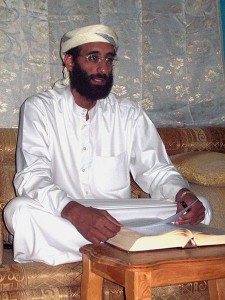
Imam Anwar al-Awlaki in Yemen October 2008. Photo: Muhammad ud-Deen.
The well-deserved death of Anwar al-Awlaki in Yemen continues a string of recent battlefield losses for al-Qaida, the most notable being Osama bin Laden at the hands of Seal Team Six. Decapitating the enemy’s leadership is an ancient tactic of warfare, and US intelligence and strike technology has brought it to new heights.
But despite our well-deserved jubilation when another terrorist rightfully meets his maker, the global war against Awlaki’s ilk is far from over. Understanding what his death does and doesn’t mean has consequences extending far beyond one enemy combatant’s demise.
First, and perhaps foremost, is that it was Barack Obama’s administration that ultimately implemented Awlaki’s execution. Despite the president’s refusal (so far) to acknowledge explicitly that he gave the order to kill Awlaki, there is no doubt, whether through a signed intelligence “finding”, classified executive order, or extensive briefings about the US target list, the ultimate command responsibility was Obama’s. He should be proud of his decision. He deserves credit for making the right call, as he does for ordering Seal Team Six to kill bin Laden.
Moreover, the Obama administration’s pattern of targeted killings in the war on terror establishes an important conceptual point. It is now clear beyond dispute that the United States, on a bipartisan basis, fully embraces the paradigm that the threat of international terrorism is a matter of war, not a matter of law enforcement. And rightly so. Law enforcement is what constitutional governments do inside their own civil societies. War is fought between societies, nations and ideologies, and international terrorists are clearly waging war against us.
While terrorism does not fit entirely comfortably within the war paradigm, which the west developed using nation states as the key actors, what Awlaki did for a living was a far cry from robbing the neighborhood bank. He was treated accordingly, and press reports indicate all Obama’s legal advisers concurred that targeting Awlaki was entirely legitimate.
This is nothing new. The post 9/11 authorisation to use military force passed the House and Senate overwhelmingly among both parties. Since then, though, advocates of treating terrorism like bank robbery have tried to nibble away at the legality and morality of – and the political support for – the war on terror. That Barack Obama presided over the killing of an American citizen like Awlaki (albeit one who had renounced his citizenship) marks a major advance in solidifying and legitimising the war paradigm.
This does not mean the United States acts lawlessly. Quite the contrary. But in war, including against international terrorism, we operate under a legal framework very different from criminal law, and for good and sufficient reasons. What George W Bush started doctrinally, Barack Obama has now completed.
Second, while Awlaki’s death eliminates an important al-Qaida propagandist and recruiter (and also, lately, an operative), it is no cause to relax our global efforts. His terrorist sandals may momentarily seem hard to fill, but as history sadly demonstrates, not impossibly so. Vladimir Lenin’s death did not bring the end of Bolshevism; it brought Joseph Stalin.
Moreover, while tempting to declare victory and go home, as the Obama administration is erroneously doing in Iraq and Afghanistan, withdrawal simply ensures that all our victories will fade away, and provide ample opportunities for the terrorists to regroup and re-emerge stronger than ever. Jihadi terrorism is, unfortunately, far more threatening than one man, however evil.
Third, Yemen is as anarchic today as it was before Awlaki died, and the outcome of the political, religious and tribal power struggle underway there is far from over. Al-Qaida and its sympathisers may yet prevail in the country-wide Hobbesian strife, or Yemen may dissolve into anarchy, like nearby Somalia.
Either outcome would afford terrorists an ideal sanctuary, a greater danger than Awlaki even at his most malign, especially for the pro-western monarchies elsewhere on the Arabian Peninsula. In addition, the continuing risk that the Middle East’s Arab Spring might fall prey to radical jihadists remains very real – further evidence why the war on terror will be long.
Therefore, despite Awlaki’s death, much hard work abides. As we celebrate, so, too, should we continue the long war.
This article was originally published by the Guardian