

Friendless In The Middle East

November 8, 2011 12:01 am 2 comments

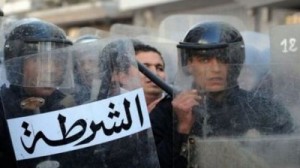
Tunisia's president called out the police in Sidi Bouzid in December 2010, but to no avail.

The Arab upheavals of 2011 have inspired wildly inconsistent Western responses. How, for example, can one justify abiding the suppression of dissidents in Bahrain while celebrating dissidents in Egypt? Or protecting Libyan rebels from government attacks but not their Syrian counterparts? Opposing Islamists taking over in Yemen but not in Tunisia?

Such ad hockery reflects something deeper than incompetence: the difficulty of devising a constructive policy toward a region where, other than in a few outliers, populations are predominantly hostile to the West. Friends are few, powerless, with dim prospects of taking control. Democracy, therefore, translates into hostile relations with unfriendly governments.

Both the first wave of elections in 2005 and the second wave, just begun in Tunisia, confirm that, given free choice, a majority of Middle Easterners vote for Islamists. Dynamic, culturally authentic and ostensibly democratic, these forward a body of uniquely vibrant political ideas and constitute the only Muslim political movement of consequence.

But Islamism is the third totalitarian ideology (following Fascism and Communism). It preposterously proposes a medieval code to deal with the challenges of modern life. Retrograde and aggressive, it denigrates non-Muslims, oppresses women, and justifies force to spread Muslim rule. Middle Eastern democracy threatens not just the West’s security but also its civilization.

That explains why Western leaders (with the brief exception of George W. Bush) shy away from promoting democracy in the Muslim Middle East.

In contrast, the region’s unelected presidents, kings, and emirs pose a lesser threat to the West. With Muammar al-Gaddafi long ago chastened by American power and Saddam Hussein removed by American-led forces, the egomaniacs were gone by 2003, and surviving strongmen largely accepted the status quo. They asked for little more than to be allowed quietly to repress their populations and noisily to enjoy their privileges.

A year ago, Western policymakers could survey the region and note with satisfaction that they enjoyed reasonable working relations with all the governments of Arabic-speaking countries, excepting Syria. The picture was not pretty but functional: Cold War dangers had been thwarted, Islamist ones mostly held off.

Greedy and cruel tyrants, however, present two problems to the West. By focusing on personal priorities to the detriment of national interests, they lay the groundwork for further problems, from terrorism to separatism to revolution; and by repressing their subjects, they offend the sensibilities of Westerners. How can those who promote freedom, individualism, and the rule of law condone oppression?

In the Middle East, full tyranny has dominated since about 1970, when rulers learned how to insulate themselves against the prior generation’s coups d’état. Hafez al-Assad, Ali Abdullah Saleh, Husni Mubarak, and the Algerian regime demonstrated with rare flamboyance the nature of full-blown stasis.

Then, last December, a butterfly flapped its wings in the small Tunisian town of Sidi Bouzid (population: 40,000), when a policewoman slapped a fruit vendor. The response toppled three tyrants in 11 months, with two more in serious jeopardy.

Summing up the West’s policy dilemma vis-à-vis the Middle East:

Democracy pleases us but brings hostile elements to power.

Tyranny betrays our principles but leaves pliable rulers in power.

As interest conflicts with principle, consistency goes out the window. Policy wavers between Scylla and Charybdis. Western chanceries focus on sui generis concerns: security interests (the U.S. Fifth Fleet stationed in Bahrain), commercial interests (oil in Saudi Arabia), geography (Libya is ideal for air sorties based in Europe), the neighbors (the Turkish role in Syria), or staving off disaster (a prospect in Yemen). Little wonder policy is a mess.

Policy guidelines are needed; here follows my suggested triad:

Aim to improve the behavior of tyrants whose lack of ideology or ambition makes them pliable. They will take the easiest road, so join together to pressure them to open up.

Always oppose Islamists, whether al Qaeda types as in Yemen or the suave and “moderate” ones in Tunisia. They represent the enemy. When tempted otherwise, ask yourself whether cooperation with “moderate” Nazis in the 1930s would have been a good idea.

Help the liberal, secular, and modern elements, those who in the first place stirred up the upheavals of 2011. Assist them eventually to come to power, so that they can salvage the politically sick Middle East from its predicament and move it in a democratic and free direction.

Mr. Pipes (www.DanielPipes.org) is president of the Middle East Forum and Taube distinguished visiting fellow at the Hoover Institution of Stanford University.

2 Comments

Leave a Reply

Please note: comments may be published in the Algemeiner print edition.


More...

  • Arts and Culture Beliefs and concepts Jewish Presence in Contemporary Art

    Jewish Presence in Contemporary Art

    The Jewish presence and identity in the contemporary world of art is one truly worth noting. At the 3rd annual conference of “Jewish Arts & Identity in the contemporary world” in Baruch College’s Jewish Studies Center, at a panel entitled “Jewish Ways of Seeing: The Visual Arts and the Jewish Tradition”, the Jewish impact on the creative world is exemplified through the discussion of artist Audrey Flack and her various works. Flack was born in 1931 to a fairly Orthodox [...]

    Read more →
  • Blogs Features Black Jazz Musician Encounters Mixed Reactions to Subway Renditions of Hatikvah, Hava Hagila

    Black Jazz Musician Encounters Mixed Reactions to Subway Renditions of Hatikvah, Hava Hagila

    At first you may be skeptical of Isaiah Richardson Jr. He doesn’t look like somebody who would be playing Hava Nagila for passengers waiting for their train in the subway. Firstly, he seems too young,  and secondly, he’s a black kid from the Bronx, dressed sharply, derby hat and all. But when upon meeting Isaiah, the 32-year-old ticked off “Hevenu Shalom Aleichem,” “Bashana Haba’ah,” and “Zum Gali Gali” as some of his favorite songs to play passing crowds, I knew [...]

    Read more →
  • Blogs Music Mother’s Day Performer Blends Israeli Independence and the Jewish Side of Verdi

    Mother’s Day Performer Blends Israeli Independence and the Jewish Side of Verdi

    This Mother’s Day, the music of opera singer Sharon Azrieli Perez will integrate the varied threads that have made up the fabric of her life. Perez, in a Mother’s Day concert May 12 at the 92nd Street Y in New York City, will weave a musical experience that brings together intimations of Israeli independence, Giuseppe Verdi’s use of Jewish melodies, medieval Ladino music, and modern Jewish show music. These musical elements are particularly personal for Perez, whose Juilliard education has [...]

    Read more →
  • Blogs Jewish 100 Social Harvey Weinstein to Elie Wiesel: Without You There Would be no ‘Schindler’s List’ (VIDEO)

    Harvey Weinstein to Elie Wiesel: Without You There Would be no ‘Schindler’s List’ (VIDEO)

    Famed film producer Harvey Weinstein presented Nobel Laureate Elie Wiesel with the Algemeiner newspaper’s ‘Warrior for Truth’ award at its recent star studded 40th anniversary ‘JEWISH 100’ Gala. “My mother, the Miriam of Miramax […] was so thrilled when she heard that I was presenting to Professor Wiesel,” Weinstein said as he called on the professor to accept the award. “I am happy to be here on the Algemeiner’s 40th anniversary and to celebrate their top 100,” Weinstein added. Commenting [...]

    Read more →
  • Israel Sports Israeli Soccer Star Victim of Anti-Semitic Abuse on Twitter

    Israeli Soccer Star Victim of Anti-Semitic Abuse on Twitter

    Israeli soccer star Yossi Benayoun, who currently plays for FC Chelsea in the English Premier League, was recently the victim of anti-Semitic abuse on Twitter. After thanking his Twitter followers for sending him birthday wishes, Benayoun, who many consider to be the greatest Israeli soccer player ever, was sent the following message: “f***in Jew a**hole.” Benayoun posted a response, saying, “Some nice people in the world.” His team has called on the police to investigate the matter, according to the Britain’s [...]

    Read more →
  • Arts and Culture Blogs Gary Baseman and The Jewish Home “The Door Is Always Open”

    Gary Baseman and The Jewish Home “The Door Is Always Open”

    This weekend, a retrospective of the works of Gary Baseman titled The Door Is Always Open, opened, at the Skirball Cultural Center. ‘Door’ recreates the artists’ childhood home filled with famous Baseman characters and Jewish subjects peppered about. Baseman has had a long and successful career with iconic characters and big clients to fill his CV, but recent works are the first time he is dealing directly with his Jewish identity and the value that it holds for him now. [...]

    Read more →
  • Blogs Jewish 100 Social Algemeiner ‘JEWISH 100′ Gala: Album 2 – Program, Speakers and Awards (PHOTOS)

    Algemeiner ‘JEWISH 100′ Gala: Album 2 – Program, Speakers and Awards (PHOTOS)

    Read more →
  • Israel Sports Israel’s National Hockey Team Wins World Championship in Turkey Tournament

    Israel’s National Hockey Team Wins World Championship in Turkey Tournament

    Israel’s national ice hockey team struck gold at the 2013 IIHF Ice Hockey World Championship Division II Group B, which was a surprise considering that they entered the tournament in Izmit, Turkey as an unknown entity and the second-lowest ranked team. The squad will move up to the top tier Group A following wins over China (6-3), Turkey (5-3), New Zealand (3-2) and Bulgaria (13-2). “Overall we played really well and disciplined, and the first four games were extremely pleasant [...]

    Read more →
Sign up now to receive our regular news briefs.