










Netanyahu’s “Serpico” Moment
Error: Contact form not found.

 by Abe Novick


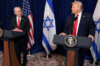
President Barack Obama (far right) with Israeli Prime Minister Benjamin Netanyahu and then Egyptian President Hosni Mubarak—both checking their watches—in September 2010 at the White House. Photo: White House.
Toward the end of the movie “Serpico” before he gets trapped in a doorway and (spoiler alert) shot in the face, Frank Serpico (Al Pacino) is transferred to work in the Brooklyn narcotics squad of the NYPD and is warned by a partner about how dangerous it is. He’s told how he’ll be a target and that while a fellow cop may not directly kill him, they just may not be there when he needs them.
“I’m not saying anything’s going to happen. I’m saying it could happen. I mean, there’s lots of ways. Nobody has to take a shot at you. They can just not be there when you need them. Somebody come at you with a gun, they look the other way. Or they can send you in first enough times…until finally one day you’re gonna walk in the wrong door.”
(Detective/Partner, “Serpico”, 1973)
Reading Jeffrey Goldberg’s recent blog on Bloomberg, I was reminded of that scene.
In his thinking, the U.S. can still apply pressure on Iran to stop its race to a nuclear bomb and will surely still supply aid to Israel, but there are other ways the U.S. can harm its closest ally in the region.
For example Goldberg explains how, while the U.S. has supported Israel at the U.N. offering it diplomatic protection, Israel may one day see that its partner just isn’t there. He references last November’s vote on the Palestinian Authority’s status and the handful of tiny countries (literally Micronesia) that joined with the U.S. at the UN and opines:
“When such an issue arises again, Israel may find itself even lonelier. It wouldn’t surprise me if the U.S. failed to whip votes the next time, or if the U.S. actually abstained. I wouldn’t be particularly surprised, either, if Obama eventually offered a public vision of what a state of Palestine should look like, and affirmed that it should have its capital in East Jerusalem.”
With yesterday’s reelection of Prime Minister Benjamin Netanyahu, the strained relationship with President Obama may move into a new phase. If what Goldberg says is true, and if Israel is expecting the U.S. to have its back, it may want to take a lesson from the 40-year-old gritty film, about an underdog with no allies, who’s trying to do the right thing, but is surrounded by corrupt, hostile armed enemies who don’t take nicely to him or what he stands for.
If it’s relying on its partner, it just might not be there.


