

Lebanese Canadian Bank to Pay $102 Million in Hizballah Laundering Case
Error: Contact form not found.

 by Abha Shankar

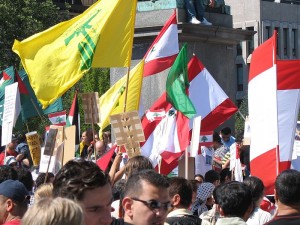
Pro-Hezbollah rally in Stockholm. Photo: wiki commons.
The Beirut-based Lebanese Canadian Bank (“LCB”) will pay $102 million as part of a settlement reached this week with federal prosecutors. The LCB was accused in a December 2011 complaint of funneling money to the Lebanese terrorist group Hizballah as part of a global money-laundering scheme.
The “settlement shows that banks laundering money for terrorists and narco-traffickers will face consequences for their actions, wherever they may be located. This type of money laundering network fuels the operations of both terrorists and drug traffickers, and will continue to use every resource at our disposal to sever the connection between terrorists, narco-traffickers, and those who fund their lethal agenda,” Manhattan U.S. Attorney Preet Bharara said in a Justice Department press release.
Lebanese financial institutions tied to Hizballah wired over $300 million from Lebanon into the United States to buy and ship used cars to West Africa as part of a money laundering scheme, the complaint alleged. Profits from the car sales and narcotics were then funneled back to Lebanon through money laundering channels controlled by Hizballah, including LCB and two Lebanese exchange houses – the Hassan Ayash Exchange Company and Ellissa Holding – as well as their subsidiaries and affiliates. The lawsuit sought $480 million in civil money laundering penalties from the Lebanese financial entities.
The Treasury Department identified LCB as a “primary money laundering concern” in February 2011 and prohibited American financial institutions from doing business with the bank. The bank allegedly laundered as much as $200 million per month in drug proceeds for a Hizballah-tied international drug ring led by Lebanese drug lord Ayman Joumaa. Joumaa was indicted in November 2011 on charges of transporting 100 tons of Columbian cocaine to the Los Zetas Mexican drug cartel.
Hizballah was designated a Foreign Terrorist Organization (FTO) in October 1997 and as a Specially Designated Global Terrorist (SDGT) in October 2001. The Hassan Ayash Exchange Company (“Ayash”) and the Ellissa Holding Company were designated as Significant Narcotics Traffickers under the Foreign Narcotics Kingpin Designation Act (the “Kingpin Act”).
In a separate settlement order issued last week, Ayash agreed to forfeit more than $720,000 to the United States.