



Self-Respect: The Unrealized Vision for the Jewish State
Error: Contact form not found.

 by Brandon Marlon

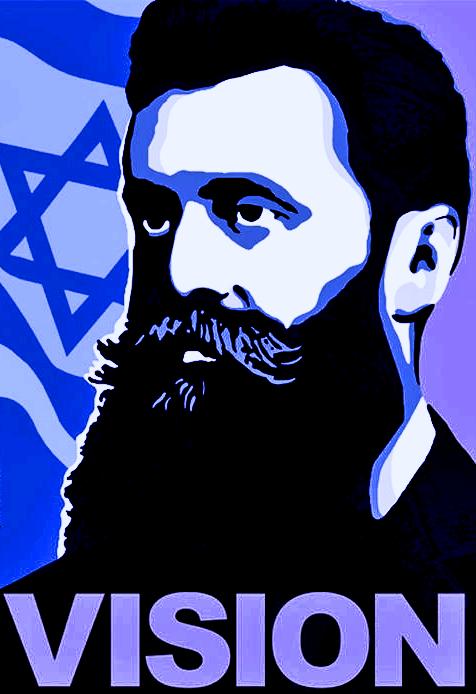
Theodor Herzl.
In the nineteenth century, Theodor Herzl and other political Zionists shared a vision for a Jewish state that would allow the Jewish People to regain their self-respect after almost two millennia of national homelessness. Would Zionists like Alkalai, Kalischer, Mohilever, Hess, Pinsker, Pines, Nordau, Reines, Bar-Ilan, Ahad Ha’am, and Bialik see in modern Israel the dignity they craved for their people? After 65 years of Jewish political independence, unfortunately, it remains rather doubtful.
What, then, would a self-respecting Jewish state look like?
To be sure, it would not look like a nation that does not exert sovereignty over its heartland; that during wartime engages in repetitive rounds of combat instead of decisive victories; that releases busloads of bloodstained murderers for a single soldier or as a “gesture” of peace; or that engages in negotiations of any kind at any time with wolves in wolves’ clothing, envoys of a culture of hatred.
Leo Pinsker wanted Jews to “rise manfully to our full height.” And, indeed, for the most part the individual Jew no longer needs to stoop like a weary ghost wandering between shtetls and ghettos, or plead like a beggar on his knees. But is the State of Israel not routinely stooping before its international adversaries, not perennially begging for foreign aid, UN votes, and recognition of its rightful capital from its apparent allies?
Just as anti-Semitism made the leap from the singular Jew to the sole Jewish state, so too have the Jew’s individual frailties scaled up to the national level. Just as the Jewish person was subjected time and again to persecution, violence, and expulsion, likewise is contemporary Israel persecuted by the UN and BDS movement, subjected to violence in recurring wars and intifadas, and threatened with expulsion from the face of the earth by Arab terrorists, Iranian madmen, and Palestinian Authority representatives fantasizing about dropping nuclear bombs. How much has Jewish political sovereignty substantively changed for world Jewry?
Berl Katzenelson maintained that Jews were “unvanquished by 2,000 years of dispersion,” but perhaps he did not live long enough to recognize the lingering psychological effects that Jewish immigrants imported into Israel from sundry lands. Ahad Ha’am felt that self-respect belonged to the spiritually advanced, but Herzl was more to the point in knowing that “long-term prisoners do not willingly quit their cells.” This is key to the problem: factually speaking, Israel’s exile endured much longer than the period of its independence. In terms of duration, the First and Second Jewish Commonwealths are only half as long as the Jews’ bitter and scattered sojourn.
Just as a dispersed people is despised, so too a self-disrespecting people is plagued. While there is much to be said for a productive dynamic between an intense center (the Land of Israel) and a great periphery (the lands of the Diaspora), it is the homeland that must remain the hub with diasporic spokes extending into the outward world. And if the hub is weak and conflicted, wracked with guilt, hesitant and tentative, unsure of itself, beholden to others for its daily bread, and fashioned by internalized perceptions from foreigners, then the progress of a people gradually grinds to a halt.
Ludwig Lewisohn averred that Jewish tepidness, ignorance, and lack of strong affirmation “according to knowledge and feeling” constituted the deepest ‘Jewish Problem’. Indeed, if every Jew, or at least every Israeli Jew, had profound knowledge of Jewish heritage and heartfelt feeling for Jewish identity, the State of Israel would be in better shape than ever before. If Israeli leaders lucidly understood that peace-for-peace is the only sustainable formula for permanent rapprochement with Israel’s neighbors; that no peace can possibly be made between a society glorifying compromise and a society glorifying jihad; and that no amount of land concessions could ever placate those who would begrudge Jews a single dunam of soil, then Israel would at long last be on the road to recovering its self-respect.
Rav Kook believed “we are stronger than all the cultures of the ages and more enduring than all the permanencies of the world.” But are we stronger than our own crippling inhibitions? Are we strong enough to eschew the dust of the Diaspora, to dispense with our mental baggage at Ben-Gurion border control and emerge from the psychological ghetto? Historically, Jews have always been their own greatest enemy.
Authentic autonomy truly arrives long after political independence and military might have been (re)generated; only those with self-respect can count themselves genuinely sovereign. For Jewry, this envisioned state remains unfulfilled.