




Netanyahu to Kerry: Iran Shouldn’t Have Enrichment, Plutonium Heavy Water Capabilities
Error: Contact form not found.

 by Joshua Levitt


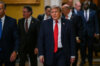
U.S. Secretary of State John Kerry meets with Israeli Prime Minister Benjamin Netanyahu in Jerusalem earlier this year. Photo: Israel GPO.
Israeli Prime Minister Benjamin Netanyahu on Wednesday told U.S. Secretary of State John Kerry, at a meeting in Rome, that Iran must end its nuclear enrichment and plutonium heavy water capabilities.
At the start of their meeting, Netanyahu said both countries agree that “Iran’s quest for nuclear weapons” is “the foremost security problem” they face.
“Preventing that is a goal I share with you and [U.S.] President [Barack] Obama, and you have said, I think wisely, that Iran must not have a nuclear weapons capability, which means that they shouldn’t have centrifuges or enrichment. They shouldn’t have a plutonium heavy water plant, which is used only for nuclear weapons. They should get rid of the advanced fissile material and they shouldn’t have underground nuclear facilities, underground for one reason – for military purposes,” he said.
Netanyahu also suggested that the Iranian problem should be addressed similarly to how the U.S. dealt with the recent Syrian chemical weapons crisis.
“I think no deal is better than a bad deal. I think a partial deal that leaves Iran with these capabilities is a bad deal,” Netanyahu said. “You wisely insisted there wouldn’t be a partial deal with Syria. You were right. If Assad had said, you know, ‘I am ready to dismantle 90%, 50% or 80% of my chemical weapons capability,’ you would have refused and correctly so, and I think in the case of Iran, it is essential that it be made to live up to Security Council resolutions that demand an end to enrichment and enrichment capability and an end to plutonium heavy water capability toward fissile material for nuclear weapons.”
Netanyahu stressed the need to hold Iran to its commitments to the international community.
He said he speaks with Secretary of State Kerry “more or less every other day” about Iran and negotiations with the Palestinian Authority.
“That peace is premised on mutual recognition, of two states for two peoples, of the Palestinian state for the Palestinian people mirrored by the Jewish state for the Jewish people. I think that’s fundamental for any peace, but equally it must be a peace that, as President Obama has said, a peace that Israel can defend by itself, for itself, against any conceivable threat. I think these are the two twin pillars for peace and I look forward to discussing how we can advance both goals in our discussions today and undoubtedly our discussions tomorrow as well,” he said.