






Jewish-Arab Coexistence Against the Odds
Error: Contact form not found.

 by Yoram Ettinger


The Jerusalem Nature Museum regularly hosts instruction sessions by IDF Emergency Population Instructors of the Jerusalem district. Pictured here is an IDF soldier instructing 5th grade students of the Arabic-Israeli school "Alachuwa." Photo: Wikimedia Commons.
The Israeli election shed some light on the increasingly local — rather than national or regional — priorities of the 1.7 million Israeli Arabs. It served to underscore the intensifying Israelization/localization of their self-determination; the widening cultural/ideological gap between Israeli Arabs and the Palestinians; the deep fragmentation within the Israeli Arab sector (despite the current merger between the individual Arab parties); their growing appreciation of Israel’s civil liberties and expanded trust in Israel’s political system; and the gap between the worldviews of a growing number of Israeli Arabs and most Arab Knesset members.
According to a Feb. 17 public opinion survey conducted by Tel Aviv University’s researcher Arik Rudnitzky, a project manager at the Konrad Adenauer Program for Jewish-Arab Cooperation, the most pressing issues for Israel’s Arabs are employment, education, health care, neighborhood crime and women’s rights (43 percent), ahead of enhancing the status of the Arab community in Israel (28.1 percent) and the Israel-Palestinian conflict and negotiations (19 percent).
Moreover, the survey concluded that 61.3 percent of Israel’s Arabs consider the Knesset an effective arena to address their concerns. Only 12.2 percent dismiss the Knesset as a platform for improving the status of Israeli Arabs.
Another Feb. 17 poll, conducted by Stat Net, indicated that 77 percent of Israeli Arabs prefer Israeli — over Palestinian — citizenship, and 64 percent are optimistic about Jewish-Arab relations. In an unprecedented fashion, 60 percent of Arab voters said they would like to see the Joint Arab List (the merged Arab parties, which went on to win 13 seats in the election) joining Israel’s coalition government. While 30 percent would join only a coalition government led by Labor (the Zionist Union), 28 percent would join a coalition headed by either Labor or Likud.
Contrary to most Arab Knesset members, 70 percent of Israeli Arabs care more about their socio-economic status than about solving the Israeli-Palestinian conflict. They are more concerned about the standard of living among Israeli Arabs in the city of Ramle than about the nationalistic aspirations of the Palestinian Authority in Ramallah. Similarly, the 2014 special election for the mayor of Nazareth featured a resounding victory (62 percent to 38 percent) for Ali Salam, who focused on civic challenges in Nazareth, over Ramiz Jaraisy, who highlighted his identification with the Palestinian Authority in Ramallah.
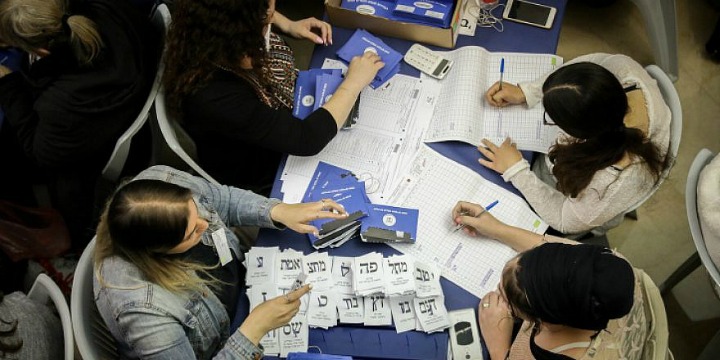
According to Rudnitzky, the dramatic increase in voter turnout among Arab voters from 56.5 percent in 2013, 53.4 percent in 2009 and 56.3 percent in 2006 to about 64 percent in 2015 reflects the widening interaction and integration between Israel’s Jews and Arabs, and growing Arab confidence in the Israeli political system. This is in contrast to the lowest ever Arab turnout, just 18 percent, in the 2001 election. Current political Arab involvement aims at peacefully coexisting with, rather than confronting, the Jewish majority. In 2015, most Israeli Arabs strive for political and civic national self-determination and improvement of their civic status within the boundaries of the Jewish state. A growing majority of Arab voters appreciate Israel’s democracy, especially when observing the flaming Arab tsunami on Arab streets throughout the Middle East, devoid of civil liberties, replete with violent intolerance towards minorities and each other.
Will the current trend of Israelization and co-existence withstand the tectonic pressures on the Israeli Arab street, fueled by the savage, intra-Muslim rampage from the Persian Gulf through northeast Africa (Islamists vs. secularists; for vs. against equality for women; local vs. national preoccupation; integrationists vs. separatists; civil liberties vs. Shariah, etc.)?
Against the backdrop of 1,400 years of no intra-Muslim peaceful coexistence, and in view of the endemic civic restlessness between majorities and minorities in most Western democracies, one should not underestimate the evolving political, cultural, economic Jewish-Arab coexistence in the Jewish state, one of the world’s leading democracies, which faces constant lethal dangers: daily terrorism and war launched by the brethren of its Arab minority.
This article was originally published by Israel Hayom.