




American Jews Are in ‘Galut’ – Exile
Error: Contact form not found.

 by Isi Leibler

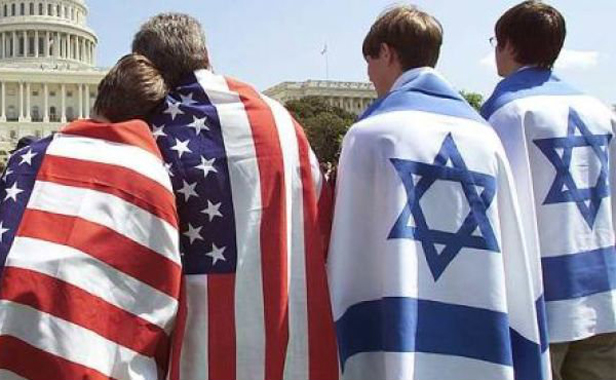
American Jewish leaders in the U.S. cannot shake off their “Galut” mentality. Photo: Isi Leibler.
The exceptional response to my column “American Jewish leaders fail to respond to Obama’s threats,” combined with further developments on the American scene, have brought me to the sad conclusion that when the chips are down and when faced with adversity, American Jewish leaders in the greatest democracy in the world cannot shake off their “Galut” (exile) mentality.
The multitude of communications I received from Jews at the grass-roots level is evidence of the fact that committed Jews are confused, distressed and angered at the failure of their leaders to respond to the outrageous statements expressed by U.S. President Barack Obama within the framework of his charm offensive.
That in no way detracts from the counterproductive boorish behavior of the Jews attending the Jerusalem Post conference in New York who jeered U.S. Treasury Secretary Jacob Lew.
The failure of the Jewish leadership to cautiously condemn the flow of distorted and biased anti-Israeli statements by the president was heightened last week with the interviews and articles relating to former Israeli Ambassador Michael Oren’s forthcoming book Ally: My Journey Across the American Israeli Divide. They provide a chilling insight into the bullying and aggressive role Obama adopted against Israel and his championing of the Palestinian cause. Even the most hardened Obama supporters who retain any pro-Israel sentiments will be stunned to read of his calculated abandonment of the Jewish state on the political level “which would have put him at odds with any Israeli leader.”
Oren wrote that from his first inauguration, “Obama put daylight between Israel and America,” publicly disagreeing with and condemning the Jewish state. Oren added that “by endorsing the Palestinian position on the 1967 lines, the White House overnight altered more than 40 years of American policy.” Repeatedly, the administration accused Israel of lack of progress on the peace process “while making no substantive demands of the Palestinians.”
Oren, certainly not a political right-winger, even makes analogies (especially in relation to the Iranian nuclear threat) between American Jewish leaders today and their counterparts in 1944, headed by Rabbi Stephen Wise. He states: “Remember that American Jewry once had a chance to save 6 million Jews. And there are 6 million today [in Israel]. So think very hard and understand that this is about our survival as a people. It’s about our children and grandchildren.”
Jewish leaders defend their position by arguing that silent diplomacy is more effective than pouring oil on the fire by publicly condemning the president. They also claim that the policy of bipartisanship will backfire if they criticize Obama. They conveniently ignore that if such a policy becomes an end goal in itself, the Jewish community, in order not to ruffle feathers, will become politically impotent and will simply cease to speak out on central issues.
All this challenges the continuous refrain we have heard from American Jewish leaders that Jewish life in the United States, in contrast to other Jewish communities, is not “Galut” but a genuine Diaspora. It is true that America is unique in its favorable attitude toward Jews and Israel. Indeed even a J Street poll indicated that Netanyahu’s standing among Jews was higher than that of Obama.
Yet despite protestations to the contrary, American Jewish leaders are far more sensitive to rocking the boat than other minorities or mainstream Americans who have absolutely no hesitation in publicly castigating their president when they disagree with his policies.
On the other hand, committed American Jews at the grass-roots are passionate and willing to speak out and condemn politicians, including their president, and are becoming increasingly vocal in their demands for community leaders to speak up. However, the situation is further fragmented by the increasing number who define themselves as secular or intermarried Jews but have no commitment to Judaism or to Israel, most of whom have abandoned any semblance of Jewish identity and became absorbed into the American melting pot.
We witnessed two major examples highlighting this over the past week. In a speech to the Orthodox Union, New York Senator Charles Schumer – who represents a strong Jewish constituency and continuously describes himself as the “shomer of Israel” [guardian of Israel] – gave notice that he intended backing Obama in his policy of abandoning the military option against Iran. What was remarkable was that despite referring to the failure of the American Jewish community during the Hitler era, which “ignored the [Nazi] threat or pushed it aside,” he stated that “some things should be said in the mishpoche [family]. … I have to do what’s right for the United States first of all, and Eretz Yisrael second.” In his charm offensive, Obama subtly adopted a similar approach.
It is quite extraordinary for a Jewish senator from New York to publicly revive the issue of Israel versus U.S. firsters and dual loyalties, which in the past was mainly employed by people hostile to Israel and antisemites. That his address was applauded by an Orthodox Jewish audience is also astonishing.
But the most shocking remarks about U.S.-Israel relations were made by longtime leader of the Anti-Defamation League, Abraham Foxman, in one of his last hurrahs at a forum on Israel’s future at the 92nd Street Y in New York. I must confess that I rubbed my eyes in disbelief as Foxman unleashed one of the most irresponsible outbursts against Israel, effectively blaming it for the deterioration in relations with the U.S. Employing primitive demagogy, he accused Israel of being blind to the world. He also blamed the Jewish state for failing to produce a peace plan and treating American Jews and the United States with contempt. He said that Israel displays no sensitivity in its dealings with the U.S., taking the support for granted, and that its support base is disintegrating because it’s not doing anything on the peace front.
Foxman was occasionally an outspoken critic of Obama in the past but his latest shameful remarks – when he called on Netanyahu to create a “peace plan” and be more attuned to the Obama administration’s demands – are inexplicable. The question is whether his successor, a former aide to Obama purportedly without a strong relationship with Israel, will be any better.
The American Israel Public Affairs Committee (AIPAC) has been a great success story and has had a remarkably positive impact in promoting the case for Israel to Congress and the American people. As a rule, it avoids publicly adopting controversial or divisive positions. But these are unprecedented times and AIPAC should speak up with dignity and restraint, knowing that even if it antagonizes some of the more left-wing Democrats in Congress, the majority will respect the fact that it is taking up issues of vital Jewish concern that transcend politics in the mainstream committed Jewish community.
The executive vice president of the Conference of Presidents of Major American Jewish Organizations, Malcolm Hoenlein, has throughout his entire public career remained totally committed and devoted to serving the cause of Israel and the Jewish people. Regrettably, he has currently been constrained from making official public statements on behalf of the Presidents Conference because the organization only operates on the basis of consensus. In the light of recent events, however, it may well be time to review the entire structure of the organization. When total consensus cannot be achieved, at least enable it to speak out on behalf of the vast majority of committed Jews.
David Harris of the American Jewish Committee is also genuinely committed to Israel and has written some outstanding pieces presenting the case for Israel but regrettably he, too, is reluctant or constrained from publicly criticizing Obama.
All of this suggests that if, in the current environment, the various Jewish organizational bodies continue maintaining their policy of “shtadlanut” – silent court-Jew diplomacy – it is time for American Jews at the grass-roots level to become more assertive and make their presence felt.
Isi Leibler may be contacted at ileibler@leibler.com. This column was originally published in the The Jerusalem Post and Israel Hayom.