






Report: Russia Giving Advanced Weapons to Hezbollah, ‘No Strings Attached’
Error: Contact form not found.

 by Algemeiner Staff

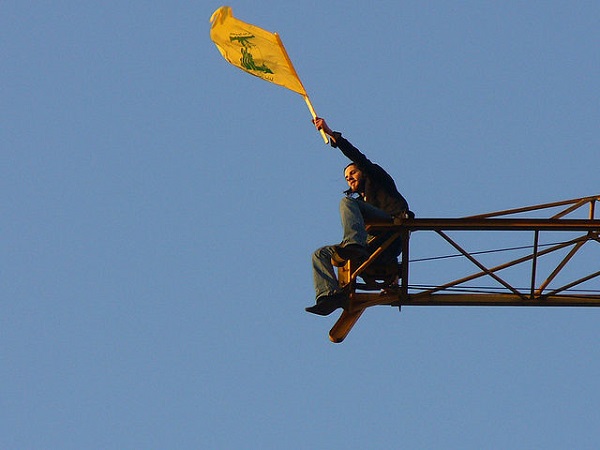
A Hezbollah operative. Photo: Wikimedia Commons.
Russia has been arming Lebanese terror group Hezbollah with heavy munitions as fighting in southern Syria intensifies, the Daily Beast reported on Monday.
The weapons come with no strings attached, a Hezbollah recruiter in Lebanon told the publication, even against Israel.
“When it comes to Israel, Hezbollah doesn’t take directions from anyone,” said Assir, the recruiter, although the report acknowledged that he may not have been senior enough to know full details about the weapons arrangement.
Among the weapons directly received by Hezbollah from Russia, according to the report, which also quoted another Hezbollah commander named Bakr who apparently commands some 200 troops, were “long-range tactical missiles, laser guided rockets, and anti-tank weapons.” Bakr also described being personally involved in training missions for Hezbollah in Iraq and Yemen.
Israeli Prime Minister Benjamin Netanyahu had previously said he informed Russian President Vladimir Putin that weapons transfers to Hezbollah through Syria was a red line for Israel, and the IDF would enforce it. Israeli airstrikes have occasionally targeted weapons convoys in Syria destined for Hezbollah since the group began fighting on the side of beleaguered Syrian President Bashar Assad.
Meanwhile, Russia has reportedly been bombing rebel targets in southern Syria near the Israeli and Jordanian borders to help the Assad regime launch its first offensive there in two years, according to the Australian. A Western official speaking to the Australian said the Russian bombardment was “followed by a ground assault led by Hezbollah and the militias.”
At the same time, an Israel-based analyst said Russia had “a lot at stake in keeping Lebanon calm and Hezbollah focused on Syria.”
“If a war were to occur between Hezbollah and Israel, the former would be forced to withdraw most of its forces from Syria to battle Israeli troops in southern Lebanon,” Daniel Nisman, chief-executive officer of security firm the Levantine Group, told The Algemeiner.
“Furthermore, a war between Hezbollah and Israel would destabilize Lebanon, as it would likely cause the collapse of the Lebanese military and government, of which Hezbollah is a major component. This would only spread instability from Syria to Lebanon. Lastly, if the Israeli air force were to operate over Lebanon and parts of Syria, it could cause a serious headache for Russian fighters which operate often times in that same area,” he said.
Last month, Israel reportedly assassinated Hezbollah operative Samir Kuntar, who was apparently helping the group organize and set up infrastructure in the Syrian Golan Heights. Hezbollah retaliated for Kuntar’s death by attacking an IDF convoy, although the bombing caused no casualties.