Sen. Joseph Lieberman: US Government’s Weak Behavior Enhances Iran’s Nefarious Activities (INTERVIEW)
Error: Contact form not found.

 by Lea Speyer

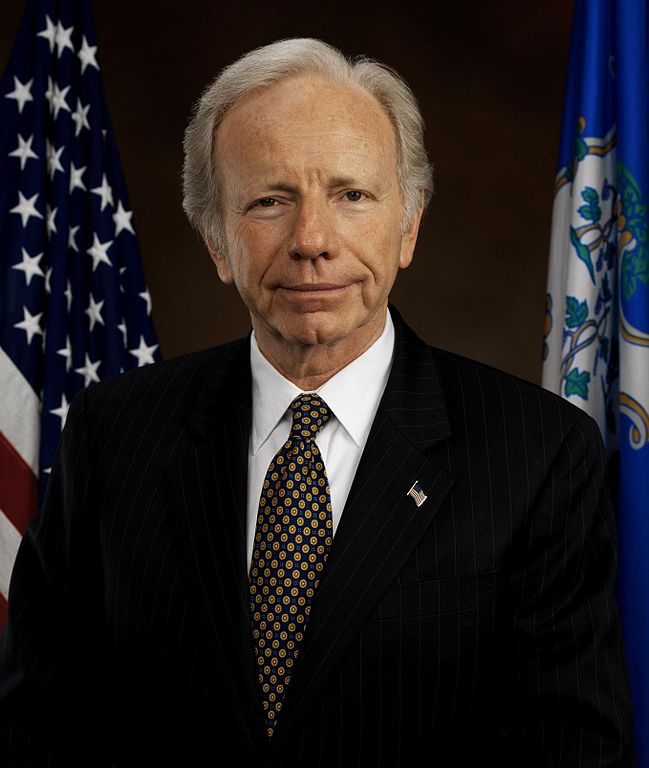
Former US Senator Joseph Lieberman said the weakness of the American government enhances Iran’s nefarious behavior. Photo: US Congress.
The American government’s behavior has enhanced Iran’s inflammatory rhetoric and nefarious activity, former US senator Joseph Lieberman told The Algemeiner on Wednesday.
“If we are weak, Iran will take advantage of our weakness,” said Lieberman, chairman of advocacy group United Against a Nuclear Iran (UANI). “If we are strong, they will adjust their behavior as much as they feel they have to.”
His comments coincide with the one-year anniversary of the July 14, 2015 signing of the Joint Comprehensive Plan of Action (JCPOA) between Iran and world powers.
However, said Lieberman, a vocal critic of the JCPOA, “The single greatest failure of the nuclear agreement is that, rather than blocking Iran’s path to building nuclear weapons, it opens an internationally approved way for Iran to build nuclear weapons in no more than 15 years.”
In addition, as The Algemeiner reported, Iran’s Atomic Energy Organization (IAEO) announced Wednesday that the country’s experts are testing a new generation of centrifuges 15 times more powerful than the ones already in its possession. These centrifuges could be used to carry out large-scale enrichment of uranium.
In a threat aimed at the P5+1 powers — China, France, Russia, the United Kingdom, the United States and Germany — an IAEO spokesman emphasized Iran’s capability to resume nuclear activities currently frozen by the JCPOA, should the West not concede to Iran’s interpretation of conditions under the JCPOA.
Iran’s nuclear activities have also taken on a more secretive nature since the signing of the JCPOA. As reported by The Algemeiner, a bombshell German intelligence report released last week confirmed that Iran has been engaging in “clandestine methods” to obtain illicit materials in Germany, “especially goods that can be used in the field of nuclear technology” and that can “potentially serve to deliver nuclear weapons.”
While Tehran overtly and covertly disregards the JCPOA, according to Lieberman, the nuclear agreement has another prominent weakness when it comes to keeping Iran’s behavior in check — namely its failure to address Tehran’s sponsorship of global terrorism.
“The JCPOA only dealt with Iran’s nuclear program, not its extremist ideology, support of terrorism, suppression of its people’s human rights or regional aggression,” the former senator told The Algemeiner. “With the JCPOA, this anti-American, anti-Israel regime has billions more dollars to pursue all their nefarious goals.”
Since last year, Iran has increased its inflammatory rhetoric against the West and Israel. As reported by The Algemeiner, earlier in July, a senior Iranian military commander warned that tens of thousands of missiles located across the Middle East — 100,000 in Lebanon alone — are ready to strike the Jewish state at a moment’s notice.
According to Lieberman, Iran’s sponsorship of terrorism has been greatly enhanced through the JCPOA, thereby strengthening the abilities of its terror proxies — namely Hezbollah, Hamas and Iranian-backed militias — to carry out its threats.
“Those threats have all been made worse by the nuclear agreement, because it legitimizes Iran’s nuclear program, and funds both the radical regime in Tehran and its terrorist proxies in the region and throughout the world,” he told The Algemeiner.