





The Iran Deal, One Year Later
Error: Contact form not found.

 by Jonathan Fenton-Harvey


Iran’s Arak heavy water reactor. Photo: Wikipedia.
The Iran nuclear deal was struck one year ago. Many lauded the agreement, claiming it would lead to peace, while others cited the economic benefits that the increase of Iranian oil and gas would bring.
Yet some did not share this enthusiasm. We were able to see through it, and envisioned the imminent dangers that would result from the deal. And in the year since the agreement, we have been proven correct.
The Iranian regime has held expansionist goals since it came to power in 1979; it has always wanted to export its ideology and terrorism to neighboring regions. Sanctions made this dream more difficult, but the lifting of them, and the money subsequently flooding into Iran’s hands, has brought Iran closer to its hellish vision.
Advocates of the deal have professed that it will limit Iran’s ability to acquire a deadly nuclear weapon — and yes, this is true in the short them. In the long term, however, that’s not the case, because the deal’s restrictions aren’t permanent. For instance, restrictions on Iran’s uranium enrichment, uranium stockpiles and heavy water expire after 15 years. After 20 years, containment and surveillance on centrifuge rotor tubes and bellows will be removed. And worst of all, ballistic-missile restrictions will be removed after eight years, and the UN arms embargo will be lifted in five.
Iran has also never renounced its calls of “death to Israel” or “death to America.” In fact, Supreme Leader Ayatollah Khameinei delivered a worrying speech last September, after the deal was struck, claiming that Israel will “likely not exist in 25 years’ time.” Coincidentally, this is when the nuclear deal’s remaining sanctions will be lifted. It’s not hard to detect the ayatollah’s intentions.
Even putting nuclear weapons aside, Iran will use much of the $100 billion it received from sanctions relief to sponsor terrorism across the Middle East. This has also led to a conflagration of the Sunni-Shia conflict. Iran and Saudi Arabia are now locking horns in a bid to gain regional superiority and hegemony in the area.
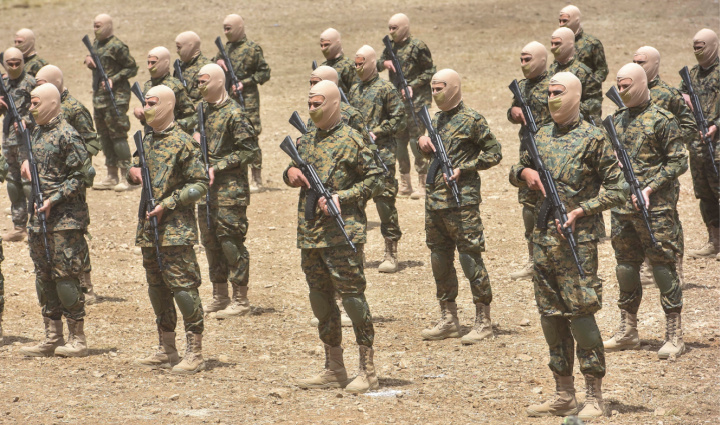
Not only that, Iran has followed up on its threats of targeting Israel. Hezbollah, which receives most of its backing from Iran, has reportedly stockpiled around 120,000 missiles (which is more than European NATO has). Despite Hezbollah’s efforts in Syria, many of these rockets are aimed at Israel. Furthermore, terrorist groups committed to Israel’s destruction — such as Hamas and Islamic Jihad — receive support from Iran, and will continue to do so while the current regime in Tehran is empowered.
A can of worms has been opened in the region, and any Israeli or Sunni leader has good reason to be concerned. The US, Russia and other entities involved in striking the deal with Iran must realize that to bring about peace in the Middle East, the power of a regime that continues to stoke conflict in the region must be restricted, before it is too late.