






Artists Boycotting Other Artists Will Not Lead to Peace
Error: Contact form not found.

 by Lana Melman

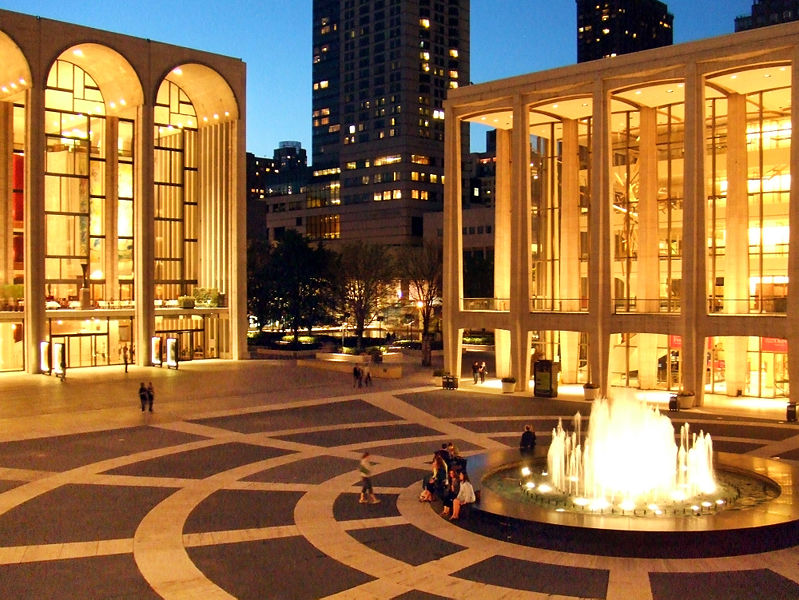
Lincoln Center. Photo: Nils Olander via Wikimedia Commons.
An open letter published by the anti-Israel group Adalah-NY and signed by more than 60 artists recently asked the Lincoln Center theater to cancel scheduled performances of David Grossman’s play, To the End of the Land.
The signatories included, among others, the Pulitzer Prize-winning playwrights Tracy Letts, Lynn Nottage and Annie Baker; the acclaimed director Sam Gold; actress Greta Gerwig; musician Roger Waters; and the playwright-actor Wallace Shawn and his My Dinner with Andre co-star Andre Gregory.
Their call for a boycott was not based on the content of the play — which, in fact, has an anti-war message. Instead, they called for cancelling the show because they do not agree with the policies of the Israeli government.
Lincoln Center has wisely, and firmly, denied their request.
This growing support among artists for a cultural boycott of Israel creates a clear and present danger not just to Israel, but to the creative community itself.
Why? Because cultural boycotts beget cultural boycotts, and artists who support cultural boycotts may soon be targeted themselves.
For example, there is now a petition to boycott Roger Waters because of his anti-Israel activities; at the time of this writing, the petition has more than 5,500 signatures. In addition, the Israel Group has initiated a campaign to boycott the signatories to the Lincoln Center letter, as well as other BDS supporters such as Emma Thompson and Stephen Hawking.
The artist community has also long-recognized the importance of the government-funded National Endowment of the Arts (NEA). Just a few months ago, when there was concern that funding for the NEA might be eliminated in the new federal budget, members of the community voiced their opposition in national publications across the country. They championed fiscal support for the arts as essential to cultural exchange, and said that it was a linchpin of democracy. They also linked government funding to the future of the freedom of artistic expression.
At no time did anyone in the artistic community lobby for defunding the program because they disagreed with the policies of the current US administration. If lack of government funding for the arts erodes freedom of artistic expression and cultural exchange, surely cultural boycotts do even worse.
The thing that is most treasured by the artistic community — freedom of expression and cultural exchange — is being undermined by the community itself through its actions. Boycotting artists from one country because the rest of the world doesn’t like the policies of its leadership sets a precedent that can easily be applied to others.
To the signatories of the Lincoln Center letter, I say: be careful what you wish for.