






Kicked Out of Film Festival Over Israel Links, Top French-Arab Movie Producer Denounces Arab World’s ‘Antisemitic Majority’
Error: Contact form not found.

 by Ben Cohen



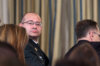
French-Tunisian movie producer Said Ben Said. Photo: SBS Productions.
A prominent Tunisian-born French movie producer has issued a frank denunciation of antisemitism in the Arab world after being compelled to pull out of North Africa’s most prestigious film festival because of his work with Israelis.
Said Ben Said revealed in an op-ed for the French daily Le Monde on Tuesday that an invitation to preside over the jury of the 28th Carthage Film Festival in Tunisia had been rescinded because of his work with Israeli film director Nadav Lapid and his participation on the judges panel at the Jerusalem Film Festival earlier this year. The 51-year-old Ben Said is seen as one of the brightest talents in international cinema, having produced movies by such directors as David Cronenburg, Roman Polanski, Brian De Palma and Thierry Klifa.
Ben Said said he bore Carthage’s organizers no ill-will, writing that “the festival was probably right to spare both themselves and me a media lynching.” The real culprit, the producer argued, was the prevalence of antisemitism fueled by Islamist extremists across the Middle East.
“No one can deny the misery of the Palestinian people, but it must be admitted that the Arab world is, in its majority, antisemitic,” Ben Said wrote. “This hatred of Jews has redoubled in intensity and depth not because of the Arab-Israeli conflict, but with the rise of a certain vision of Islam.”
Successive opinion polls in the Arab world over the last decade tend to confirm Ben Said’s assertion. A Pew Research poll in 2011 found that between 96 and 98 percent of respondents in Egypt, Lebanon, Jordan and the Palestinian territories held hostile views toward Jews, while a global Anti-Defamation League poll in 2015 recorded similar levels of antipathy. Even in Tunisia, a relatively liberal nation with a small Jewish population, the ADL found that 86 percent of respondents were antisemitic.
One part of the challenge, Ben Said argued, was the denial among Arabs that a problem existed in the first place. He took issue with the common argument in the Arab world that because Arabs were so-called “Semites,” they could not be “antisemitic.”
“Nothing could be more wrong,” he wrote. “The term ‘antisemitic,’ invented in Europe in the nineteenth century, never concerned the Arabs. It designated Jews exclusively.”
Ben Said recalled that as a schoolboy in Tunisia, he had been taught through Quranic verses that “the Jews were…treacherous, falsifiers, immoral, evil, etc., and, most importantly, these verses were the words of God.”
“Every Arab child grows up with these images,” he observed. “In an Arab Gulf monarchy, for example, today’s textbooks state that Jews are descended from monkeys because a verse from the Quran (II-65) threatens that Sabbath transgressors will be turned into monkeys.”
Too many Muslims were unaware that “the Jews of the Quran were, in reality, the Jews of Medina, who had first been perceived by Muhammad as potential allies before becoming his mortal enemies, since they did not recognize him as a prophet,” Ben Said continued, before accusing Muslim clerics of turning criticism of Jews within a specific context into general anti-Judaism and outright antisemitism.
As a result, antisemitic myths were now entrenched in the Arab world, Ben Said noted. “How many times have I heard people say in Tunisia that harvests are bad because the Mossad poisons the soil, or that the Mossad staged the 9/11 attack to help Americans get their hands on Iraqi oil?” he asked.
Emphasizing his pride in being Tunisian, Muslim and French, Ben Said concluded by saying, “[T]he evil is there, lurking deep inside us.”
“Its roots are deep,” he wrote. “Hundreds of thousands of Arabs are murdered by other Arabs in Syria, Iraq, Libya, Sudan, but that is less important to us than crimes committed by the Israeli army.”
The Carthage Film Festival is no stranger to controversy around Jews and Israel. In 2014, protesters met the French-Jewish philosopher Bernard-Henri Lévy with signs denouncing “Zionist power” in Tunisia. And in July of this year, Michel Boujenah, a French-Jewish comedian, was the target of Tunisian BDS activists over his performance at another cultural festival in Carthage.