






Blowing the Shofar for Mental Health in 5786
Error: Contact form not found.
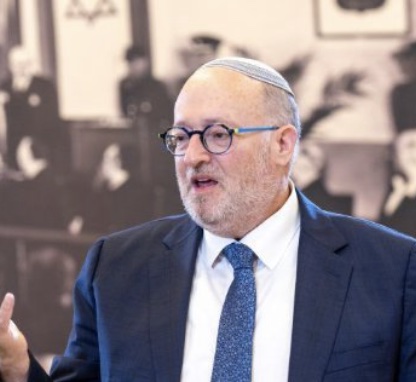
 by Kenneth Brander


The blowing of the shofar, traditionally done on Rosh Hashanah. Photo: Wikimedia Commons.
After nearly two years of a multi-front war in Israel, the toll on Israel’s mental health is staggering. Surveys and data show steep and widespread increases in PTSD, anxiety, depression, sleep disruptions, and addiction. Although the government has increased services, it is clear that not nearly enough is being done, with severe shortages of professionals and funding resulting in months-long waits for appointments for mental health care, even when it’s a matter of life and death. The heartbreaking rise in suicides among IDF soldiers, reservists, and first aid providers at Oct 7 attack sites underscores the unprecedented level of crisis.
Yet the sheer size of the challenge has, like never before, acted as a catalyst to force the topic of mental health out into the open. While there is so much darkness around us, this development — the willingness of the public, policymakers, educators, community leaders and military officials, to talk about issues that have for too long remained taboo — gives us a glimmer of light and hope. We must seize this moment and encourage the conversations to continue. We need to wake up to the needs around us.
Let’s make the coming new Jewish year, 5786 the year of mental health, in Israel and across the Jewish world.
Each year the sounds of the shofar on Rosh Hashanah call us to awaken to both personal and community needs. Our sages teach us that the set of shofar blasts during (or in some congregations, before) the silent Amida prayer hearken us to wake up on a personal level; while the later set of shofar blasts, during the chazan’s repetition of the Amida, call to us to wake up as a community.
This year, both sets of blasts should stir us to confront the crisis of mental health, for ourselves and for our people. The need has always been there, but it has increased due to the current difficult times for the Jewish people.
Judaism obligates us to take care of ourselves, including our health. We are permitted to violate Shabbat to help someone with mental health or illness (Shemirat Shabbat Kehilchata 32:26). Our daily prayers for the sick ask for a healing of the “nefesh and guf” — the soul and the body, with the reference to the soul coming first. Our tradition also commands us to care for the others in our midst; “Kol Yisrael arevim ze bah ze,” all of Israel is responsible for each other. This means that all of us, especially community leaders, including educators, rabbis, and Israeli government officials, must take responsibility and ensure mental health is being addressed directly and to a sufficient level.
While there is ample and serious research over the years linking religious practice, spirituality, and community to improved well-being — and Israeli data has also found that Orthodox communities and ultra-Orthodox are experiencing lower levels of stress than secular and traditional people — relying solely on these assumptions is insufficient and potentially dangerous. No one and no community is immune. Jewish leaders’ role now is to help start more conversations about mental health, normalizing the topic, as well as to encourage and help people to access professional help.
Mental health is not just an Israeli issue. Increased antisemitism and division over how Israel is handling the war are causing more stress, anxiety and fear in the Diaspora as well. Places with large and strong Jewish communities that have long felt shielded from antisemitism — places like my previous residence Teaneck, New Jersey — are now facing anti-Israel rallies and open hostility. For those who came of age at a time when outright antisemitism was waning in the United States, this marks their first encounter with overt hatred and violence. Clearly under such circumstances, leaders of synagogues, schools and community organizations must treat mental health with the same importance as security.
In both Israel and the Diaspora, we must expand our view of mental health beyond war-related trauma. It is also time to address depression, anxiety and other conditions in general, which have been very real issues but often not given adequate attention. In fact, even before the mental health situation worsened post-Oct. 7, studies showed that American Jews are at higher risk for mental health and trauma than the general population, a phenomenon that the American Psychiatric Association says is partly related to intergenerational trauma, including second and third generation children of Holocaust survivors. The emerging public conversation around mental health makes confronting these longstanding needs more feasible now.
For example, over the last two academic years, Ohr Torah Stone, the network of 32 educational institutions I oversee in Israel, has made counseling available to all students and staff. This initiative began in reaction to Oct. 7 and the war, which has taken the lives of 62 alumni and first degree relatives of our students and staff, pulled hundreds of our students, teachers and their families into ongoing reserve military duty, and disrupted the sense of safety for many, with regular air-raid sirens and losses in their communities. While many utilized these services to discuss those challenges, many others have sought counseling for unrelated issues, finally feeling safe enough to seek help. (These services remain free of charge, thanks to generous donors).
Dedicating 5786 to mental health will no doubt be uncomfortable and challenging, but it will also be transformative. Real change is what Rosh Hashanah and Yom Kippur are all about; like true repentance, it requires us not just to pay lip service, but to actually behave differently.
The shofar is a stark reminder of this; it is a prayer unshackled by words, composed solely of raw sounds that penetrate our entire essence and being, commanding and inspiring us to change.
This year, let’s answer the shofar’s call by normalizing conversation about mental health in our families, schools, pulpits, and community programs. Let us implement programs to train educators and rabbis in basic mental health awareness, remove the stigma still surrounding these illnesses, and treat mental health with the same urgency as physical illness. In doing so, we have the ability to save lives and strengthen our people.
Rabbi Kenneth Brander is the president of Ohr Torah Stone, an international network of 32 religious educational institutions. He previously served as a vice president at Yeshiva University in New York, and is the rabbi emeritus of the Boca Raton Synagogue in Florida.