


Iran Claims Major U.S. Concession Over Centrifuges in Nuclear Talks
Error: Contact form not found.

 by Ben Cohen


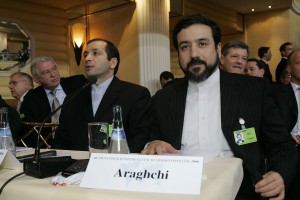
Seyed Abbas Araghchi, Iran's Deputy Foreign Minister, is cliaming that the US has agreed to Iran maintaining 4,000 centrifuges. Photo: Wikicommons.
A senior member of the Iranian parliament’s National Security and Foreign Policy Commission has told one of the Islamic Republic’s official news agencies that the United States has agreed that Iran can keep 4,000 active centrifuges as part of a final nuclear deal.
Javad Karimi Qoddousi informed the Mehr news agency that he had been told directly by Seyed Abbas Araghchi, Iran’s Deputy Foreign Minister and a senior nuclear negotiator, that the Americans were “now coming to terms ” with “4,000 active centrifuges,” despite the fact that in the “New York and Vienna talks, US would not accept 1,300 centrifuges.”
Aragchi is known to have impressed American negotiators in their interactions with him since the signing of the Geneva Accord on Iran’s nuclear program in November 2013. In April this year, the lead US negotiator, Undersecretary of State Wendy Sherman, told Al Monitor: “Mr. Araghchi is a very professional negotiator and also a tough negotiator.”
The same report noted, however, that the Americans did not have particularly high hopes for Araghchi when they negotiated with him in Baghdad in 2007, over the issue of Iranian support for Shi’a extremists in Iraq:
“We came to the conclusion that the discussions had not produced any progress at all,” the observer at the 2007 Baghdad meeting told Al-Monitor. “And it was used by Iran against us. Iran would tell other international partners, including the Europeans, ‘Don’t talk to us about the nuclear program or terror or human rights. We are conducting a private dialogue with the Americans. You don’t know what’s going on.'”
“We faced the classic negotiators’ dilemma … no progress, no substantive benchmark to judge if the talks were succeeding,” the source said. “And so like every preceding [US] administration that attempted such talks [with the Iranians], we came to the substantive, not political judgment, that not only were the talks not productive, but they were counterproductive.”