






Think Tank: As Oil Prices Drop, Sanctions Relief Not Likely to Improve Iranian Economy
Error: Contact form not found.

 by Algemeiner Staff

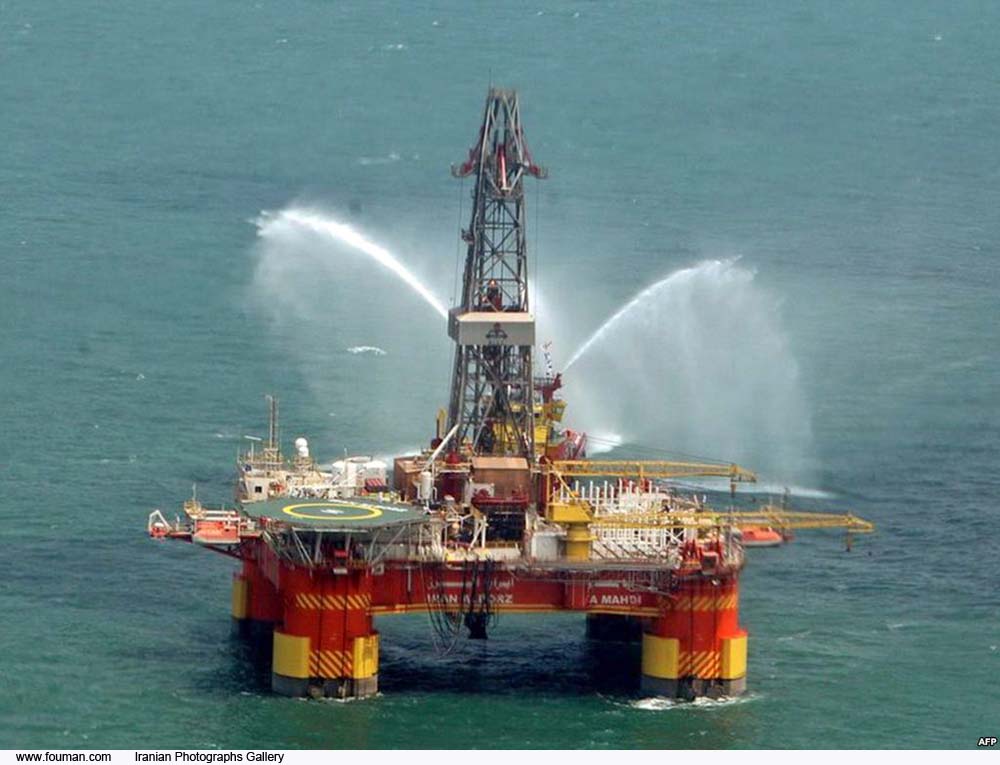
An Iranian oil platform in the Caspian Sea. Due to dropping oil prices, sanctions relief may have little effect on the Iranian economy. Photo: Wikipedia.
Sanctions relief will only provide Iran with a “moderate positive impact on the economy,” unless wide fiscal and monetary reforms are implemented in the country, the International Monetary Fund wrote this week, according to a Washington, DC think tank.
According to a report released on Wednesday by The Washington Institute for Near East Policy, this puts pressure on Iranian President Hassan Rouhani, a putative moderate whose 2013 election campaign relied heavily on the promise of pulling Iran out of a deep recession, in large part through the lifting of crippling international sanctions that have remained in place for years over the country’s controversial nuclear program.
Because relief from lifted sanctions will accrue slowly — especially as global oil prices continue to tumble, hurting some of the world’s largest oil exporters — the economic benefits to the Iranian population may be slow in coming, the think tank said.
Western policy-makers involved in sealing the nuclear deal with Iran believed that lifting sanctions could empower Iranian moderates. But if sanctions relief fails to provide much in the way of economic benefit for regular Iranians, and the moderate government fails to follow through with reforms to stimulate the economy, then this policy could ultimately fail, and the Iranian government could swing back to the conservatives.
According to the IMF report, Iran’s 2015-2016 economic forecast is hardly promising: GDP will end up shrinking or growing by 0.5%, even as consumer prices continue to rise. The IMF also noted that Iran under Rouhani has practiced a “fiscal policy [that] has been procyclical, which usually leads to lower growth.”
Additionally, the think tank said, the IMF predicted that “unemployment is expected to rise from 10.4% in 2013/14 to 11.9% this year. The Tehran Stock Exchange index is 30% below the January 2014 peak, and imports are forecast to fall 10% this year.”
“These unemployment figures are artificially depressed by the poor prospects for Iran’s increasingly educated young women, many of whom never enter the labor force. According to the World Bank, women’s labor force participation in the Islamic Republic is 18% — lower than Turkey (32%), Egypt (26%), and even Saudi Arabia (22%). If Iranian women participated in the labor force at the same rate seen in Turkey, unemployment would currently be 18%,” said the report.