









IDF Unmasks Veteran Terrorist Mounir Shaito as Commander of Hezbollah Operations in Golan Heights
Error: Contact form not found.

 by Ben Cohen


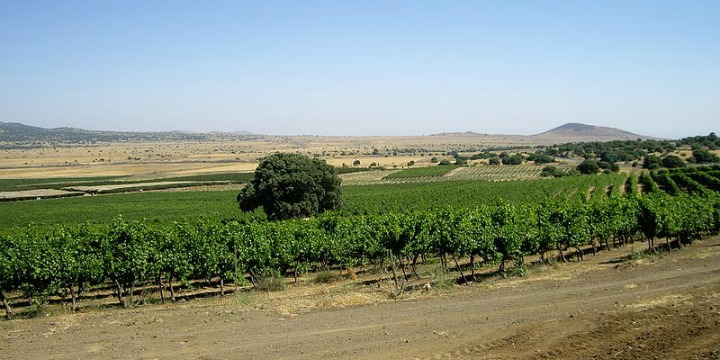
The Israel-Syria border area in the Golan Heights. Photo: DYKT Mohigan via Wikimedia Commons.
The IDF has revealed what it says is the identity of the Hezbollah commander in charge of the terrorist organization’s operations on the Israel-Syria border in the Golan Heights.
IDF Arabic spokesman Avichay Adraee posted a photo of Mounir Ali Shaito — also known as Haj Hesham — on his official Twitter account on Wednesday. Shaito, who has served as a Hezbollah field commander in both Lebanon and Syria, is said by the IDF to be carrying out “Iran’s mission” in the Golan.
https://twitter.com/AvichayAdraee/status/923063058104307713
Married with four children who live in Lebanon, Shaito is believed to spend most of his time in Syria. Deeply involved with terrorist operations for at least 20 years, Shaito is reported to have been the deputy commander of a 2002 terrorist attack on Kibbutz Matzuva in northern Israel in which six Israelis were were murdered by two gunmen, who were subsequently shot dead by security forces. While Islamic Jihad later claimed responsibility, Israeli intelligence at the time determined that the attack bore the hallmarks of a Hezbollah operation.
Shaito has been among Hezbollah’s top commanders over the last decade, coordinating its operations during the war with Israel in 2006, and more recently in Syria, where it has played a key role alongside Iran and Russia in stabilizing the regime of President Bashar al-Assad and consolidating Iran’s hold on a so-called “Shia corridor” stretching from Iran to the Golan Heights, cutting through Iraq and Syria along the way.
On Wednesday, news site Lebanon 24 reported that Hezbollah would be withdrawing 60 percent of its fighting units from Syria in the coming days, with a full exit by 2018. The site listed a number of reasons for Hezbollah’s decision, foremost among them the need to relocate forces along border areas of Lebanon and Syria overlooking Israel. Israeli security officials believe estimate that Hezbollah currently possesses around 150,000 missiles aimed at Israel — ten times more than in 2006, when the terrorist group last unleashed its firepower on Israel’s northern population centers.
Other reasons behind the planned withdrawal, according to Lebanon 24, include Hezbollah’s conclusion that the Assad dictatorship has definitively survived the Syrian war, and that the regime’s supply lines — running the Shia corridor from Iran in the east and Lebanon in the south and west — have been secured.
Lebanon 24 also noted that Hezbollah expects the IDF to launch a heavy ground offensive inside Lebanon in the event of a new conflict, and therefore wants to “double” the number of field commanders on its fronts with Israel.


