









Israel’s Favorable Public Image in Greece Boosted by Partnership With Left-Wing Government
Error: Contact form not found.

 by Ben Cohen



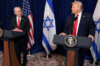
Greek PM Alexis Tsipras (left) meets with Israeli PM Benjamin Netanyahu in January 2016. Photo: Israel MFA.
One of the most intriguing anomalies in European politics — a government of the far-left in Greece that pursues an openly pro-Israel foreign policy — came under the spotlight in a new paper published this week by a leading Israeli strategic research institute.
Addressing the subject of Israel’s improving image in Greece in a briefing for the Begin-Sadat Center for Security Studies (BESA), academic George Tzogopoulos noted that “an additional barrier tarnishing Israel’s image in Greece was removed” when the left-wing Syriza Party of Prime Minister Alexis Tsipras came to power in the debt-embattled country’s 2015 elections.
“Though Tsipras had participated in pro-Palestinian demonstrations in the past, his tune changed when he assumed his new position,” Tzogopoulos wrote. “In contrast to his pre-election stance, Tsipras treats Israel as an ally, and his foreign policy is reflected in media coverage on both left and right.”
Israel’s vastly improved relations with Greece are almost a decade in the making. Traditionally among Europe’s most pro-Palestinian countries, with a long tradition of antisemitism and deeply hostile to Israel’s ties with regional rival Turkey, Tzogopoulos observed that Greece’s dramatic shift in policy began in 2010.
“George Papandreou, the Greek premier at the time, saw Israel as a critical ally in an era of economic austerity and uncertainty over Greece’s potential default and exit from the Eurozone,” Tzogopoulos continued. “The Greek media followed Papandreou’s lead.”
Israeli Prime Minister Benjamin Netanyahu visited Papandreou in Athens in August 2010, embarking on a strategic relationship that became something for a model for Netanyahu’s subsequent outreach to countries such as India and a number of African states.
The perception that Israel is more widely viewed by Greek journalists as a partner bringing visible economic benefits is another critical factor, according to Tzogopoulos. “This strategic partnership yields positives for Greece in terms of security and energy affairs, and also has a tangibly positive effect on the Greek economy,” he wrote.
Tzogopoulos argued that the “improving image of Israel in Greece could theoretically go hand in hand with a reduction in anti-Semitism. In 2014, the Greek parliament voted in favor of a new anti-racism law that made Holocaust denial, inter alia, a criminal act.”
However, he added, “[N]umbers cannot confirm this, though, as some stereotypes grounded in the thinking of older generations have deep roots.”


