






Israeli Book Exposes Paltry Conversion Rate in 30 Years
Error: Contact form not found.

 by JNS.org

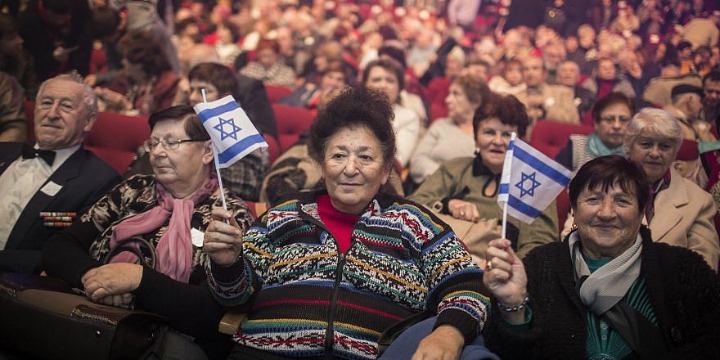
Russian immigrants (new olim) attend an event marking the 25th anniversary of the great Russian aliyah to Israel from the former Soviet Union at the Jerusalem Convention Center on Dec. 24, 2015. Photo: Hadas Parush/Flash90.
JNS.org – New figures in “Conversion in Israel: Vision, Achievements and Challenges,” published in Hebrew and just released by the Israel Democracy Institute Press, expose how the state conversion system has failed since its launch in 1996.
The 25 articles contained in the book, edited by Professor Yedidia Z. Stern and Dr. Netanel Fisher, address the fact that while 10,000 additional Israeli citizens (olim and children of olim) are registered as “of no religion” each year, the state system manages to convert fewer than 2,000 of them. In other words, around 8,000 persons of “no religion”—most of whom see themselves as Jews and as part of the Israeli collective—are added to the population annually.
In one sector of the population, at least, the conversion rate is high: Of the 50,000 olim from Ethiopia in the past two decades, 95 percent completed the process. But among new immigrants from the former Soviet Union who are not recognized as Jews when they enter the country, only 7 percent have done so (29,000 of more than 400,000); a third of these converted through a special track in the military.
The data newly published in this book reveal that each year, about 4,500 children are born in Israel to parents “of no religion,” while about 5,000 newcomers from the former Soviet Union are not recognized as halachically Jewish. Around 80 percent of those who do convert are women.
Stern and Fisher call for a comprehensive reform of the state conversion system, so that it will better serve the hundreds of thousands of Israelis “of no religion” who face problems in registering for marriage and in receiving equal rights because of their status. The editors assert that this situation is a paramount national challenge on both the ethical and practical levels.
Articles in the book present the personal stories of successful converts and of people who chose not to convert; examine how conversion impacts the relations between Israel and the Diaspora; review the intra-Orthodox argument about conversion and the non-Orthodox alternatives; study the gendered aspects of conversion; and look at the national challenges that conversion places on the Israeli agenda.


