




Jerusalem Mayoral Race Narrows to Religious and Secular Jewish Candidates
Error: Contact form not found.

 by Reuters and Algemeiner Staff

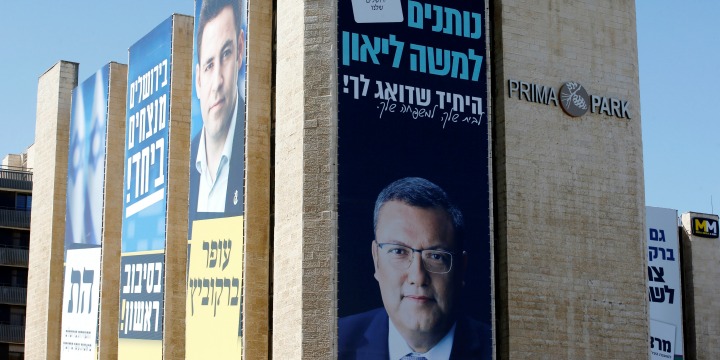
Campaign posters of Jerusalem mayoral candidates Ofer Berkovitch (L) and Moshe Lion are seen on a building in the Israeli capital, Oct. 31, 2018. Photo: Reuters / Ronen Zvulun.
The race for mayor of Jerusalem, a role shaping Israel’s rule over the sacred city at the heart of its conflict with the Palestinians, will go to a run-off between religious and secular Jewish candidates, election tallies showed on Wednesday.
Moshe Lion, a skullcap-wearing bureaucrat favored by two key members of Prime Minister Benjamin Netanyahu’s rightist cabinet, will face off against Ofer Berkovitch, the 35-year-old deputy mayor, after they came out on top of Tuesday’s five-man contest — but neither with sufficient votes to win outright.
The ballot was held as part of nationwide Israeli municipal elections in which many candidates run as independents or on non-traditional party lists, making it difficult to gauge any broader political impact from the results.
While Netanyahu’s own approval ratings are strong, a senior member of his party and cabinet who ran for Jerusalem mayor with his blessing, Zeev Elkin, came in third in Tuesday’s poll.
The Jerusalem vote was largely boycotted by Palestinians who make up a third of the city’s population. They live in East Jerusalem, which Israel took control of in the 1967 Six-Day War and later annexed.
Many Jerusalem Palestinians complain of entrenched neglect by the Israeli municipality. A Palestinian candidate who bucked the boycott by running for the administrative Jerusalem City Council failed to garner enough votes to get in.
Both Lion and Berkovitch — whose second-round ballot is on Nov 13 — have vowed to appeal to all sectors of the city. Neither is likely to break with Netanyahu government policy against ceding East Jerusalem for the Palestinians’ hoped-for future state.
Trailing fourth in Tuesday’s mayoral election was Yossi Daitsh, the sole representative of ultra-Orthodox Jews who, by making up 36 percent of Jerusalem’s Jewish Israeli populace, might have been the biggest voting bloc.
Instead, many ultra-Orthodox voted for candidates outside their close-knit community — a possible gauge of their assimilation in wider Israeli society where their welfare benefits and military draft exemptions are often resented.
On the Jerusalem City Council, however, ultra-Orthodox lists took 14 of the 31 seats — the same presence as previously.
Twenty-one percent of Jerusalem Jews are secular, while 43 percent are not ultra-Orthodox but of various less strict religious denominations.