



Rose Schneiderman Fought for American Labor Rights — and Zionism
Error: Contact form not found.

 by Harold Brackman

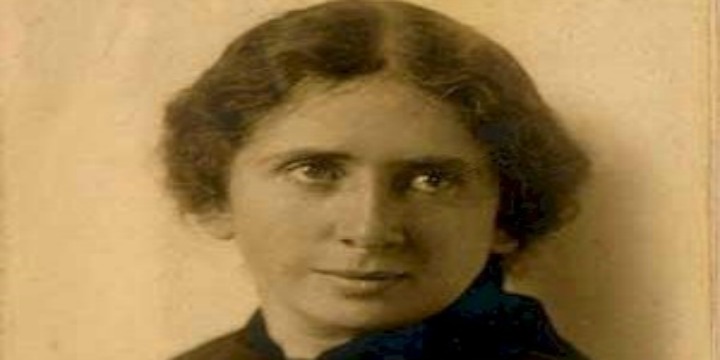
Rose Schneiderman. Photo: Wikimedia Commons.
All of four feet, ten inches tall — with a full head of red hair and a fiery oratorical style — Rose Schneiderman was a towering figure in the American labor movement.
Born in 1882 into a devout Jewish family in Sawin, Poland, she was raised by her parents to believe that she could do anything a man could do. They enrolled her in a Jewish school at the age of four; at six, she attended a Russian public school. Her family immigrated to the US, where her father died, leaving them penniless. Her mother took in boarders but had to send her four children to stay in orphanages. Rose dropped out of public school. Her first job as a sales girl paid so little that she quit to become a cap maker.
By 1903, Schneiderman had organized a union shop, and led a successful strike. In 1904, she became one of the first women to hold office in a national union — the International Ladies Garment Workers Union (ILGWU). In 1908, a German-Jewish philanthropist offered Schneiderman money to complete her education. She refused the scholarship, but did accept an offer to pay her salary as a labor organizer.
Rose’s efforts to organize workers in the Lower East Side garment industry helped build momentum for the 1909 “Uprising of the 20,000” — a general strike of shirtwaist makers, most of whom were Jewish immigrant women. The largest strike by women up to that time, the 11-week-long walkout against sweatshop conditions ended with concessions from a majority of shirtwaist factory owners. The Women’s Trade Union League (WTUL)’s upper-class women supporters — whom Schneiderman called the “mink brigade” — raised money for the workers and even joined on picket lines.
After the Triangle Shirtwaist Fire of 1911, in which 146 young women were burned to death or lost their lives jumping from the ninth floor, Schneiderman scolded her own organization, the WTUL, for not doing enough: “I would be a traitor to these poor burned bodies if I came here to talk good fellowship. … The old Inquisition had its rack and its thumbscrews and its instruments of torture with iron teeth. … [T]he rack is here in the firetrap structures that will destroy us the minute they catch on fire.”
At a suffrage rally in 1912, Rose rephrased a poem into the words for which she is best known — “The worker must have bread, but she must have roses, too” — a reflection of her belief that the labor movement’s goal was to ensure that workers had a right to more than basic subsidence.
She was also among the first labor leaders to raise awareness of the pervasiveness of sexual harassment and assault in the workplace. She helped to pass the New York state referendum of 1917 that gave women the right to vote. Schneiderman was also a founding member of the American Civil Liberties Union. When FDR became president in 1933, he appointed Schneiderman to the National Labor Advisory Board.
As New York’s Secretary of Labor from 1937 to 1943, Schneiderman campaigned for the extension of Social Security to domestic workers, and for equal pay for women workers. She also lent support to union campaigns among the state’s increasing number of hotel maids, restaurant workers, and beauty parlor workers.
Attracted to Ber Borochov’s Poale Zion, she became deeply involved in Jewish issues. She was active in refugee relief work and in socialist Zionist causes, and was a major fundraiser for the Labor-Zionist Leon Blum Colony in Palestine.
Ninety years old, she died at the Jewish Home and Hospital for the Aged in 1972.
Historian Harold Brackman is coauthor with Ephraim Isaac of “From Abraham to Obama: A History of Jews, Africans, African Americans” (Africa World Press, 2015).


