Erdogan Says Turkey Will Take Issue of Golan Heights to UN
×
Error: Contact form not found.
by Reuters and Algemeiner Staff
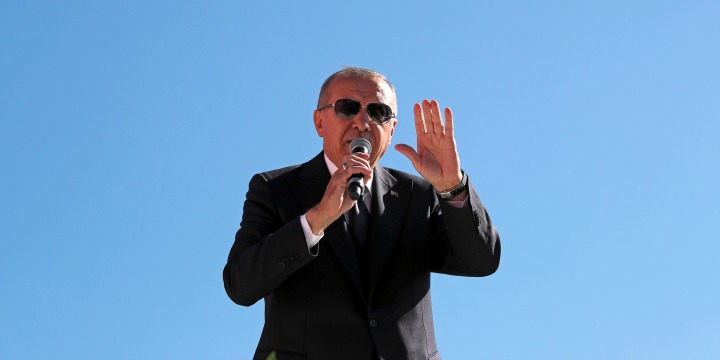
Turkish President Recep Tayyip Erdogan said on Sunday that Turkey will take the issue of the Golan Heights to the United Nations.
In an interview with broadcaster TGRT Haber, Erdogan said US President Donald Trump’s statement on Golan Heights was a “gift” to Israeli Prime Minister Benjamin Netanyahu ahead of elections there.
Trump moved on Thursday to recognize Israeli sovereignty over the territory seized in war, marking a dramatic shift in US policy.
In a speech at a meeting of the Organisation of Islamic Cooperation on Friday, Erdogan said the legitimization of the “occupation” of the Golan Heights could not be allowed.
Colombia to Open Embassy in Jerusalem Next Week After Restoring Ties With Israel
Expert Discusses ‘Moral Obligation’ of Documenting Oct. 7 Sexual Crimes for the Record
‘Goebbels Is Applauding From Hell’: UN Investigator Pillay, Who Accused Israel of Genocide, Wins Nobel Peace Prize
Israeli Officer Killed in Humvee Rollover in Southern Lebanon as Hezbollah Disarmament Stalls
Israel’s Oscar Submission ‘Tell Me Everything’ Dropped From Queer Film Festival Following Boycott Threats
Mamdani Dines on Oct. 7 Anniversary at Palestinian Restaurant That Accuses Israel of Genocide, Occupation
Exposed: All the Pro-Hamas Hostage Negotiation Lies Have Just Been Proven Wrong
Your Israeli Election Primer: The Issues, What to Watch for Before and on Election Night
How a Story From Brazil Highlights This Week’s Torah Portion
Saudi Arabia Is No Longer a Bystander; It’s Part of the Middle East’s Security Perimeter


‘Goebbels Is Applauding From Hell’: UN Investigator Pillay, Who Accused Israel of Genocide, Wins Nobel Peace Prize
Expert Discusses ‘Moral Obligation’ of Documenting Oct. 7 Sexual Crimes for the Record
Hamas Beyond Gaza: The Strategic Significance of the Greece-Cyprus Case
Exposed: All the Pro-Hamas Hostage Negotiation Lies Have Just Been Proven Wrong
Saudi Arabia Is No Longer a Bystander; It’s Part of the Middle East’s Security Perimeter