


US to Renew Waivers Allowing Non-Proliferation Work With Iran, Sources Say
Error: Contact form not found.

 by Reuters and Algemeiner Staff

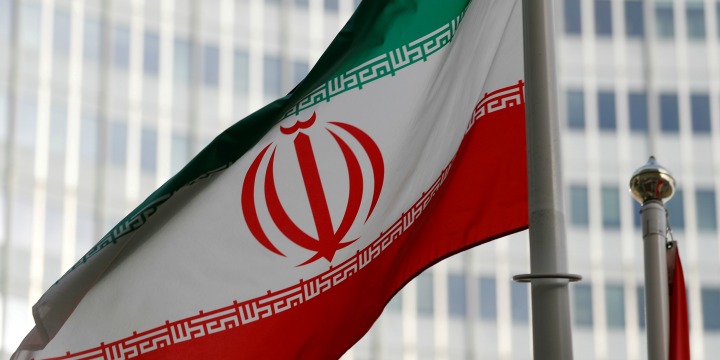
An Iranian flag flutters in front the International Atomic Energy Agency (IAEA) headquarters in Vienna, Austria, March 4, 2019. Photo: Reuters / Leonhard Foeger / File.
The United States plans to allow Russian, Chinese and European companies to continue non-proliferation work at Iranian nuclear facilities to make it harder for Iran to develop a nuclear weapon, two sources familiar with the matter said on Wednesday.
The Trump administration, which last year pulled out of the 2015 Iran nuclear deal and reimposed sanctions on Iran, will let the work go forward by issuing waivers to sanctions that bar non-US firms from dealing with the Atomic Energy Organization of Iran (AEOI), said the sources on condition of anonymity.
While the waivers’ renewal would allow non-proliferation work to continue at the Arak heavy water research reactor and the Fordow fuel enrichment plant, which AEOI oversees, it may also signal that Washington is leaving the door open to diplomacy.
Under the 2015 deal between Iran and six world powers — Britain, China, France, Germany, Russia and the United States — Tehran agreed to limit its nuclear program in return for the lifting of economic sanctions that had crippled its economy.
When US President Donald Trump unilaterally abandoned the deal in May 2018, he reimposed US sanctions in a “maximum pressure” campaign designed to force Iran to return to the negotiating table.
Trump wants a broader deal that would also limit Iran‘s missile program as well as its regional activities; Iran has demanded the United States first resume complying with the 2015 deal called the Joint Comprehensive Plan of Action.
France, in particular, has sought to bring the two into a wider dialogue but has so far failed, suggesting neither is yet willing to abandon core elements of policy: the US belief that pressure will bring Iran to its knees, and Iran‘s refusal to capitulate to US duress.
Under the 2015 deal, the Arak reactor was to be redesigned to render it unable to make bomb-grade plutonium under normal operation, while the Fordow plant was to stop enriching uranium and be converted into a nuclear, physics and technology center.
Chinese state-owned China National Nuclear Corp has done non-proliferation work at Arak, and Russia’s Rosatom has done it at Fordow. Rosatom has also provided uranium fuel for Iran’s Bushehr nuclear power plant.
The US State Department had no immediate comment. Rosatom did not immediately respond to a request for comment.
A China National Nuclear Corp spokesman told Reuters on Thursday by email that it was “starting to cooperate with the Iranian side under guidance from Beijing on seeking a positive solution to the Iran nuclear problem.” It did not provide further details.


