








Israeli PM Netanyahu Calls for Snapback Sanctions on Tehran Regime, as Europe Triggers Iran Nuke Deal Dispute Mechanism
Error: Contact form not found.

 by Benjamin Kerstein

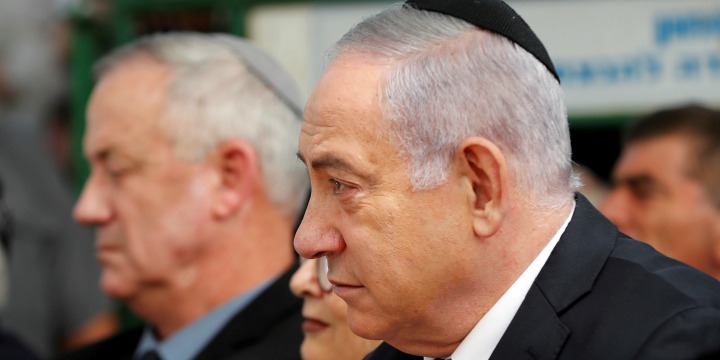
Israeli Prime Minister Benjamin Netanyahu looks on as he sits next to Benny Gantz, leader of the Blue and White party, during a memorial ceremony for late Israeli President Shimon Peres, on Mount Herzl in Jerusalem, Sept. 19, 2019. Photo: Reuters / Ronen Zvulun / File.
Two top Israeli leaders, Prime Minister Benjamin Netanyahu and ex-IDF Chief of Staff Benny Gantz, called for further sanctions on the Tehran regime on Tuesday, the same day three European powers triggered the dispute mechanism in the 2015 Iran nuclear deal.
In a video statement posted on social media, Netanyahu said, “We know exactly what’s happening with the Iranian nuclear program. Iran thinks it can achieve nuclear weapons.”
“I reiterate: Israel won’t allow Iran to achieve nuclear weapons,” he pledged. “I also call on all Western countries to impose snapback sanctions at the UN now.”
https://twitter.com/IsraeliPM/status/1217140036380086272
Earlier, Gantz — the head of the centrist Blue and White party who is seeking to oust Netanyahu in the upcoming March Knesset elections — said, “The Europeans are beginning to understand that there is no other choice, that the attempts at conciliation with Iran are ineffective, and they are therefore moving toward sanctions, which I applaud.”
“The Iranian regime needs to understand that it cannot play with fire, as the justified strike on Soleimani made clear,” he added, referring to the death of Iran’s Quds Force commander Qassem Soleimani in a targeted killing conducted by the US military in Baghdad earlier this month.
The Iranian regime needs to understand that it cannot play with fire, as the justified strike on Soleimani made clear.”
— Blue and White (@YeshAtidEng) January 14, 2020
On Tuesday, the foreign ministers of Britain, France, and Germany issued a statement saying that Iran had “continued to break key restrictions” of the JCPOA and its actions were “inconsistent with the provisions of the nuclear agreement and have increasingly severe and non-reversible proliferation implications.”
“We have therefore been left with no choice, given Iran’s actions, but to register today our concerns that Iran is not meeting its commitments … and to refer this matter to the Joint Commission under the Dispute Resolution Mechanism,” they declared.
This move could ultimately lead to the reimposition of UN sanctions on Iran that were lifted after the nuclear deal was reached by the Tehran regime and six world powers nearly five years ago.


