








The Palestinians Are Now on Their Own
Error: Contact form not found.

 by Eyal Zisser / Israel Hayom / JNS.org

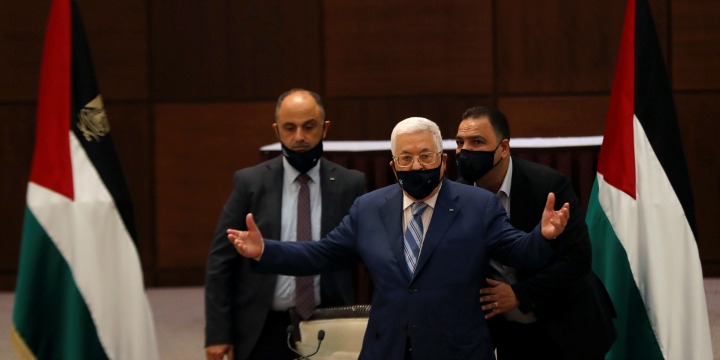
Palestinian Authority President Mahmoud Abbas gestures during a meeting, in the West Bank city of Ramallah, Aug. 18, 2020. Photo: Reuters / Mohamad Torokman / Pool.
JNS.org – Israel and the United Arab Emirates are taking another important step towards peace.
The announcement that the UAE was canceling its economic boycott of Israel, that the first commercial flight departed for the UAE from Ben Gurion International Airport on Monday, and that the start of practical negotiations for implementing peace all show that the Emirati leaders are determined to make sure the agreement includes real content. The goal is to maintain warm ties with Israel and cooperate with it on economic ventures, rather than just defense.
The Palestinians could have been the first to enjoy the fruits of said cooperation, but they aren’t interested in normalization or a warm peace, even if these could bring both Israel and the Palestinians prosperity. It’s no wonder that the Palestinians greeted the news of peace between Israel and the UAE with a cry of desperation and rushed to condemn the Emirati “betrayal” of the Palestinian cause.
But it seems as if what’s bothering the Palestinians isn’t the declaration of peace or the fact that most Arab countries welcome and support it — in fact, a few are even signaling that they will soon follow suit. The Palestinians have been left on their own, and the Arab world, which was supposed to fight their battles for them, is now lining up to make peace with Israel.
Basically, only Iran and Turkey took a stand against the Israel-UAE peace deal, and even they didn’t do so for the sake of the Palestinians, but because they see the deal as hurting their own status in the region, and possibly even as a challenge to their attempts to gain influence and control throughout the Arab world.
The deal could have helped the Palestinians promote their own vital interests. It gives the UAE the power to act to implement calm and regional stability, and even mediate between the two sides to help them reach understandings, which would improve the Palestinians’ economic situation and living standards. After all, aid like this is better than the money the Qataris are throwing on the conflict like gasoline on a fire, which merely goes to feed radicalism and terrorism.
But the Palestinians prefer to cling to dreams that will never come true — and to anger, disappointment, and frustration that will lead them nowhere. To make peace, one needs courage. It’s much easier to stay put in a dead end.
Eyal Zisser is a lecturer in the Middle East History Department at Tel Aviv University. A version of this article first appeared in Israel Hayom.


