







When Jews Helped Triumph Over Anti-Black Racism
Error: Contact form not found.

 by Harold Brackman

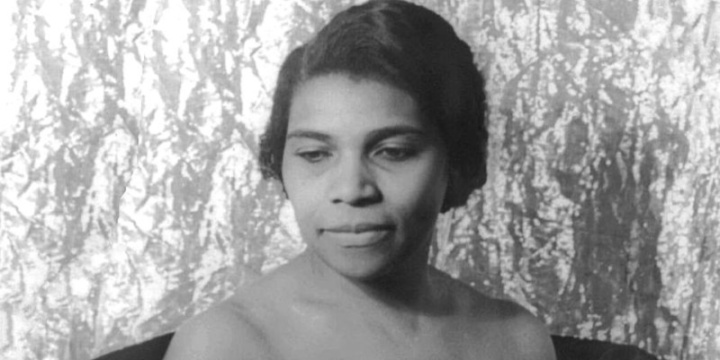
Marian Anderson. Photo: Wiki Commons.
On Easter Sunday, April 9, 1939, Jewish immigrant impresario Sol Hurok teamed with African-American contralto Marian Anderson to score a victory over prejudice.
On the steps of the Lincoln Memorial — where Reverend Martin Luther King, Jr. would later enunciate his “dream” — Anderson said that God “held her in the hollow of his hand.” She enthralled an audience of tens of thousands of spectators, plus millions more radio listeners. She sang there because the Daughters of the American Revolution (DAR), mistaking white pedigree for patriotism, barred her from singing at Constitution Hall. Washington’s bigoted (and segregated) School Board did the same.
Hurok recruited the NAACP’s Walter White and First Lady Eleanor Roosevelt (who invited Anderson to sing at the White House), to persuade Secretary of the Interior Harold Ickes to approve Anderson’s open-air Lincoln Memorial concert.
How did Hurok and Anderson add this storied chapter to America’s chronicle?
According to biographer Harlow Robinson, Hurok was born in Pogar, a small village in what is now Ukraine, probably in 1888. In 1906, he arrived in New York Harbor, where his family’s name was changed from Gurkov to Hurok. He was a peddler, streetcar conductor, and hardware salesman before his appointment in 1911 as director of the Workmen’s Circle Labor Lyceum in Brownsville, Brooklyn, where he frequented delicatessens featuring socialist ideas with “hot pastrami and dill pickles.”
Hurok’s first triumph was persuading violin virtuoso Efrem Zimbalist to play at a benefit for the Socialist Party, where he serenaded an immigrant working-class audience hungry for culture. Hurok presented “Music for the Masses” at Brooklyn’s Academy of Music.
This was the start of a legendary career, during which “Sol Hurok Presents” used showmanship to introduce American audiences to Artur Rubinstein, Isaac Stern, and Pavlova, in addition to the Bolshoi and Kirov Ballets.
The young Hurok acquired his taste for classical music in Philadelphia. The irony was that this was the same time and place where Marian Anderson was growing up. But they did not meet until 1935 in Paris.
As biographer Allan Keiler relates, Marian Anderson was born in 1902. She initially depended on Baptist church contributions to support her voice training. In 1925, she won first prize in a New York Philharmonic competition, yet her career in the US languished because of prejudice and racism.
In 1930, she went to Europe with grants from the Rosenwald Fund. In Salzburg, Arturo Toscanini, after hearing her sing, remarked: “A voice like yours is heard only once in a hundred years.” In Finland, composer Jean Sibelius wrote a new arrangement of the song “Solitude” — originally entitled “The Jewish Girl’s Song” — dedicated to Anderson in 1939. In Europe, she was spurned by the Nazis because she was “not an Aryan.”
Hurok arranged for her appearance at New York’s Town Hall and two Carnegie Hall recitals that laid the groundwork for her 1939 triumph. In 1943, the DAR relented and invited her to sing before an integrated audience in Washington. She stayed at Albert Einstein’s home in Princeton. As an American goodwill ambassador to the world, she performed with the Israeli Philharmonic. In 1955, she starred as the first African-American performer with New York’s Metropolitan Opera.
Sol Hurok remained Anderson’s manager until his death in 1974.
Historian Harold Brackman is coauthor with Ephraim Isaac of From Abraham to Obama: A History of Jews, Africans, and African Americans (Africa World Press, 2015).