





The Quest for Curiosity Jump-Started at the Seder
Error: Contact form not found.

 by Warren Goldstein / JNS.org

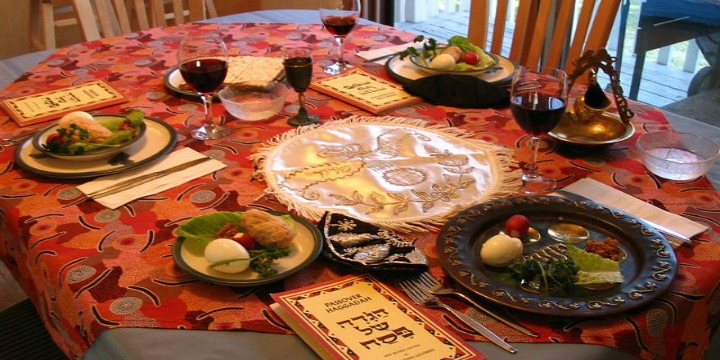
A Passover Seder table. Photo: Wikimedia Commons.
JNS.org – Learning to nurture curiosity is the quest of our times. How do we nurture in our children and in ourselves curiosity, not cynicism? Fascination not apathy? How do we raise a generation of curious kids? In a fast-changing world, as technology shifts the way we live, learn, work and play—and established professions quickly become obsolete—how do we equip them with the curiosity necessary to adapt and find their place? More fundamentally, in a world of mass cynicism and apathy, how do we raise our children to be engaged and enthusiastic, to be excited about life? And excited about being Jewish?
The Passover seder is a crash course in curiosity. We kick off the main section—during which we relive the great beginnings of the Jewish People, our Exodus from Egypt and our liberation from slavery—with “Mah Nishtanah?” (“The Four Questions”) traditionally sung or recited by the youngest child. One of the reasons we do this is as a warm-up exercise to provoke our curiosity for the remainder of the seder.
This element of curiosity, of childlike wonder, continues throughout the seder. We point, we probe, we speculate, we marvel. And it’s not just the children. If there are no children attending, then an adult will ask the four questions. Indeed, at the seder, we are all children; we are all curious. And if, like the simple son, we lack that curiosity and “don’t know how to ask,” others must “open up the conversation for us,” provoking us into a curious state.
People conventionally understand the seder to be about getting the children to ask questions. But it’s deeper than that. It’s about provoking curiosity. Curiosity is more profound; it’s what makes us care enough to ask questions in the first place. To be curious is to show an interest—and to be interested enough to want to know more. It’s a fascination that is expressed through a question that arises in your mind.
The quest for curiosity is a driving Torah value. From a young age, we are taught and encouraged to ask questions to initiate the first stirrings of our intellectual curiosity. When we learn Torah, we are taught to be curious—to ask, to seek to understand. In the great yeshivah study halls of the world, it’s the probing question that earns the highest approval of the rabbi and the admiration of one’s peers. Curiosity is the means through which we engage with our Divine heritage.
To be curious is to be alive. Without it, we are deadened to the joy and novelty of life. We become cynical, apathetic even. We stop caring. We see this with the four sons in the Haggadah, each one reflecting a different level of curiosity and probing interest. The worst of them maintains an ironic distance; someone whose cynicism deadens him to the joy of being Jewish; someone profoundly incurious. The best is engaged actively. And then there are those who are somewhere in between.
Unfortunately, the older we get, the more cynical and apathetic we can often become. But in a way, the Passover seder is an antidote to that jadedness. At the seder, we all strive to be children, to be curious about life again.
Curiosity is at the heart of a new limited podcast my family and I have produced. “The Goldstein Family Podcast” invites listeners into our home as we prepare together for this year’s seder. Over the course of the eight-part series, we go through the Haggadah together, as a family—discussing and debating, questioning and inquiring, letting our curiosity lead us on a journey of discovery as we explore the holiday.
Listen in and use it as a springboard to initiate your own pre-Passover family discussion so that you can prepare for your seder experience. Join the conversation with your own children and never stop encouraging their curiosity.
Rabbi Dr. Warren Goldstein is the chief rabbi of South Africa.