


We Must Tighten Hate Speech Laws to Combat Antisemitism
Error: Contact form not found.

 by Avi Benlolo

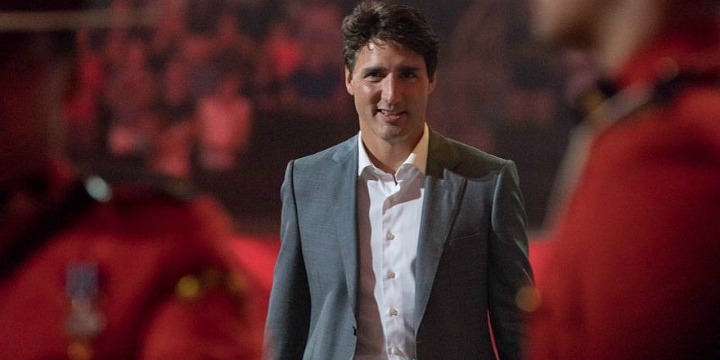
Canadian Prime Minister Justin Trudeau. Photo: Wikimedia Commons.
For many years now, I have written and advocated for stronger laws in Canada against hate speech. In 2019, I testified at an inter-parliamentary committee about the growth of online antisemitism, hate, and intolerance. At the time, I spoke with a panel of parliamentarians about my fear and concern that in the near future, we would be unable to control the widespread hate that was online. Immediate action was needed.
At the time, many parliamentarians looked befuddled about how to exert more control over the Internet. They said they had invited Facebook’s Mark Zuckerberg to attend the session, but he was a no-show. What was clear then, as it’s clear now, is that social media in particular is controlled by a small group of people who are determining the confines of free expression. Government is no longer the gatekeeper, and can hardly enforce the law.
Sadly, my forecast came to be realized over the last year — and certainly in the last two months, as antisemitism became an online tsunami.
If enacted, the Canadian government’s new “action to protect Canadians against hate speech and hate crimes” would clamp down on individuals who express “detestation or vilification of an individual or group of individuals on the basis of a prohibited ground of discrimination. This would apply to public communications by individual users on the internet, including on social media, on personal websites and in mass emails.”
Statistics Canada reports that the Jewish community is the most targeted religious group for hate crimes and hate speech in this country.
In 2017, hate crimes in general increased by a whopping 47 percent here. In 2019, police recorded 1,946 criminal incidents that were motivated by hate, representing a seven percent increase from the previous year.
Undoubtedly, these figures have increased under cover of the coronavirus pandemic, as people have been spending more time online. And during the Hamas-Israel conflict in May, an online torrent of antisemitism infected every corner of the planet.
As a promoter of free speech and diverse opinions, my rational self agrees with the late US Supreme Court Justice Louis Brandeis’ contention that “sunlight is said to be the best of disinfectants.”
But there are problems with this perspective, too. As a student of the Holocaust, I have observed over the years that antisemitism is an infectious disease that if left unchecked in the social marketplace, will rise to the top of hate and discriminatory practice in almost any society.
Sunlight does not disinfect antisemitism. Sunlight allows antisemitism to replicate when it’s out in the open.
More importantly, there are some hard lessons learned from the general silence during the recent spate of antisemitic assaults in Toronto, New York, Los Angeles, and elsewhere: not enough outrage occurred.
Where were the massive street protests? The marches? The massive and open condemnations? The majority remained silent. This is exactly why hate speech and hate crime laws are necessary — to speak for the victims when society fails to act, and sufficiently condemn them in such a way as to marginalize them.
The stabbing of Boston Rabbi Shlomo Noginski is a clarion call that more action must be undertaken immediately to eradicate antisemitism.
What comes next? More Jewish people will be assaulted around the world unless increased measures are taken. The media and social networking companies must take immediate responsibility for making platforms available to this kind of hatred.
With the help of social media, antisemitism circulates faster online than ever before in history. Violence, hate, and murder will follow. Let’s start changing that.
Avi Benlolo is an international human rights advocate and is soon launching a global foundation. Visit his website at www.avibenlolo.org


