





Israel’s Headache Named Qatar
Error: Contact form not found.

 by Benjamin Weil / JNS.org

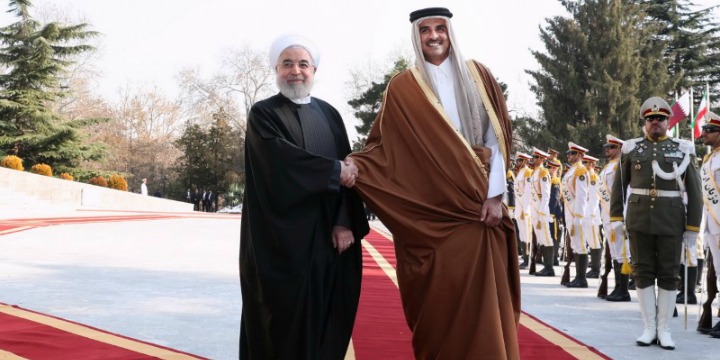
Iranian President Hassan Rouhani shakes hands with Emir of Qatar Sheikh Tamim bin Hamad bin Khalifa Al-Thani during a welcome ceremony, in Tehran, Iran January 12, 2020. Photo: Official Iranian Presidential Website/Handout via REUTERS.
JNS.org – What would you say if I told you that Israel is allowing a close ally of Iran, her arch-enemy, to fund the Hamas terrorist regime in Gaza?
In 2018, the tension on the Israel-Gaza border flared up. Hamas began flying fire kites and incendiary balloons towards Israel. This caused damage to Israeli farming lands and forced Israeli kindergartens and facilities to evacuate in fear of a mass fire spreading, forcing the Israelis to respond. The tit for tat between both sides quickly got out of hand. As part of a long-term “arrangement” between Israel and Hamas, the Qataris offered to transfer monthly stipends of $15 million each month to Hamas officials in the civil sector. Additionally, $10 million was granted to purchase diesel for the Gaza power plant. The Qatari Gaza Reconstruction Committee began its work in 2012 with a $407 million grant. It is considered one of the largest donor organizations in the Gaza Strip.
Israel had hoped that improving the lives of Palestinians would give Palestinians one less reason to join the cycle of terrorism. By allowing the Qataris to elevate the humanitarian crisis, the Israeli believed that it would lead to a quiet border with Gaza. Since Hamas is a recognized terrorist organization and the Palestinian Authority has extremely limited power in the Gaza Strip, Qatar would be the benefactor for the reconstruction of Gaza.
Over time, the Israelis have become accustomed to seeing the Qatari envoy enter Gaza with suitcases of dollar bills, paying Hamas officials, and have even become somewhat dependent on such money in exchange for the quiet. Having Qatar fill such an important role in Israeli foreign policy poses a national security threat. Qatar benefits from a close economic relationship with Iran. It avoids criticizing Iranian domestic and foreign policy, and is considered a close ally to the Persians.
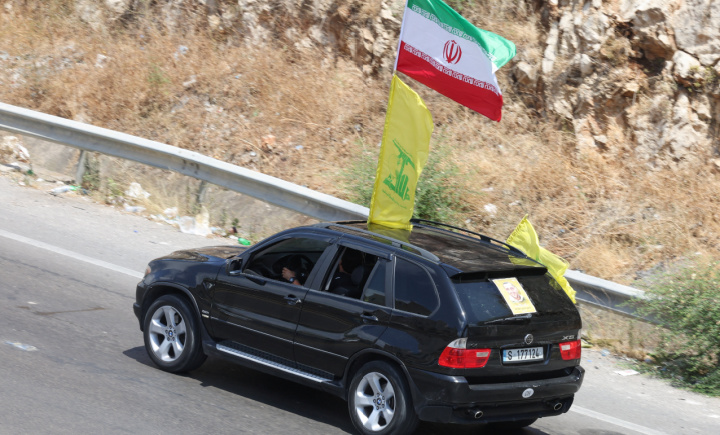
It is worth noting that Iran supplies the terrorist organizations in Gaza with military technology and missiles. In a flip of a dime, Iran can cause the Gaza border to heat up. If the Iranians apply pressure on Qatar to stop the payments, Hamas will use the Iranian-made and Iranian-inspired missiles to attack Israel. This is in addition to the threats coming from the Iranian proxy, Hezbollah, on Israel’s northern border—in Lebanon and stationed in Syria.
While the Israelis continue their campaign against a nuclear Iran, the Iranians, through Qatari assistance, affect the calm on Israeli borders except those with Jordan and Egypt. Although the threat of Hezbollah is not in Israel’s control, the dependency on the Qataris is very much Israel’s choice.
Israeli security officials have been warning the world about the Iranian crescent in the Middle East—the Iranian attempt to “hug” the region with its influence and proxies. The notion that Israel is allowing an Iranian ally to subsidize the salaries of a terrorist organization is counterproductive. It sends mixed signals to Israel’s allies.
Israel must consider the tradeoff between decreasing Iranian influence in the Middle East and fragile serenity on the Gaza border. Allowing Qatari money to flow into Gaza may be a solution for quiet on the Gaza front, but in the long run, it will harm Israel’s national security. In a way, the Qatari money is a form of bribery, and it is only good as long as the Qataris keep on paying and there is a mutual interest to do so. These payments end up feeding Iranian interests committed to destroying the Jewish state.
However, it’s not too late to end this financial arrangement, even at the cost of a short-term de-escalation with Hamas. It will pay off in the long run by minimizing Iranian influence in the region and preventing Iran from holding the keys to Israel’s stability on its southern border. Israel must reassess the Qatari role in the region.
Benjamin Weil is director of the Project for Israel’s National Security for the Endowment for Middle East Truth (EMET), a pro-Israel and pro-American think tank and policy institute in Washington, D.C. He formerly served as the international adviser to Yuval Steinitz, a member of Israel’s Security Cabinet.