



After the Abraham Accords, Olympics Continue to Build Israeli-Arab Peace
Error: Contact form not found.

 by Hanna Gerber

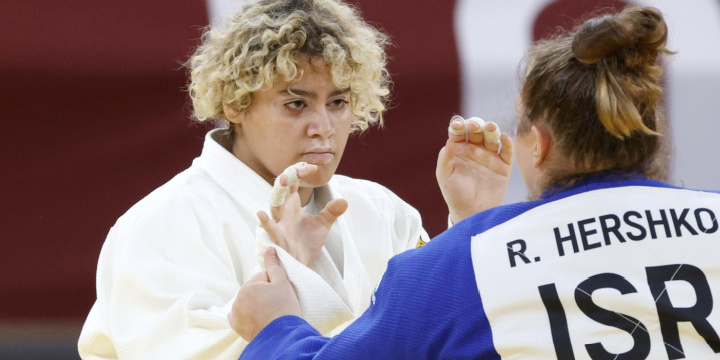
Saudi Arabia’s Tahani Alqahtani (white) and Israel’s Raz Hershko compete in the first round of the women’s judo over 78-kilogram category at the Tokyo Olympics on July 30, 2021, at Nippon Budokan. Photo: Reuters/Kyodo News.
This week, as I was flipping through the various Olympic channels, my eye caught the blue and white stripes of the Israeli flag alongside the bright green image of the Saudi Arabian flag.
I did a double take and discovered that indeed an Israeli athlete, Raz Hershko, was competing against a Saudi athlete, Tahani Al-Qahtani, in the women’s +78kg judo.
As I watched these female athletes compete against each other, hand-to-hand, I was struck by the significance of the match. United in their passion for the sport of judo, these two powerful young women put aside any adverse politics and fought, woman to woman.
Historically, sports have consistently brought people of different nationalities, religions, sexes, and colors together. Competition paved the way for US-China relations during the World Table Tennis Championships, and it also unified women across the globe during Billie Jean King’s landmark Battle of the Sexes tennis match.
To this day, sports are used to bring together Israeli and Arab children in an open, neutral, and friendly environment. Sports have a way of stripping down biased tendencies, and allowing people to connect on a basic, person-to-person level.
The Abraham Accords marked the beginning of a warm peace between two nationalities that were eager to move forward. Unlike past treaties, these accords were not limited to government interaction but extended to people-to-people exchange.
Across the Middle East — and in the face of armed conflict, terror, and political discord — brave individuals have decided that rather than hide behind barriers, it is time to start building bridges and connect with people from different religions, countries, and races.
Whether it is in sports, the arts, culture, or religion, when we push past personal biases and relate on a person-to-person level, we discover that we are more similar than we might think.
The Olympic Games were created on the premise of the 9th century BC Olympic Truce, which halted regional conflict to allow athletes and their families to travel safely to and from the Olympic games.
The Olympics continue to be a time of unity and pacifism, as the Saudi-Israeli judo match beautifully proves. Sports, in the form of “ping-pong diplomacy,” have improved international relations before. Let’s hope that the Tokyo Olympics can help do it again.
Hanna Gerber recently completed a gap year in Jerusalem, and is an upcoming freshman at Barnard College in New York City.


