








80 Years Later, Rare Photos Reveal Attempt to Envision Babi Yar Massacre
Error: Contact form not found.

 by JNS.org



The Babi Yar massacre of the Jews of Kyiv, Ukraine, September 1941. Photo: Yad Vashem
JNS.org – Eighty years after the Babi Yar massacre, rare images that tell the story of the Soviet-era struggle to commemorate the atrocity have been released for the first time by the National Library of Israel’s Central Archives for the History of the Jewish People (CAHJP). The photos reveal grisly yet critical early efforts to better understand the legacy of Babi Yar and remember its victims.
On Sept. 29-30, 1941, the Nazis and their collaborators committed one of the Holocaust’s largest massacres, murdering nearly 35,000 Jews in just two days at the Babi Yar (sometimes written “Babyn Yar”) ravine, which was then just outside of Kyiv (Kiev) and which is now located within the modern Ukrainian city. More than 100,000 people total were murdered there in just two years.
Yet for a long time, the memory of Babi Yar was in many ways forgotten—the result of efforts to erase and rewrite history, as well as the fact that the role and images of the death camps often overshadowed the centrality that other mass murders played in the story of the Holocaust.
This began to change in the 1960s with the publication of Yevgeny Yevtushenko’s famous 1961 poem, “Babi Yar,” as well as Anatoly Kuznetsov’s 1966 book of the same name, and a broader movement led by young local Jews interested in their own heritage and history. The personal archive of one of the leaders of this movement, an engineer named Emmanuel (Amik) Diamant, recently came to the CAHJP.
In 1966, on the 25th anniversary of the massacre, an unofficial memorial sign was hung at the Babi Yar site, which on subsequent anniversaries drew thousands of local Jews and would become a central force in the awakening of Soviet Jewry. Grassroots efforts also began around that time to locate the mass graves in the area, something else that was certainly not a priority for the Soviet authorities.
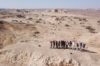
Some of these activities were captured on film by Holocaust survivor, Red Army veteran, anti-Soviet dissident and Zionist activist Joseph Schneider, whose archive also recently arrived at the CAHJP. These photos, found in the Emmanuel (Amik) Diamant Archive, have now been released to the public for the first time.


