Don’t Be Tempted by False Messiahs
Error: Contact form not found.

 by Jeremy Rosen

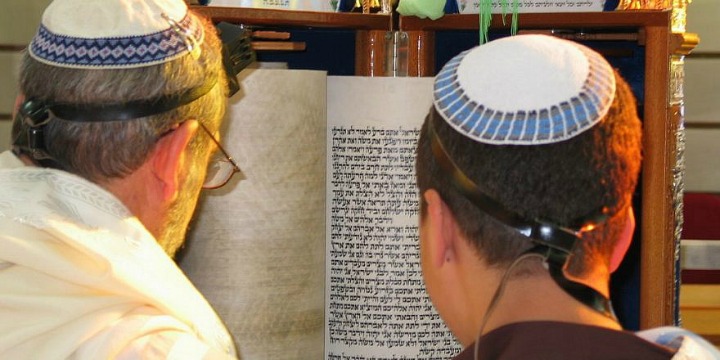
Reading from a Torah scroll in accordance with Sephardi tradition. Photo: Sagie Maoz via Wikimedia Commons.
Among the fascinating laws in this week’s Torah portion is one that is significant because of what it says about miracles, signs, and false messiahs. In fact, this reference to false prophets helps explain why we have been persecuted both by Christianity and Islam — because we have not recognized either the Divinity or prophecy of their founders.
If a prophet or a dreamer emerges from amongst the Jewish people — and uses miracles to get the Jews to abandon their God — then one must ignore the miracles. We should see these as tests of our loyalty to God and the commandments:
If there appears among you a prophet or a dream-diviner, who gives you a sign or a miracle that God had given them and tells you that you should follow another God who you have not encountered … Do not listen to that prophet or dreamer, because God is just testing you to see if you genuinely love your God with all your hearts and souls. Instead, you should follow God, respect Him, follow his commandments, and listen to the words He has revealed to you. He alone is who should worship (Deuteronomy 13:2-6).
Interestingly, the passage does not say that magic or miracles will not work. Skills of delusion or attributing miracles to natural events might be very persuasive. Humans are eminently suggestible. The Torah just says that we should not pay any attention to them.
On the other hand, the Torah is full of miracles. But our commentators say that the Torah uses miracles to reinforce faith. Miracles function to strengthen a prior commitment, especially for those whose belief is weak and uncertain.
But the whole function and nature of miracles are downgraded by this passage. The emphasis is on our actions, how we lead our lives, and whether we are loyal to our tradition. And I would add that even if we do not always adhere to the rules as strictly as we should, it is loyalty to Judaism and ensuring that it survives and thrives, which is what we should be committed to.
This does not mean that ours is the only religion and the only way that God communicates with humanity. There were other prophets outside of Judaism. And Israelite prophets also spoke to the nations. The Torah assumes that other nations and traditions will co-exist with ours, from Ishmael onwards.
There are indeed many paths to God, and others may have equally high ethical and spiritual traditions. But our tradition is our heritage, and anyone trying to attack that fundamental tenet cannot possibly have anything of value to say to us, miracles or not.
The author is a rabbi, currently living in New York.