





Supreme Court Declines to Hear Israel Boycott Case in Major Win for BDS Opponents

 by Andrew Bernard


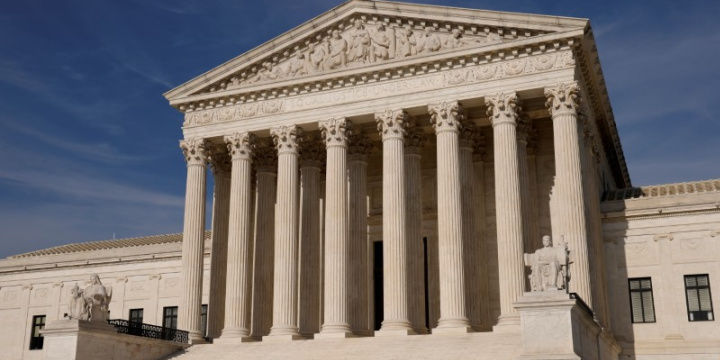
The U.S. Supreme Court building in Washington, U.S. May 17, 2021. REUTERS/Jonathan Ernst
The US Supreme Court on Tuesday declined to hear the appeal of a newspaper suing the University of Arkansas (U of A) over a state law requiring contractors to affirm that they are not boycotting the state of Israel. As a result, the Eighth Circuit’s ruling upholding the law stands in a significant legal victory for opponents of the boycott, divestment and sanctions (BDS) movement against Israel.
“This is a really important win that will give comfort to other states and municipalities that are considering joining the fight against BDS,” said Kenneth Marcus, chairman of the Louis D. Brandeis Center for Human Rights Under Law and an amicus for U of A. “We now have anti-BDS legislation in many states around the country, similar to Arkansas. Some of them involve government contracts, while others involve pension funds. In every one of these cases, states are acting to ensure that taxpayer funds are not being used to subsidize antisemitic, discriminatory boycott, divestment and sanctions of Israel. Until today, anti-Zionist organizations have been complaining that this legislation infringes on their freedom of speech. The Supreme Court has put an end to that.”
The case, Arkansas Times v. Mark Waldrip et al., saw the local newspaper suing the trustees of the University of Arkansas after a longtime advertiser with the paper contacted the paper in 2018 to certify that it was not boycotting Israel, a requirement under Arkansas law. The Arkansas Times, represented by the ACLU, argued that that requirement violated their First Amendment rights.
“The Supreme Court missed an important opportunity to reaffirm that the First Amendment protects the right to boycott,” said Brian Hauss, a senior staff attorney with the ACLU in a statement. “From the Boston Tea Party to the Montgomery Bus Boycott to the boycott of apartheid South Africa, Americans have proudly exercised that right to make their voices heard. But if states can suppress boycotts of Israel, then they can suppress boycotts of the National Rifle Association or Planned Parenthood.”
UCLA law professor Eugene Volokh, another amicus on behalf of U of A, rejected the idea that a boycott is protected speech under the First Amendment.
“The court has not generally recognized the First Amendment right to not do business with someone,” Volokh told The Algemeiner. “In fact the premise of anti-discrimination laws of various sorts, and of other laws like common carrier laws, is that people can often be required to do business with others, even if they don’t like it.”
In its June 2022 ruling, the Eighth Circuit rejected the Arkansas Times’ argument that certifying under contract that it was not engaged in a boycott of Israel amounted to unconstitutionally compelled speech.
“The compelled speech doctrine prohibits the government from making someone disseminate a political or ideological message,” Judge Jonathan Kobes wrote for the majority. “But the certification requirement here is markedly different from other compelled speech cases. Although it requires contractors to agree to a contract provision they would otherwise not include, it does not require them to publicly endorse or disseminate a message.”
Currently, 35 states have passed some form of anti-boycott legislation intended to counter the BDS movement. In April, Tennessee joined that list, with anti-BDS measures in Alaska, Nebraska, North Dakota, Utah, and Virginia pending, and New York seeking to beef up its existing anti-BDS laws.
While the Supreme Court’s decision not to hear the appeal does not set a precedent, and there is a similar case pending before the Fifth Circuit about Texas’ anti-BDS law, Marcus believes that today’s action suggests the court is less likely to overturn anti-BDS laws elsewhere.
“The Supreme Court could take this issue up again in the future,” he said. “But if even as many as four out of the nine justices supported the ACLU position, this is the case they would have taken because this case was a big victory for the Jewish community. It’s always conceivable that the Supreme Court will change direction. And I think we need to remain diligent. I suspect that the anti-Zionist groups will continue to try to make these arguments, but it will be harder for them going forward.”


