







The Preventable Death of Salwan Momika — and How It Exposed the Weaknesses of Sweden’s Immigration System
Error: Contact form not found.

 by Ethan Kaufman


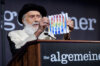
Salwan Momika. Photo: Screenshot
The Jan. 29 murder of Iraqi refugee and activist Salwan Momika — killed in his Stockholm apartment while live-streaming on TikTok — has sparked crucial questions about Swedish immigration policy. Momika, who had gained global notoriety for publicly burning the Quran, became a flashpoint in Sweden’s ongoing struggle to balance free speech, religious sensitivity, and immigration security.
While Momika’s death was widely reported, few media outlets have gone on to ask about the ways his death, or the tumult brought about by his actions in life, could have been avoided by the Swedish immigration system. At a time when European nations are reeling from poorly managed immigration policy — which has led to migrant violence and social disorder, with widely different solutions proposed — Momika’s story provides a microcosm for some of the issues these countries face.
Momika was a controversial figure in life and death, championed by some as a hero of free speech and a prophet foreseeing the threat of radical Islam in Europe. To others, he was a hideous blasphemer, a radical hatemonger on a mission to incite against his countrymen and their coreligionists, or just a fraudster looking for attention.
Born in 1986 to a Catholic Assyrian family in northern Iraq, Momika’s path to Sweden was marked by conflict. During the heyday of Islamic State (ISIS), he commanded a Christian brigade within the Iran-affiliated Popular Mobilization Forces (PMF). A dispute with fellow Assyrian PMF commander Rayan al-Kildani prompted his flight in 2018 to Sweden, where he secured refugee status by 2021. This background would later raise questions about the thoroughness of Sweden’s asylum vetting process.
Sweden’s handling of Momika’s case exposed critical weaknesses in its immigration system. While Swedish law prohibits entry to those who have committed “serious crimes” or pose security threats, significant oversights occurred.
First, despite Momika’s involvement with the Iran-linked Imam Ali Brigades, his military background received insufficient scrutiny. Second, his false statements on his asylum application regarding persecution and prior activities weren’t discovered until after his controversial actions began. These systemic failures became more apparent as Momika’s public provocations escalated.
In Sweden, Momika was sentenced to community service after threatening to kill a man while holding a knife. Two years later, in 2023, he began publicly burning the Quran, attracting crowds. His actions triggered diplomatic crises, forcing the Swedish ambassador out of Baghdad at the hands of an angry Iraqi crowd, as the burning also drew furious demonstrations in other Muslim countries. But Sweden chose not to take any decisive action against him under its highly permissive free speech laws.
After Momika’s anti-Islam activities intensified, the Swedish government considered deporting him, noting he had lied on his application about his former activities with the Imam Ali Brigades. Due to lack of sufficient security and background checks, Sweden demonstrated an abject failure of immigration policy by allowing a former pro-Iran brigade commander to seek asylum, without further questions asked.
Sweden only provided a verdict on Momika’s anti-Islam demonstrations once he had died. On Feb. 2, following Momika’s murder, his co-activist, 50-year-old Iraqi-Swede Salwan Najem, was fined 4,000 crowns for the pair’s activities, classified as hate speech by the court, which concluded that Momika and Najem had exceeded the line of protected speech by a wide margin and had engaged in incitement against an ethnic group.
While Momika’s murder is still being investigated, with five suspects released from custody two days after his death, it is in line with other crimes committed by Muslim vigilantes against perceived opponents of the faith. It’s possible that Momika’s murderer was another Middle Eastern refugee in asylum who had taken advantage of Sweden’s lax vetting and arrived under similarly questionable circumstances. Swedish Prime Minister Ulf Kristersson even said that a “foreign power” may have been behind the activist’s death.
Sweden’s lax security regarding Momika’s entry and residence in Sweden raise important questions. For example, to what extent have affiliates of Iran managed to gain asylum in Sweden and other Nordic countries? While Momika was clearly not acting on behalf of the Iranian government, it appears possible that Iranian agents could take advantage of similarly lax immigration policies to further Iran’s agenda in Europe.
In short, there are serious weaknesses in the Swedish immigration system, where accurate background checks need to be enacted to keep out hostile agents seeking to further a nefarious agenda.
Likewise, Momika’s attacker, while not yet identified (and who may never be identified), was likely an Islamist vigilante looking to punish him for his public blasphemy against Islam, in line with the opinions of multiple high-profile Islamic scholars and in keeping with the opinions on the street in much of the Muslim world. Multiple sources on Iraqi social media named Omar al-Aani from Fallujah as a suspect in the murder who was temporarily detained, although authorities in Sweden have not disclosed the names of those who were questioned.
Iraqis angry at Momika’s behavior for religious reasons also had extra motivation to target him. Indeed, the city of Kufa in Iraq offered a bounty of $2 million and a 2kg gold Quran to anyone who killed Momika. His extradition had also been demanded by the government in Baghdad.
Following Momika’s death, Muslims of many different backgrounds — including some of his fellow Iraqis, a member of the Indian National Congress, and others — celebrated and gloated about what happened.
If the killer turns out to have been another migrant, it will highlight the potential danger of migrants to each other. Throughout Europe, much anger has been voiced around crimes by immigrants against native locals, but little attention has been given to the potential for exporting sectarian conflicts from the Middle East and elsewhere to Western soil, among citizens of the same home country living abroad. For example, should Momika’s murderer turn out to be a Sunni Iraqi, it would represent a frightening extension of Iraqi sectarian violence into the borders of a country thousands of miles away.
On top of all this, consider the Swedish Prime Minister’s suggestion that a foreign country may have been involved in the killing of Momika. Was there no prior intelligence to suggest the magnitude of danger he was in, even as he warned both the public and the authorities of the threats against him? Was the Swedish government afraid of being seen as sheltering him? If so, who were they afraid of?
The Swedish government’s indecision between security and tolerance, combined with its “please-everybody-and-nobody mentality,” were directly responsible for Momika’s death. Had they refused him asylum or expelled him quickly on account of his past in Iraq or the diplomatic liability and civil unrest he generated, they would have demonstrated a cohesive policy. On the other hand, had they doubled down on the importance of free speech and recognized the imminent threats to Momika’s life, they also would have demonstrated a cohesive policy — and possibly saved his life. The Momika case illustrates the urgent need for reform in Swedish (and broader European) immigration policy. Three specific areas require immediate attention:
- More rigorous background verification systems for asylum seekers
- Clear protocols for handling cases involving potential security risks
- Consistent policy application balancing free speech protection with public safety
Sweden’s experience offers crucial lessons for other European nations grappling with similar challenges. The goal must be to develop immigration policies that maintain humanitarian commitments while ensuring public safety and social cohesion. Otherwise, Momika will certainly not be the last to be denied justice in the midst of Europe’s immigration crisis.