







Turkey Backing Syria’s Military and Has No Immediate Withdrawal Plans, Defense Minister Says
Error: Contact form not found.

 by Reuters and Algemeiner Staff


Turkish Defense Minister Yasar Guler takes part in a NATO Defense Ministers’ meeting at the Alliance’s headquarters in Brussels, Belgium, Oct. 12, 2023. Photo: REUTERS/Johanna Geron
Turkey is training and advising Syria’s armed forces and helping improve its defenses, and has no immediate plans for the withdrawal or relocation of its troops stationed there, Defense Minister Yasar Guler told Reuters.
Turkey has emerged as a key foreign ally of Syria’s new government since rebels – some of them backed for years by Ankara – ousted former Syrian President Bashar al-Assad in December to end his family’s five-decade rule.
It has promised to help rebuild neighboring Syria and facilitate the return of millions of Syrian civil war refugees, and played a key role last month getting US and European sanctions on Syria lifted.
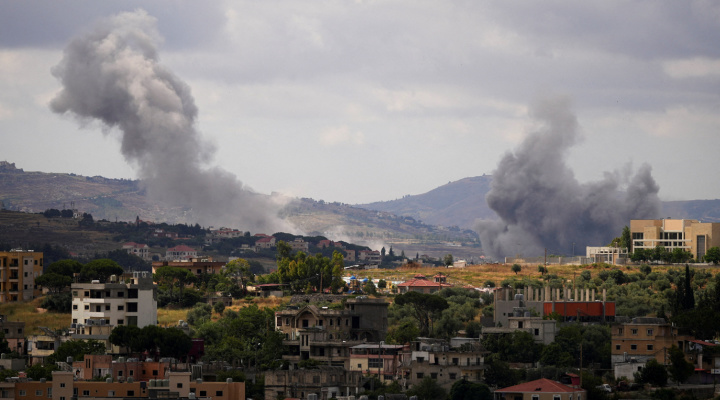
The newfound Turkish influence in Damascus has raised Israeli concerns and risked a standoff or worse in Syria between the regional powers.
In written answers to questions from Reuters, Guler said Turkey and Israel – which carried out its latest airstrikes on southern Syria late on Tuesday – are continuing de-confliction talks to avoid military accidents in the country.
Turkey‘s overall priority in Syria is preserving its territorial integrity and unity, and ridding it of terrorism, he said, adding Ankara was supporting Damascus in these efforts.
“We have started providing military training and consultancy services, while taking steps to increase Syria’s defense capacity,” Guler said, without elaborating on those steps.
Named to the post by President Tayyip Erdogan two years ago, Guler said it was too early to discuss possible withdrawal or relocation of the more than 20,000 Turkish troops in Syria.
Ankara controlled swathes of northern Syria and established dozens of bases there after several cross-border operations in recent years against Kurdish militants it deems terrorists.
This can “only be re-evaluated when Syria achieves peace and stability, when the threat of terrorism in the region is fully removed, when our border security is fully ensured, and when the honorable return of people who had to flee is done,” he said.
NATO member Turkey has accused Israel of undermining Syrian peace and rebuilding with its military operations there in recent months and, since late 2023, has also fiercely criticized Israel’s military campaign in Gaza.
But the two regional powers have been quietly working to establish a de-confliction mechanism in Syria.
Guler described the talks as “technical level meetings to establish a de-confliction mechanism to prevent unwanted events” or direct conflict, as well as “a communication and coordination structure.”
“Our efforts to form this line and make it fully operational continue. Yet it should not be forgotten that the de-confliction mechanism is not a normalization,” he told Reuters.