




US ‘Unbelievably Satisfied’ With Lebanon Reply to Proposal on Disarming Hezbollah
Error: Contact form not found.

 by Reuters and Algemeiner Staff


Syrian Foreign Minister Asaad Hassan al-Shibani stands next to US Envoy for Syria Thomas Barrack as he raises the American flag at US ambassador’s residency in Damascus, Syria, May 29, 2025. Photo: REUTERS/Firas Makdesi
A US envoy said on Monday he was “unbelievably satisfied” with Lebanon’s reply to a US proposal on disarming Hezbollah, following meetings in Beirut held hours after Israel launched new air strikes and a cross-border incursion.
Envoy Thomas Barrack’s proposal, delivered to Lebanese officials during his last visit on June 19, would see Hezbollah fully disarmed within four months in exchange for Israel halting air strikes and withdrawing troops from posts in south Lebanon they still occupy following a war last year.
Speaking to reporters after meeting Lebanon’s president on Monday, Barrack said he had received a seven-page reply, although he gave no details of its contents.
“What the government gave us was something spectacular in a very short period of time,” Barrack said. “I’m unbelievably satisfied with the response.”
Barrack, a longtime advisor to US President Donald Trump who also serves as US ambassador to Turkey and special envoy for Syria, said he believed “the Israelis do not want war with Lebanon.”
“Both countries are trying to give the same thing — the notion of a stand-down agreement, of the cessation of hostilities, and a road to peace,” he said.
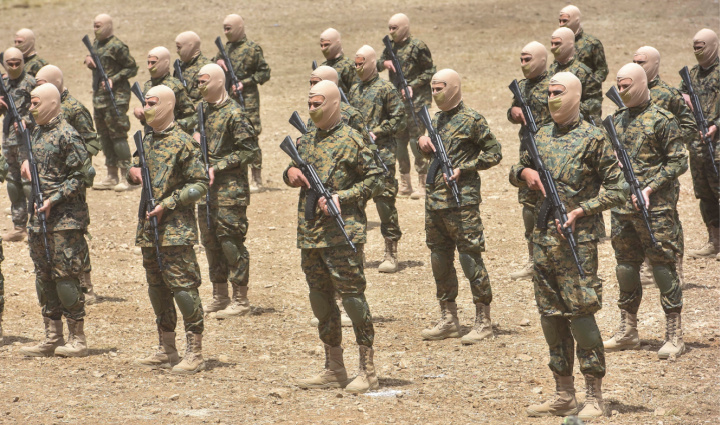
Israel crushed the leadership of Lebanon’s Iran-backed Hezbollah militant group in a bombing campaign last year, one of many fronts on which it has inflicted severe blows against Iran and its allies since the start of the war in Gaza in 2023.
Hezbollah has already relinquished some weapons and withdrawn from southern areas under a ceasefire agreed last year. Israel has kept troops at five posts in southern Lebanon and continued targeting Hezbollah fighters with air strikes, saying it wants the group to pose no threat to Israel.
Hezbollah has not publicly responded to the US disarmament proposal, but its leader said on Sunday the group needed to keep some weapons to defend Lebanon from Israel. Sources have told Reuters that the group is considering shrinking its arsenal, without disarming in full.
In the hours before Barrack’s visit, Israel carried out a wave of air strikes on Lebanon’s south and east as well as a cross-border ground assault on a Lebanese border village. The Israeli escalation was seen by Lebanese officials and diplomats as an attempt to ratchet up pressure on Hezbollah.
Western countries have long said changes in the region could provide a chance for Lebanon to strengthen state institutions that have remained weak for decades in the shadow of powerful sectarian groups.
Barrack said Hezbollah needed reassurance that it would still have a future in Lebanon as a major political party.
Regional changes provided an opportunity for Lebanon, he said, noting that Syria’s new government, which took power last year after the fall of Iranian ally Bashar al-Assad, was now opening dialogue with Israel.
“The dialogue has started between Syria and Israel, just as the dialogue needs to be reinvented by Lebanon,” he said. “If you don’t want change, it’s no problem. The rest of the region is moving at Mach speed, and you will be left behind.”