




Saudi Warplanes Struck Militias in Iraq During War, Sources Say
Error: Contact form not found.

 by Reuters and Algemeiner Staff

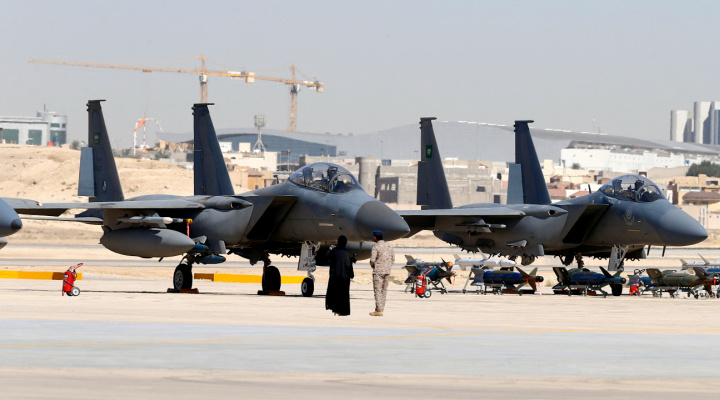
F-15SA fighter jets are seen at King Faisal Air College in Riyadh, Saudi Arabia, Jan. 25, 2017. Photo: REUTERS/Faisal Al Nasser
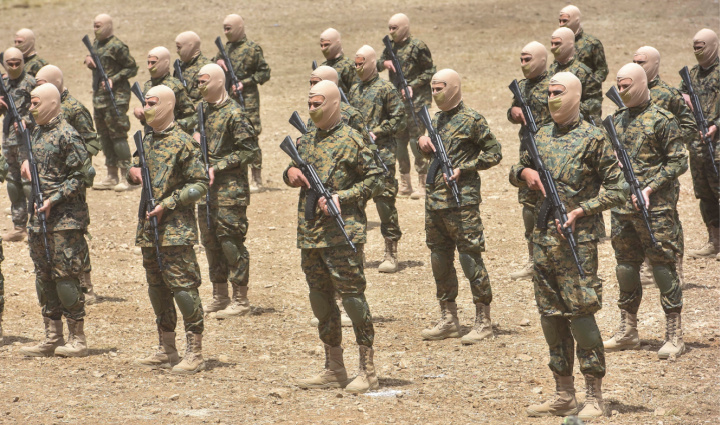
Saudi fighter jets bombed targets linked to powerful Tehran-backed Shi’ite militias in Iraq during the Iran war, while retaliatory strikes were also launched from Kuwait into Iraq, multiple sources familiar with the matter said.
The strikes are part of a broader pattern of military responses around the Gulf that remained largely hidden during a conflict that began with US-Israeli attacks on Iran and has spread to the wider Middle East.
For this report, Reuters spoke to three Iraqi security and military officials, a Western official, and two people briefed on the matter, one of them in the US.
The Saudi strikes were carried out by Saudi air force fighter jets on Iran-linked militia targets near the kingdom’s northern border with Iraq, one Western official and the person briefed on the matter said. The Western official said some strikes took place around the time of the April 7 US-Iran ceasefire.
They targeted sites from which drone and missile attacks were launched at Saudi Arabia and other Gulf states, the sources said.
Citing military assessments, the Iraqi sources said rocket attacks were launched on at least two occasions from Kuwaiti territory on Iraq. One set of strikes hit militia positions in southern Iraq in April, killing several fighters and destroying a facility used by Iran-backed militia Kataib Hezbollah for communications and drone operations, they said.
Reuters could not determine whether the rockets from Kuwait were fired by the Kuwaiti armed forces or the US military, which has a large presence there. The US military declined to comment. The Kuwaiti information ministry and the Iraqi government did not immediately respond to requests for comment.
SAUDI ARABIA ALSO HIT IRAN
A Saudi foreign ministry official said Saudi Arabia sought de-escalation, self-restraint and the “reduction of tensions in pursuit of the stability, security, and prosperity of the region,” but did not address the issue of strikes on Iraq. A spokesperson for Iraq’s Kataib Hezbollah also did not immediately respond to a request for comment.
On Tuesday, Reuters reported that Saudi Arabia launched strikes directly on Iran during the war in retaliation for attacks on the kingdom, the first time Riyadh is known to have hit Iranian soil. The UAE also carried out similar strikes on Iran, three people familiar with the matter said.
But hundreds of the drones that targeted the Gulf emanated from Iraq, all the sources said.
Militia-linked Telegram channels repeatedly posted statements during the war claiming attacks on targets in Gulf states, including Saudi Arabia and Kuwait. Reuters could not independently confirm their authenticity.
Sustained attacks from a second front in Iraq prompted Saudi Arabia and Kuwait to lose patience with the militias, which collectively command tens of thousands of fighters and arsenals including missiles and drones.
Kuwait summoned Iraq’s representative in the country three times during the war to protest cross-border attacks, as well as the storming of the Kuwaiti consulate in the city of Basra on April 7. Saudi Arabia also summoned Iraq’s ambassador on April 12 to protest attacks.
IRAQ-GULF TIES DEFINED BY SUSPICION
Gulf Arab relations with Iraq have long been defined by suspicion. Ties were severely damaged in 1990 when Iraqi President Saddam Hussein’s forces invaded Kuwait and fired Scud missiles at Saudi Arabia, and they remained strained for decades.
The 2003 US-led invasion of Iraq deepened Gulf concerns by empowering Shi’ite political factions and armed groups closely tied to Tehran, turning Iraq into a key node in Iran’s regional network of proxies.
Gulf states have repeatedly accused Baghdad of failing to rein in those groups, which operate with significant autonomy and have launched attacks across borders.
A China-brokered détente between Iran and Saudi Arabia in 2023 had offered hope for broader regional stabilization. But the outbreak of war has severely tested those gains, drawing Gulf states into a conflict they had sought to avoid and exposing the limits of diplomatic progress made in recent years.
In March, Saudi Arabia and Kuwait had warned Baghdad via diplomatic channels to curb rocket and drone attacks by pro-Iranian groups against Gulf states, according to two Iraqi security officials and a government security adviser.
Iraqi forces say they intercepted some attempted attacks, including the seizure of a rocket launcher west of Basra intended to strike Saudi energy facilities.
But Iran-backed militias continue to fly surveillance drones along Iraq’s borders with Kuwait and Saudi Arabia, conducting reconnaissance and feeding intelligence to Iran, according to four Iraqi security sources and a person briefed on the matter.
“They are gathering information on what has been damaged, what is still working. They are preparing for the next strike,” the person briefed on the matter said.