










Antisemitism Isn’t Hatred, It’s a System — That’s Why It Keeps Winning
Error: Contact form not found.

 by Vladislav Khaykin


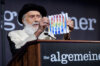
The American Jewish Congress at Soviet Jewry Solidarity Day, 1968. Photo: Center for Jewish History, New York City/Flickr.
My grandfather fought the Nazis across Europe, helped liberate multiple European capitals, and came home to a grateful nation that in due time would label him a “Zionist fascist.” He was a decorated war hero. He was also Jewish.
In the Soviet Union, that second fact eventually superseded the first.
I’ve spent my career trying to understand how that happens. How an ideology that ought to be indefensible finds a way to make itself at home — again and again.
I’ve worked at the Anti-Defamation League, the American Jewish Committee, and now the Simon Wiesenthal Center. And the longer I do this work, the more convinced I am that the most fundamental mistake we make in fighting antisemitism is misidentifying what it actually is.
We call it hatred. But it is not, primarily, hatred.
Antisemitism is a system of explanation — an interpretive framework that purports to tell you how the world “really” works.
When people feel economic anxiety, political instability, or social dislocation, the mind naturally searches for a cause. Antisemitism rushes in with a ready answer: it’s the Jews. The Zionists. The globalists. Whatever term is in fashion.
The ideology doesn’t just hate a group of people. It organizes the complexities of the world into a simplistic morality tale in which that group is responsible for everything that’s gone wrong — the impediment that stands between us and the kind of world we want to inhabit.
That explanatory power is precisely what makes antisemitism so durable. It is not a simple prejudice like contempt for a group seen as inferior.
It is a portable worldview that can attach to any grievance, any political tradition, any cultural context. To seduce the left, it speaks in the language of anti-colonialism and anti-racism. To seduce the right, it speaks in the language of nationalism and civilizational threat. To seduce Christians, it finds its footing in theology. To seduce Muslims, it finds a different scripture. Same architecture. Different clothes. Antisemitism always dresses for the occasion.
The current mutation is anti-Zionism. And I want to be precise about what I mean, because the terminological slippage here is itself part of the problem.
Opposing Israeli government policy is not anti-Zionism or antisemitism. Criticizing specific military decisions is not anti-Zionism or antisemitism. These can be legitimate political positions, however much one may disagree with them.
What I am describing is something categorically different: the ideological position that Jews, and Jews alone among the world’s peoples, have no legitimate claim to self-determination in any form and whose illegitimate state is uniquely evil, uniquely contemptuous of human rights, uniquely an impediment to global justice. Accordingly, in this worldview, Zionism is not merely a political movement, but an inherently evil conspiracy against humanity.
This version of anti-Zionism has a genealogy. It was manufactured.
After Israel decisively defeated the Soviet Union’s Arab allies in 1967, Soviet intelligence launched a sophisticated disinformation campaign to export anti-Zionism across the developing world and the Western left. They translated the Protocols of the Elders of Zion, a czarist-era conspiracy tract, into Arabic and Farsi, rebranding its paranoid fantasy of Jewish global domination as a factual account of the plans of Zionism. They designed this propaganda not just to spread, but to self-replicate: to turn its targets into its own distribution system. It worked. Those intellectual currents did not die with the Soviet Union. They took root, mutated, and are now being carried forward by new actors, including Iran, whose adoption of Soviet-era anti-Zionist tactics the Wiesenthal Center will document in a forthcoming report.
This is why, in debates over anti-Zionism, I am consistently struck by the abstraction. The argument unfolds in seminar rooms and on op-ed pages as though it were a philosophical question. But this is not a philosophy. It is a history with a body count.
Millions of Jews from Iraq, Egypt, Syria, Tunisia, Libya, Poland, Czechoslovakia, and the Soviet Union can still tell you what happens when anti-Zionism triumphs. Dispossession. Displacement. Purges. Violence. The Jewish communities of the Middle East and North Africa, rooted for 2,000 years, were emptied in a single generation after Israel’s birth. This is not a debate for textbooks. The witnesses are still here. Still awaiting justice. Or at least a recognition of the injustices suffered, however delayed by the failure of the world to acknowledge the total eradication of Jewish life from Arab countries wrought by anti-Zionism.
There is no single intervention that will solve antisemitism. Anyone arguing otherwise is selling something. What we need is every person who understands what’s happening to ask themselves where they are best positioned to fight it. In their political community. In their professional network. In their family. In themselves.
My grandfather learned that victory on the battlefield does not guarantee victory over the ideas that made the battlefield necessary. Those ideas outlive the wars that expose them. And unless we finally understand what antisemitism is, an interpretive system that offers the comfort of explanation without the burden of truth, we will keep fighting it, and keep losing, in every generation.
Vladislav Khaykin is the Head of North American Advocacy at the Simon Wiesenthal Center. Khaykin brings a personal and global perspective to the fight against antisemitism and hate. He came to the United States as a refugee from state-sponsored antisemitism in the Soviet Union and is a grandson of Holocaust survivors. He regularly speaks and writes on Jewish identity, extremism, and human rights issues.


