






Banned From Turkey for Supporting Israel’s Right to Exist: The Price of Dissent
Error: Contact form not found.
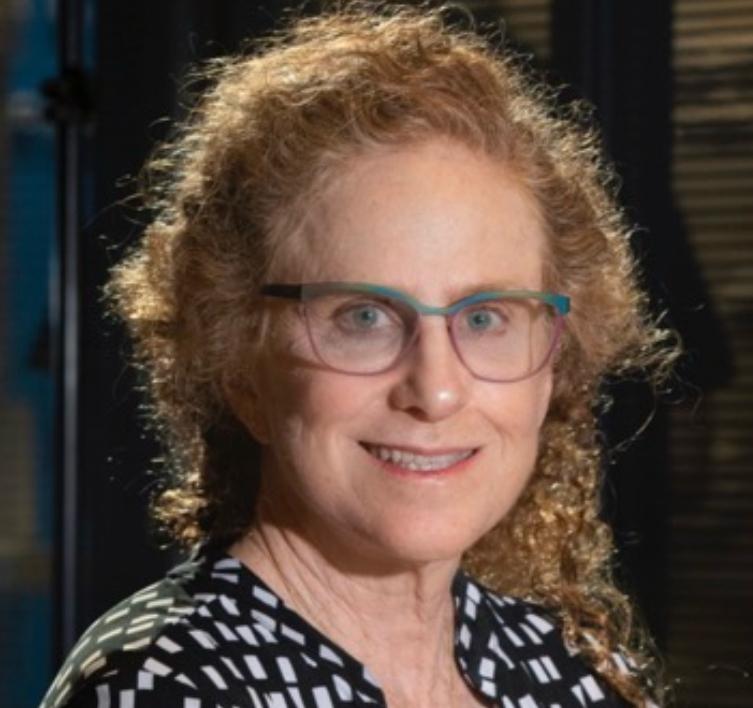
 by Nira Broner Worcman


Turkish President Tayyip Erdogan speaks during a ceremony for the handover of new vehicles to the gendarmerie and police forces in Istanbul, Turkey, Nov. 28, 2025. Photo: REUTERS/Murad Sezer
“Are you a Zionist?”
“Yes, of course.”
That was all it took. After a short street interview in Jerusalem earlier this year, a 27-year-old Turkish Muslim student named Türkü Avcı found herself at the center of a national outrage campaign.
Within hours, the video had gone viral in Turkey. Thousands demanded her arrest. Others called for her rape or assassination. Journalists linked to pro-government media circulated photographs of her parents, their identification numbers, and their personal information online.
According to Avcı, people claimed they had contacted Palestinian acquaintances to “hunt her down” in Israel.
Soon afterward, she learned there was reportedly an arrest warrant in her name in Turkey. Her alleged offense was not violence, espionage or incitement. It was ideological trespassing.
Avcı had violated a political expectation attached to her identity: As a Turkish Muslim woman, she was not supposed to say that she was a Zionist — certainly not publicly, and certainly not without apology.
Whether one agrees with Zionism is ultimately beside the point here. What matters is the belief, in countries across the political spectrum, that certain people no longer have the right to think outside the identities assigned to them.
Political and social life increasingly operates through prescribed ideological roles. Muslims are expected to hold one set of views on Israel. Jews another. Women another. The punishment for deviation can be swift and deeply personal.
What happened to Avcı reveals something larger than Turkey’s deteriorating democracy. It reveals how modern political intimidation works long before formal censorship or imprisonment begin.
The first stage is social: humiliation, exposure, moral denunciation, and fear. The goal is not simply to disagree with someone but to redefine them as illegitimate. In this new environment, dissent is no longer treated as disagreement. It is treated as betrayal.
Turkey under President Recep Tayyip Erdoğan has become a vivid example of this dynamic. Over the past decade, the country has drifted from imperfect democracy toward a hybrid system in which elections still occur but institutional protections steadily erode.
Journalists, academics, opposition figures, and activists have faced arrests, investigations and public vilification. In recent years, anti-Israel rhetoric has become central to Erdoğan’s political strategy, especially as economic instability and domestic dissatisfaction have grown. But Avcı’s story matters precisely because it transcends Turkish politics.
Her case exposes a broader and deeply contemporary phenomenon: the collapse of tolerance for ideological complexity inside minority identities themselves. In many societies today, there is discomfort with people who disrupt moral narratives: a Muslim who openly supports Israel. A Jew who sharply criticizes Israel. A feminist who rejects dominant activist frameworks. A dissident immigrant who criticizes the politics of the country from which they came.
The problem such individuals create is not merely political disagreement. Once identity becomes politically sacred, independent thought itself begins to look threatening.
This dynamic is not confined to authoritarian states. Democracies across the world are increasingly shaped by ideological sorting amplified through social media.
Public life rewards outrage and conformity more than ambiguity or intellectual independence. A person no longer needs to commit a crime to become socially unemployable or physically unsafe. Often, all that is required is a sentence that violates the expectations attached to their identity. The result is a culture in which fear quietly governs speech long before laws do. The boundary between democratic participation and ideological policing becomes blurred.
According to interviews Avcı gave to Israeli media, her parents were forced to temporarily relocate after receiving threats. She says she cannot safely return to Turkey. Her lawyer reportedly could not even access the details of the alleged warrant against her. Meanwhile, she has struggled financially in Israel after losing funding and housing connected to her studies.
Yet perhaps the most revealing part of her story is this: Avcı insists she still loves Turkey.
That detail matters because it reflects a truth often lost in polarized political discourse. People who challenge ideological conformity are rarely motivated by hatred of their societies. More often, they are insisting on the right to belong to those societies without surrendering intellectual independence.
In authoritarian environments, loyalty means ideological synchronization. Citizenship becomes conditional not only on obeying laws, but on performing the correct emotional and political posture. Those who diverge are recast not as fellow citizens with different opinions, but as internal enemies, traitors or agents of contamination.
That transformation carries profound consequences for democratic culture. Once societies begin dividing people into morally legitimate and illegitimate categories based on political identity, equal citizenship itself begins to erode.
Authoritarianism in the 21st century rarely arrives wearing the face of classic dictatorship. More often, it emerges through the fusion of digital mobs, political polarization, moral absolutism and institutions too weak — or too intimidated — to resist them.
In one interview, Avcı quoted the Turkish poet Nazım Hikmet: “If I don’t burn, if you don’t burn, if we don’t burn, how will darkness ever turn into light?” Then she added her own reflection: “In order to turn darkness into light, some of us need to get burned.”
No democracy can remain healthy when independent thought carries the cost of social destruction.
Nira Broner Worcman is a Brazilian journalist and CEO of Art Presse Communications.