





The World Cup Came to America — and Anti-Israel Hate Came With It
Error: Contact form not found.

 by David Katz

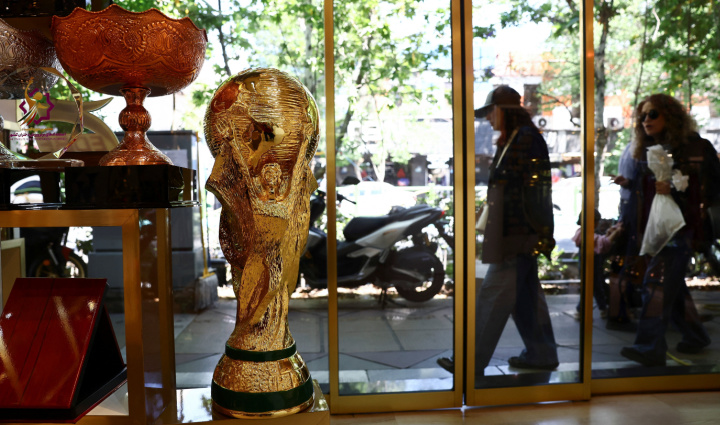
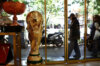
A replica of the FIFA World Cup trophy is displayed in a shop, in Tehran, Iran, April 23, 2026. Photo: Majid Asgaripour/WANA (West Asia News Agency) via REUTERS
As the 2026 FIFA World Cup got underway across the United States, Mexico, and Canada, Israel was entirely absent from the list of participating nations. Yet within days of the opening matches, Israel appeared repeatedly across activist campaigns, media features, protest actions, social media imagery, and calls for FIFA sanctions.
AJ+ promoted efforts to suspend Israel from international soccer. Al Jazeera amplified demonstrations aimed at keeping Palestine in the spotlight during the tournament. The Associated Press published a World Cup-timed feature focused on Palestinian soccer players in the West Bank. Social media accounts merged World Cup symbolism with images from Gaza. Sixteen years after HonestReporting first examined how the 2010 World Cup was used as a vehicle for anti-Israel imagery and messaging, many of the same patterns have returned.
The Playbook Hasn’t Changed
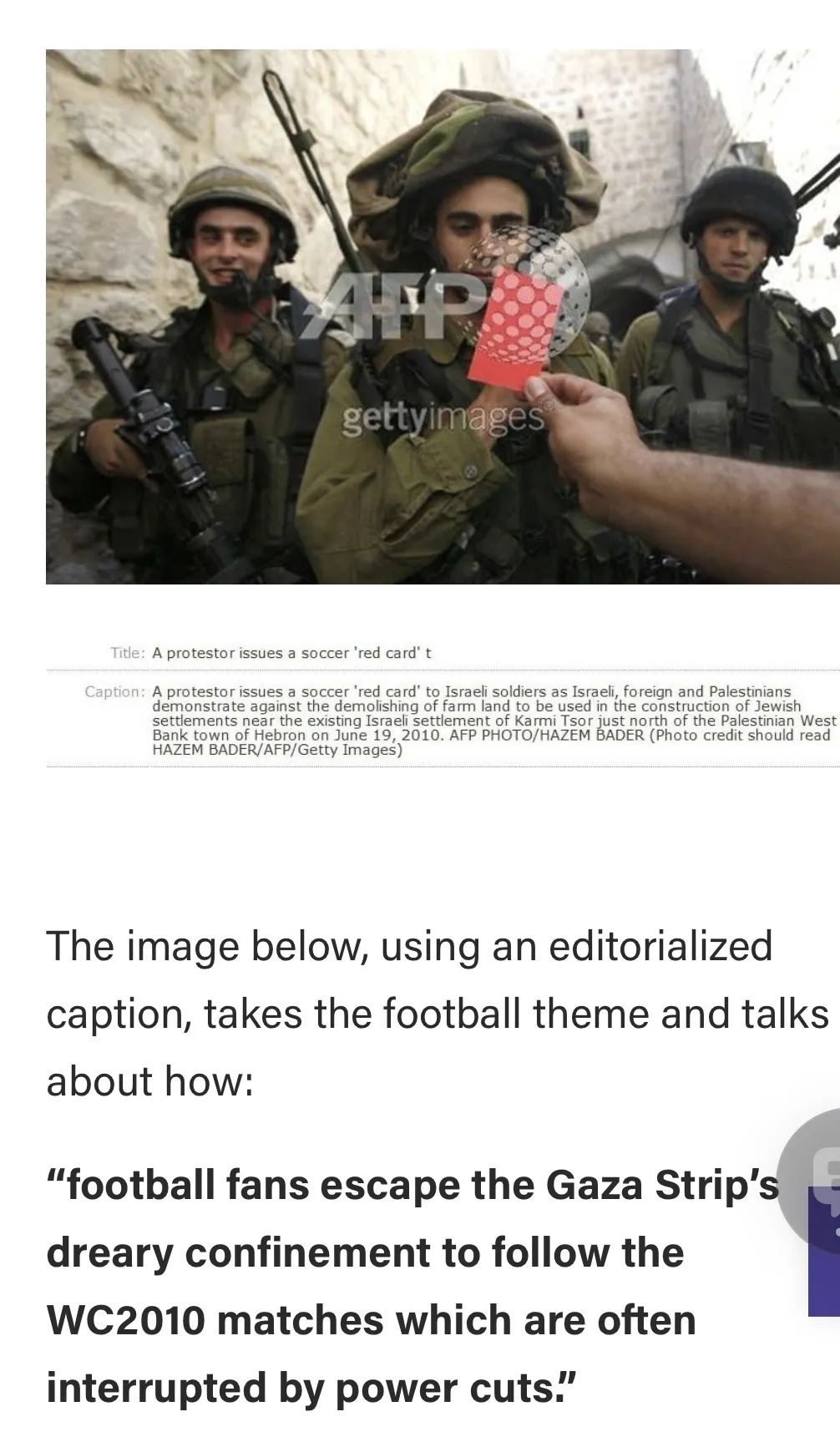
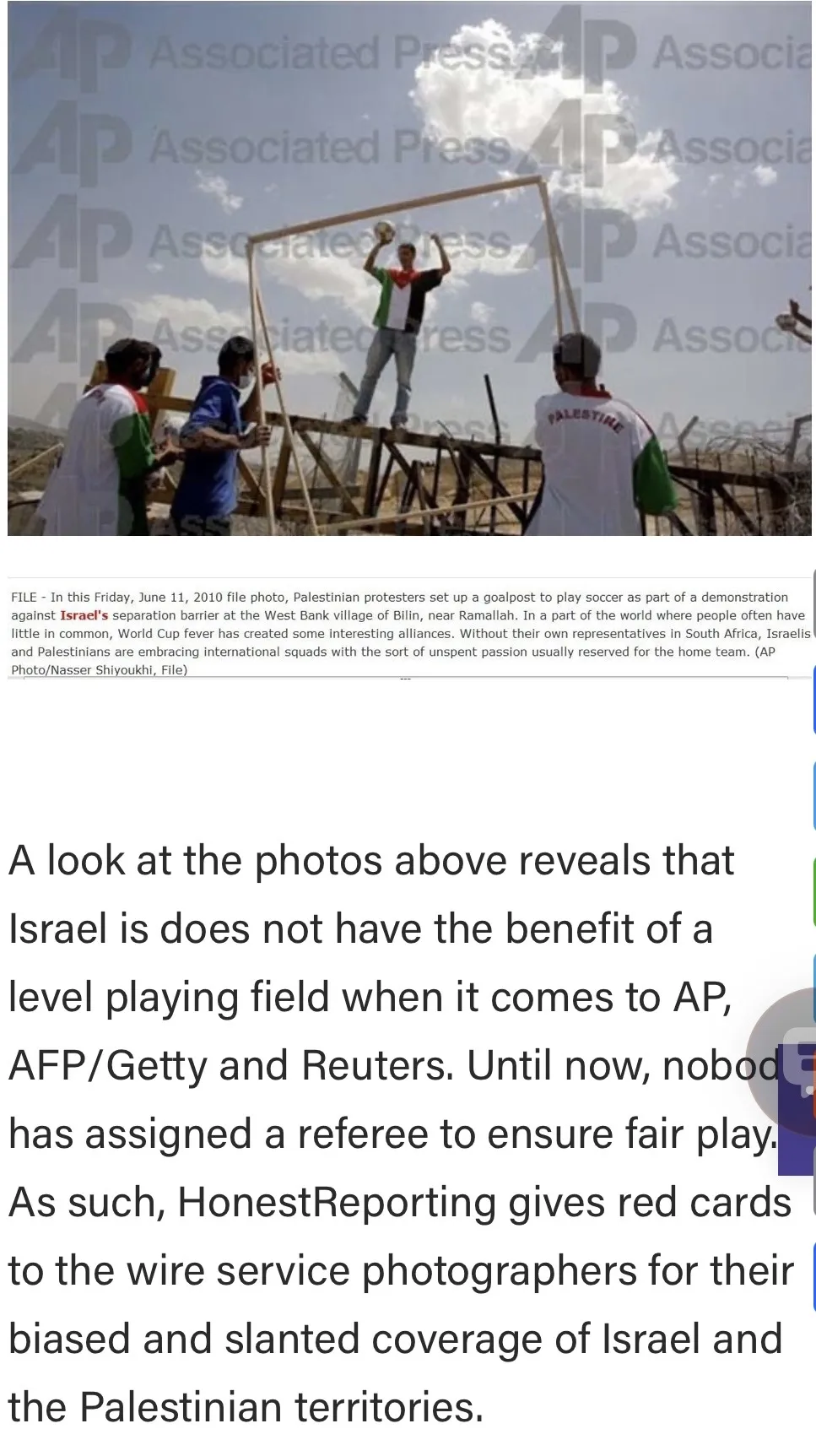
In December 2010, HonestReporting published “Shattered Lens: Part 2 – Abusing Sport for Propaganda,” an investigation examining how international wire-service photographers repeatedly used the South Africa World Cup as a visual hook for stories centered on Israel and the Palestinians.
The study found that soccer imagery was frequently employed as a mechanism for drawing international attention toward political grievances unrelated to the tournament itself. Photographs of Palestinians playing soccer were staged beside the security fence. Goalposts appeared at demonstrations. Editorialized captions linked World Cup enthusiasm to restrictions, barriers, and conflict.
The central finding was straightforward: The tournament provided global visibility while political messaging supplied the underlying purpose.
Sixteen years later, the same formula remains remarkably familiar.
Opening Week Activism
During the opening days of the 2026 World Cup, AJ+ published a series of posts demanding soccer’s international governing body, FIFA, takes action against Israel.
One post highlighted the detention of two Palestinian women’s national team players and featured a protest sign reading “Kick Israel Out of FIFA.’ Another promoted claims by the Palestine Football Association alleging a pattern of targeting Palestinian athletes while calling on FIFA to intervene.
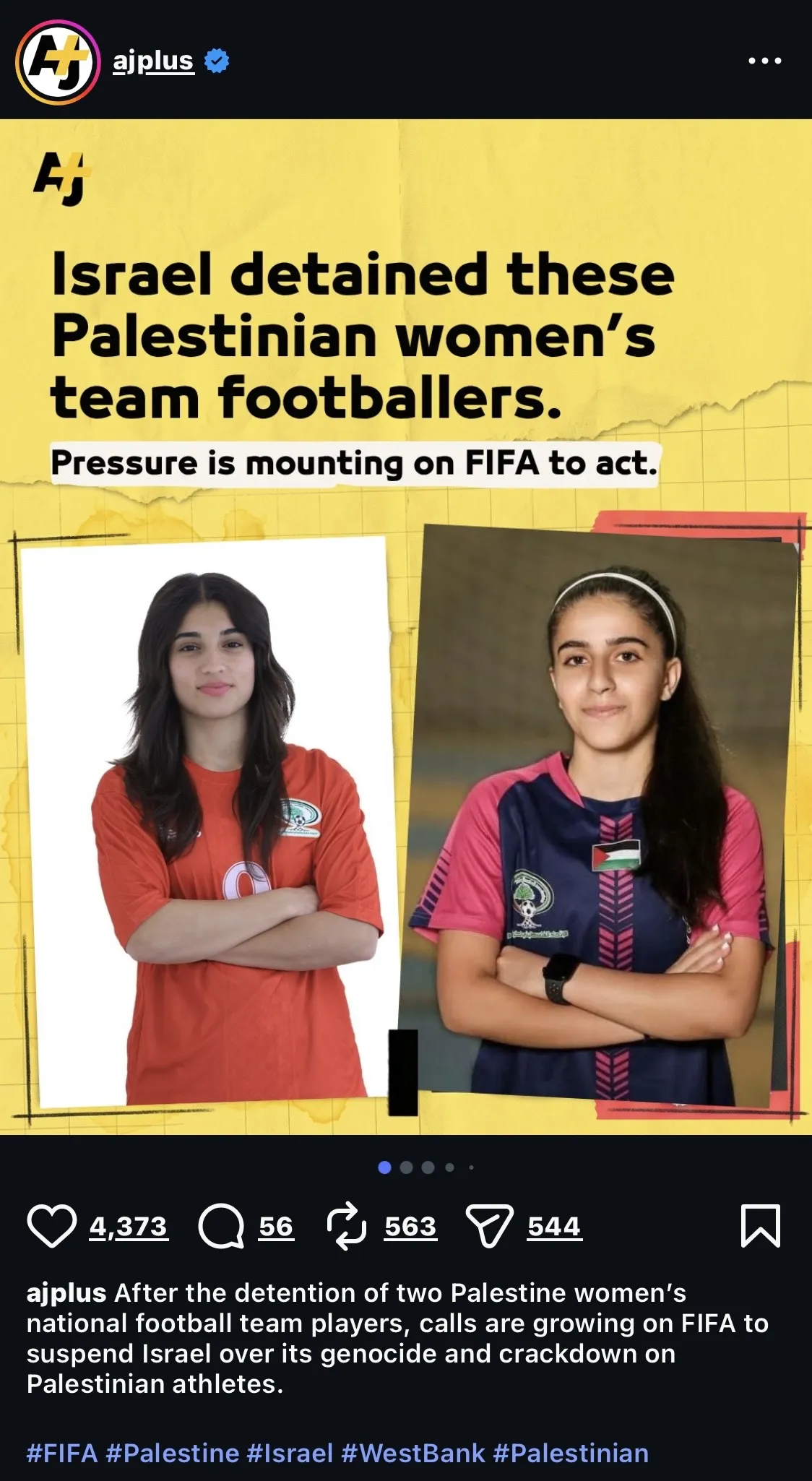
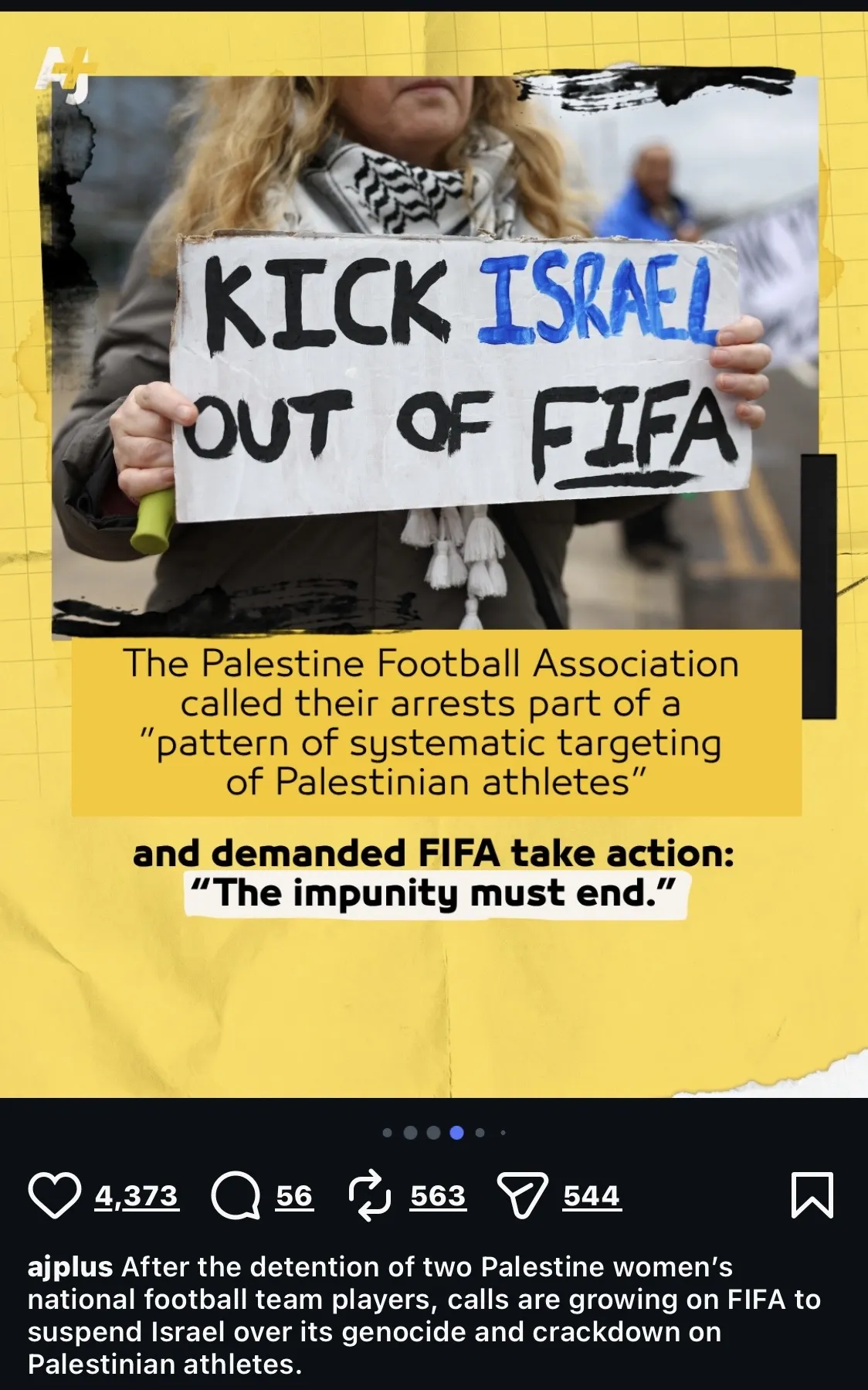
The campaign coincided with the opening week of the tournament, placing Israel-related political demands directly into the wider World Cup conversation.
The effort extended beyond social media.
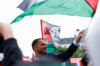
On June 11, Al Jazeera English highlighted a demonstration in Mexico City staged alongside World Cup opening events. Participants formed a giant human Palestinian flag while organizers openly stated that the purpose was to keep the Palestinian issue in the spotlight during one of the world’s most-watched sporting events.
The tournament’s audience was the attraction.
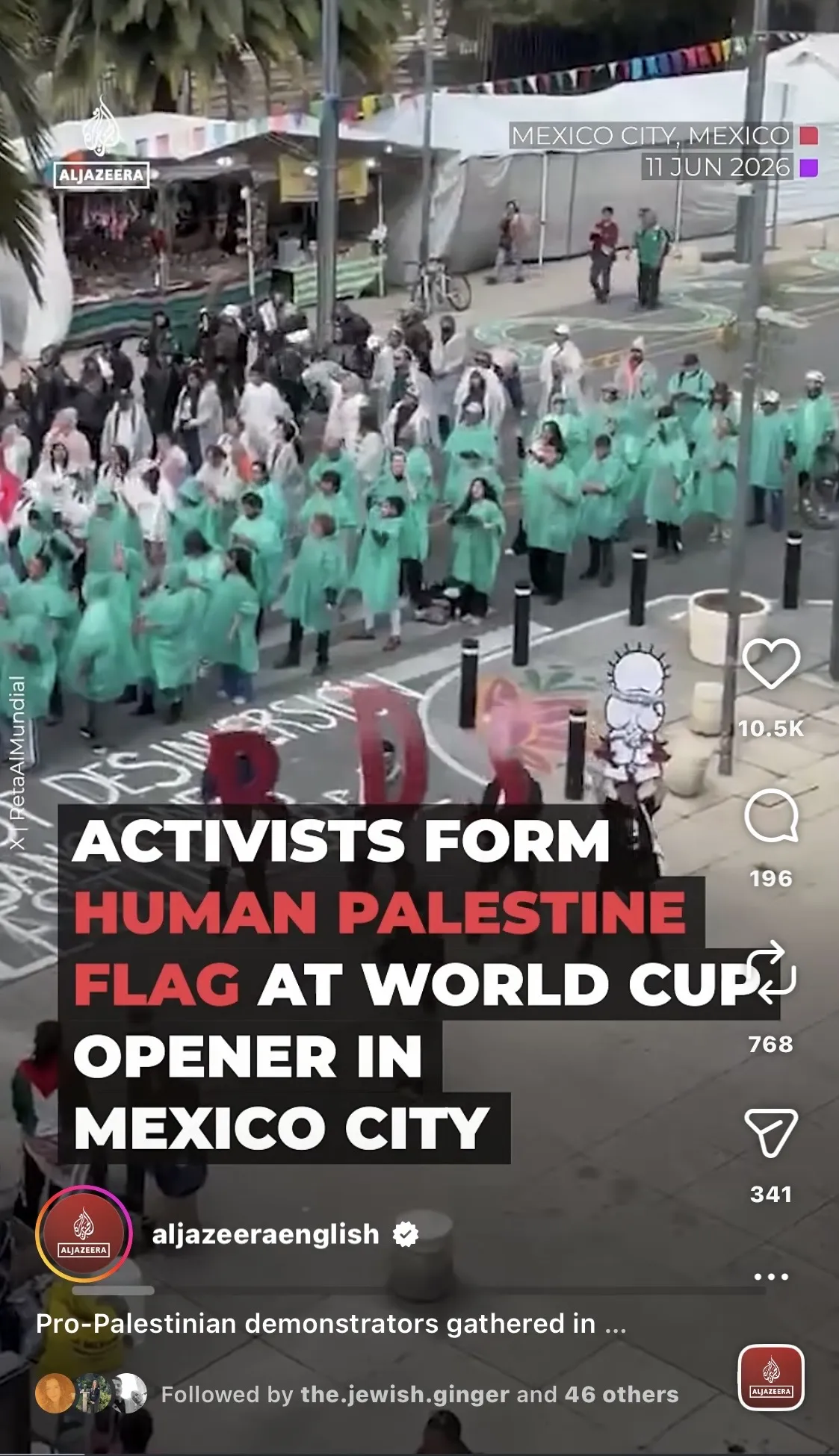
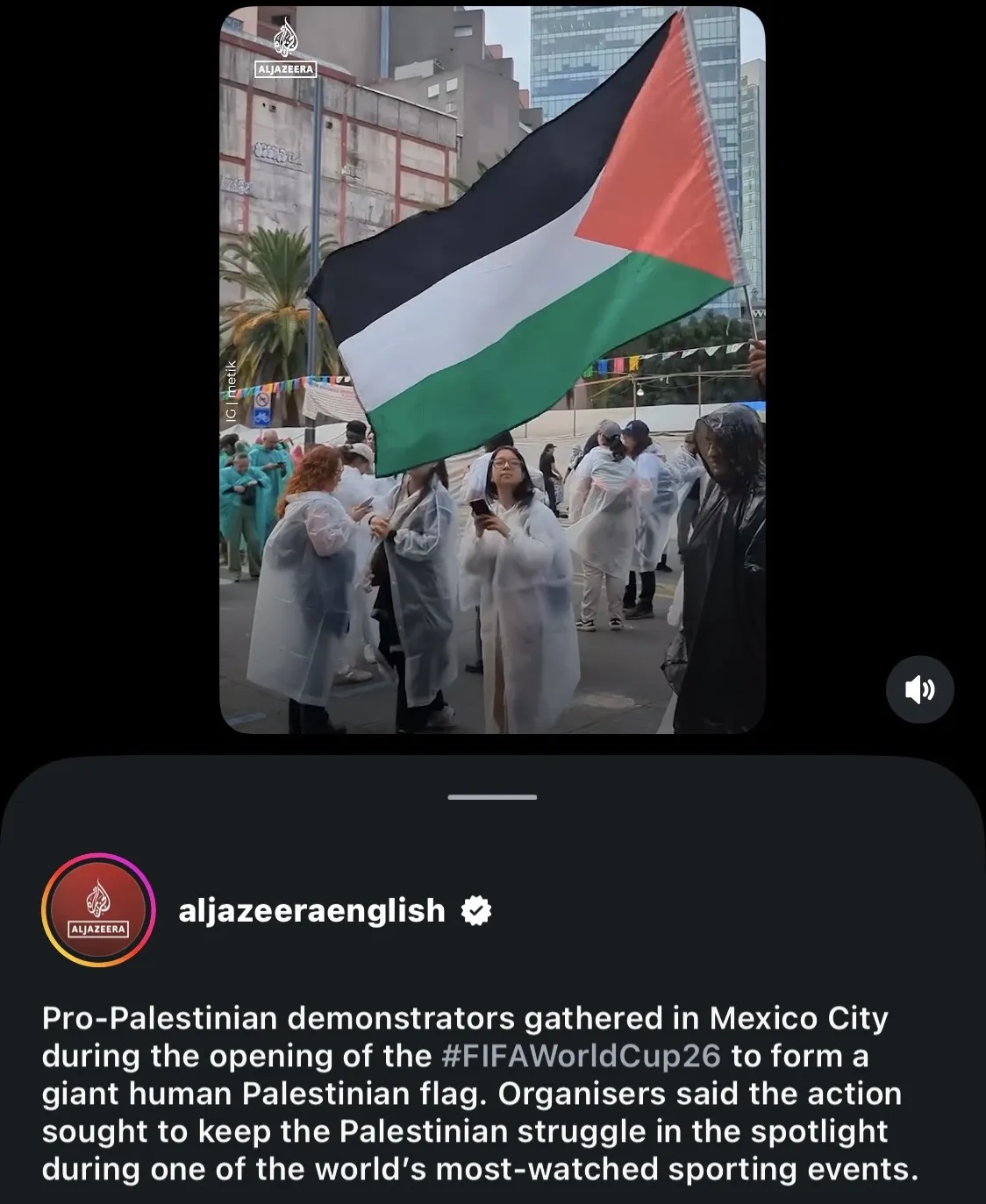
Gaza and the World Cup
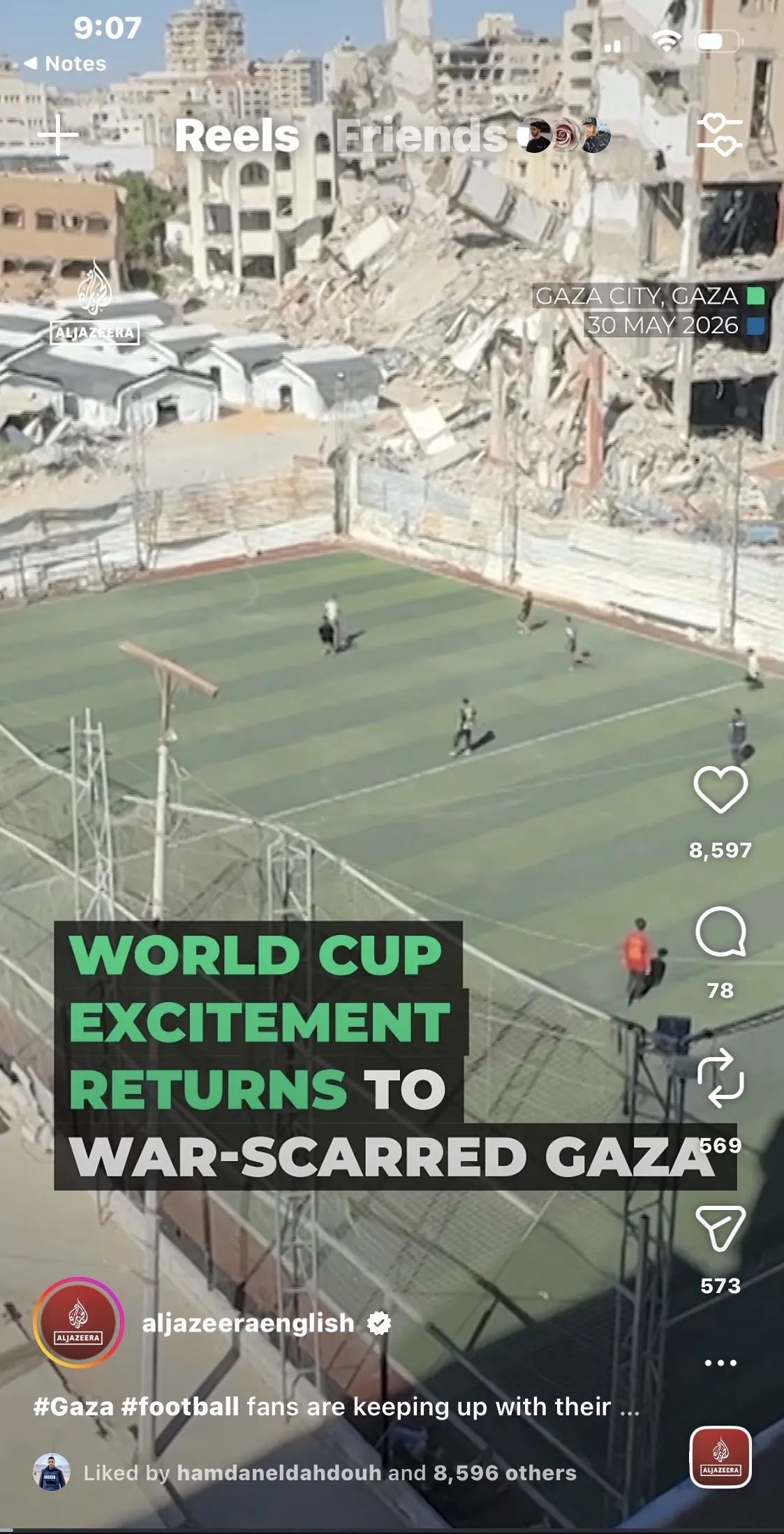
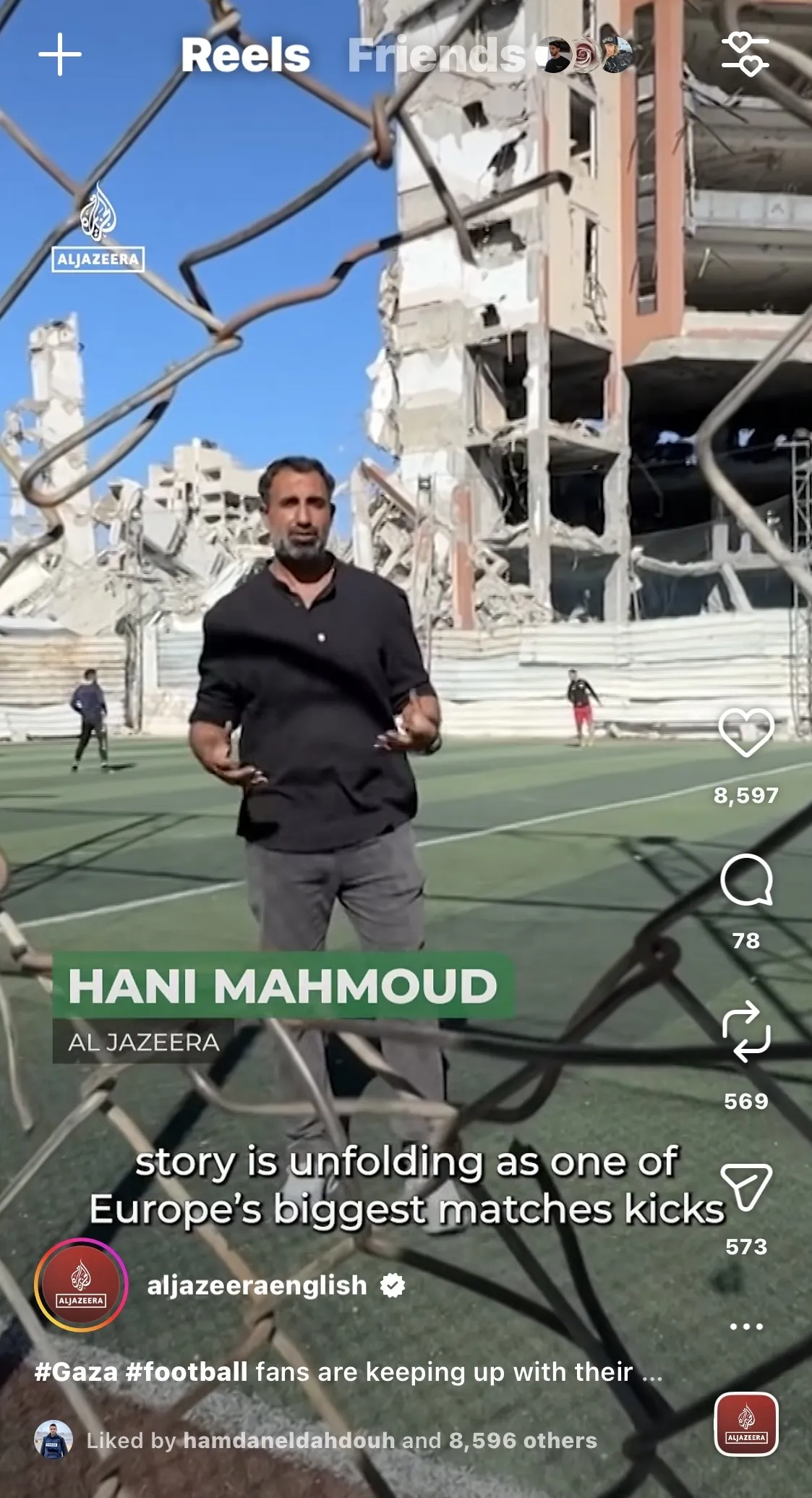
Al Jazeera also produced a feature from Gaza under the banner: “World Cup Excitement Returns to War-Scarred Gaza.”
Reporter Hani Mahmoud opened the segment by telling viewers that Gaza is typically associated with “conflict, destruction, and crisis” before introducing scenes of people gathering to watch soccer.
The report included interviews with local residents discussing friendship, recreation, competition, and the importance of preserving ordinary social activities despite the realities of war.
The editorial framing is what makes the piece noteworthy.
Throughout the segment, soccer fields were shown against heavily damaged buildings. Rubble dominated the background. Mahmoud delivered portions of the report surrounded by visible destruction while discussing World Cup excitement and community gatherings.
The spoken story centered on soccer.
The visual story remained firmly anchored in war.
The AP Case Study
Associated Press provided perhaps the clearest example of how the World Cup can function as an editorial gateway.
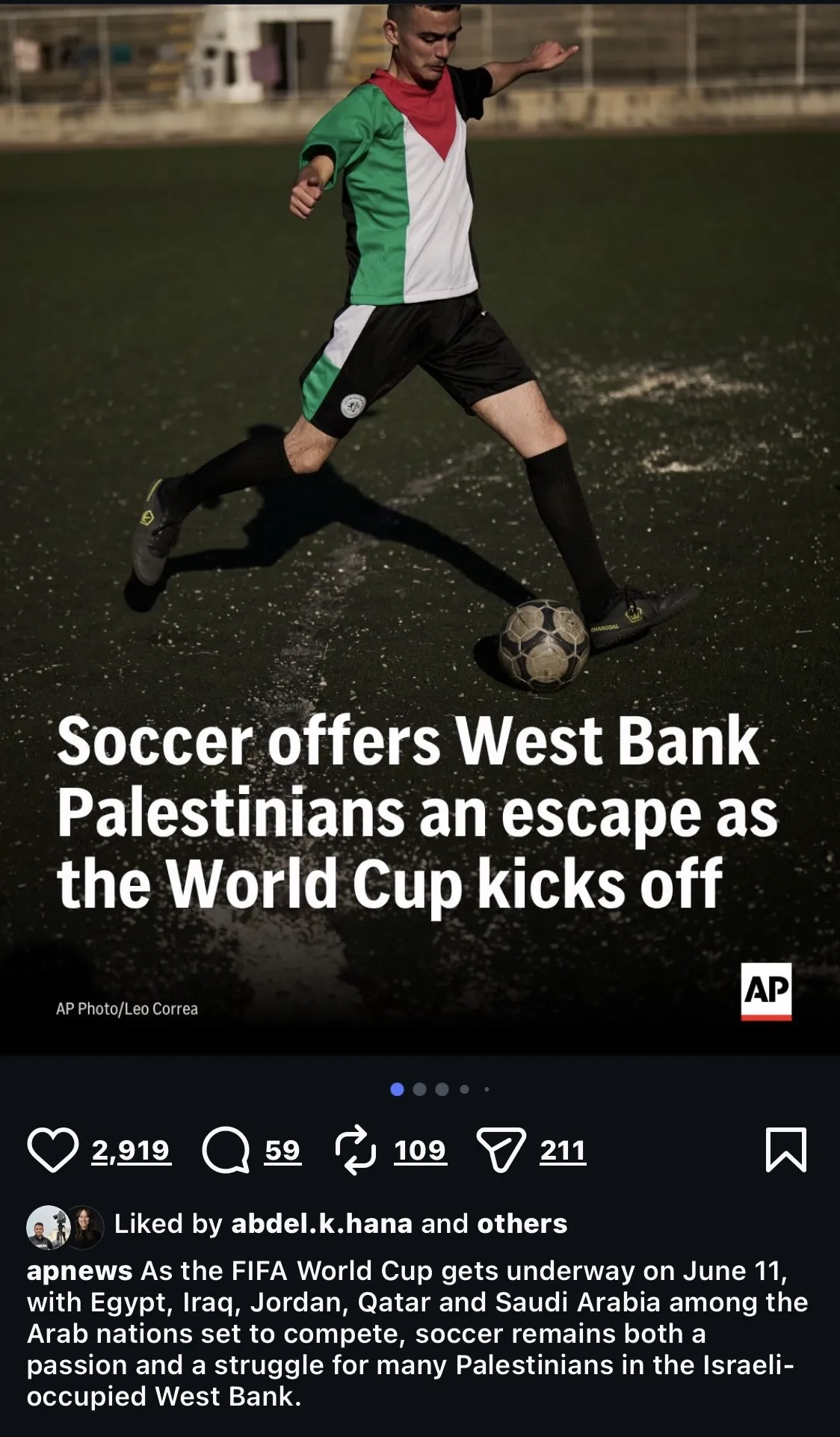
Published as the tournament began, AP’s feature by veteran photographer Leo Correa appeared under the headline: “Soccer offers West Bank Palestinians an escape as the World Cup kicks off.”
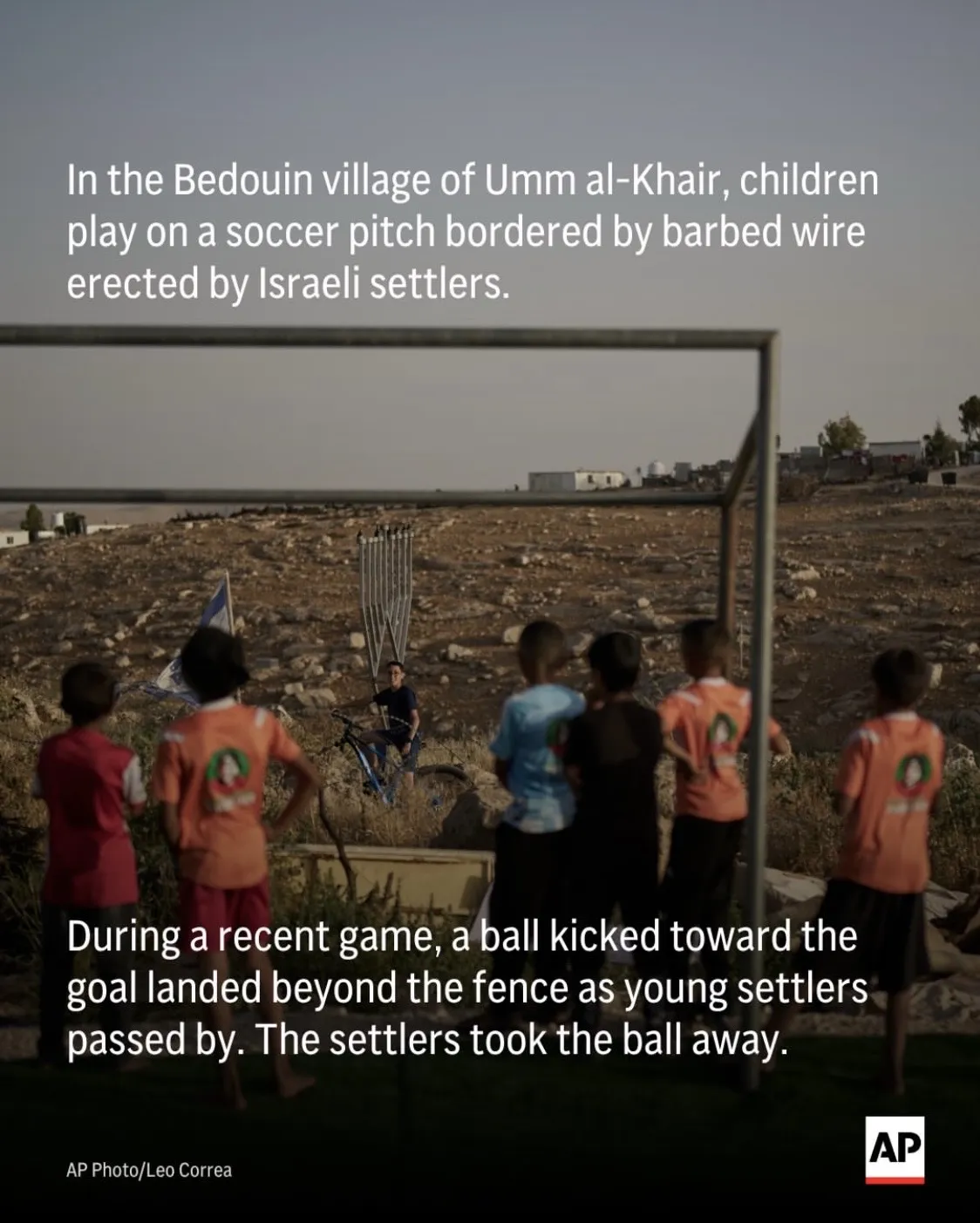
Readers arriving through World Cup coverage were not introduced to participating teams, tournament venues, host nations, or competition storylines. Instead, they encountered a localized West Bank narrative involving Palestinian youth soccer, nearby Israeli residents, fencing, access disputes, and allegations that soccer balls kicked beyond a fence were not always returned.
The reporting focused on a local issue.
What makes the package significant is the editorial decision to frame that issue through the opening of the World Cup itself.
A global sporting event attracting billions of viewers became the entry point into a story centered on Israel and the Palestinians. The mechanism bears a striking resemblance to the pattern documented by HonestReporting during the 2010 tournament, when soccer imagery repeatedly directed international audiences toward political narratives far removed from the matches taking place on the field.
Different Standards
The opening week also produced an illuminating comparison.
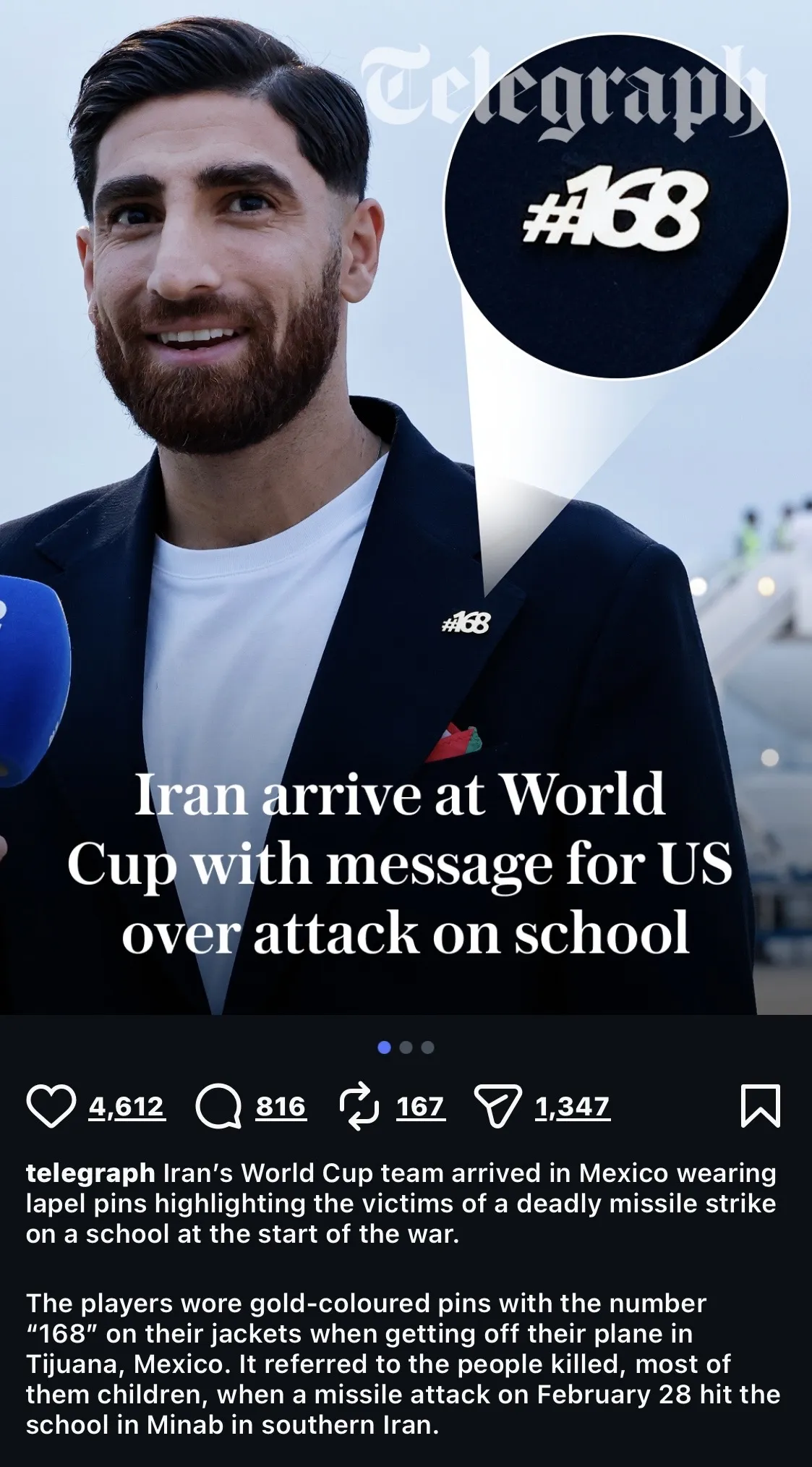
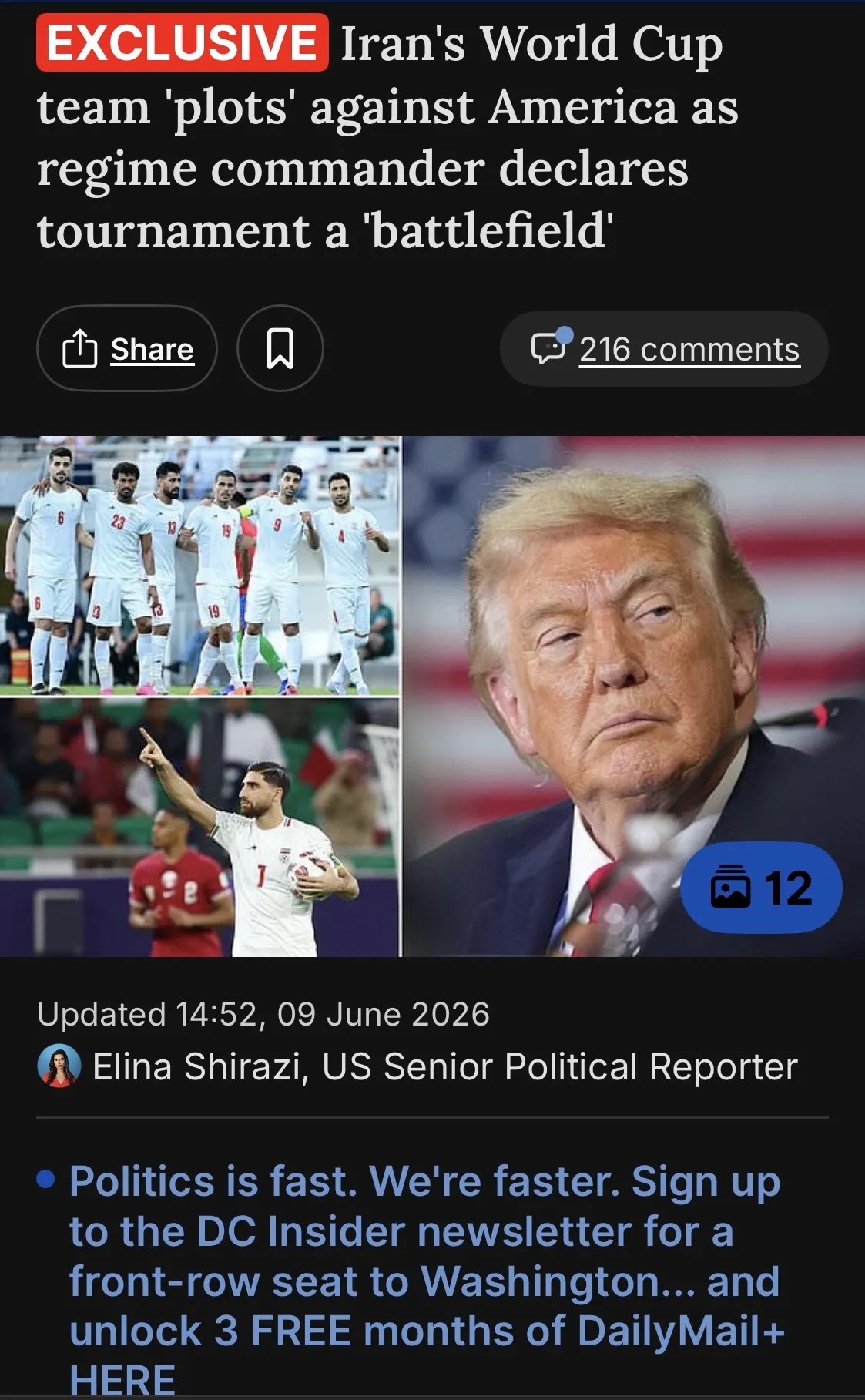
On June 9, media outlets including The Telegraph and Daily Mail reported that Iran’s national team arrived at Tijuana International Airport wearing “#168” lapel pins commemorating victims of a missile strike inside Iran. Coverage also highlighted statements attributed to an Iranian regime commander who described the World Cup as a “battlefield” against the United States.
Iran was one of the participating nations.
Yet explicit political messaging attached to an actual World Cup delegation was largely treated as a news curiosity, while sustained activist and media attention continued to focus on Israel, a country not participating in the tournament.
The Image Factory Expands
The World Cup has also become a canvas for visual activism beyond traditional news organizations.
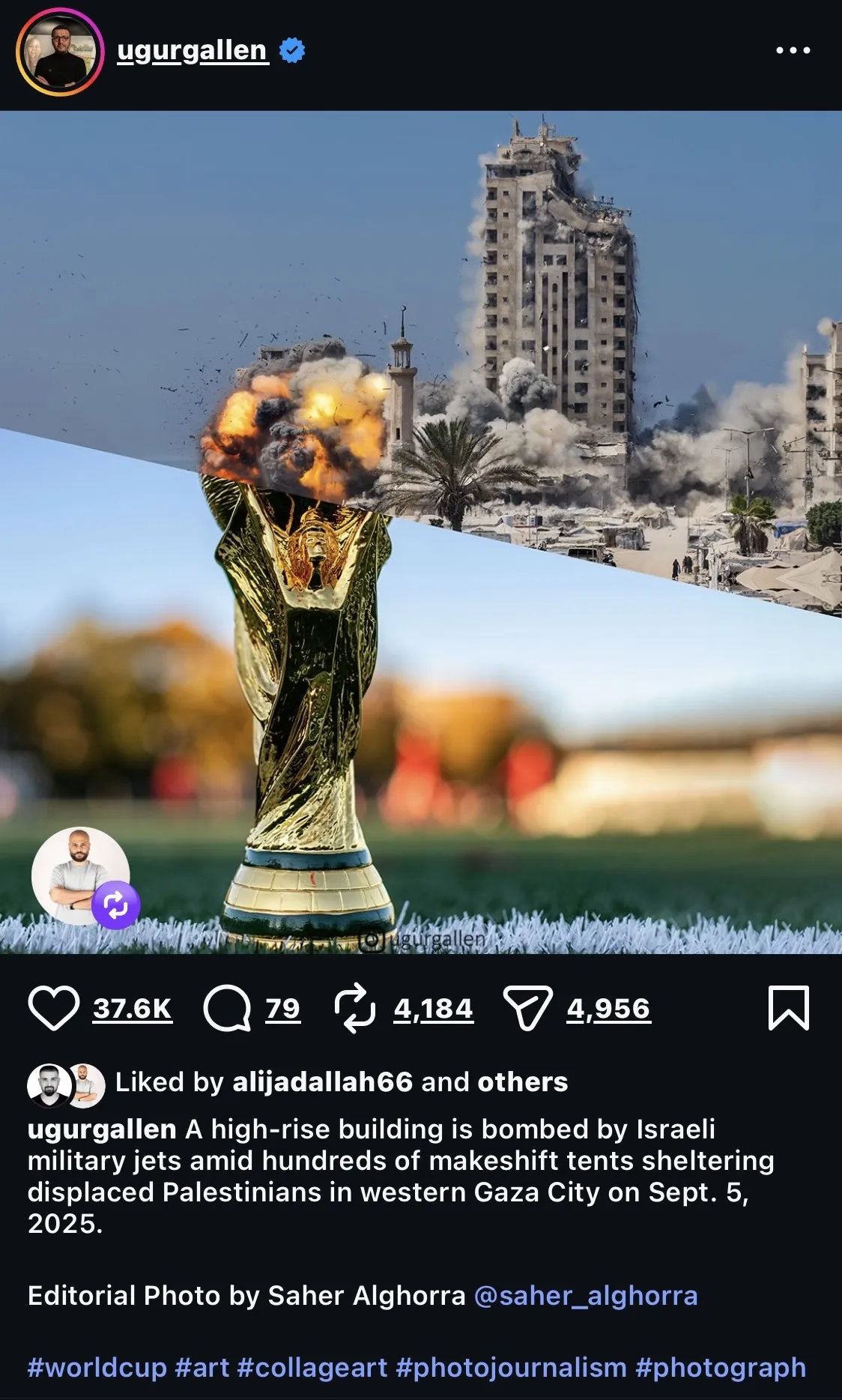
One widely circulated image published by digital artist Ugur Gallenkuş combined the FIFA World Cup trophy with a scene of destruction in Gaza. Gallenkuş credited the underlying conflict photograph to Saher Alghorra, the controversial Gaza-based Pulitzer Prize-winning photographer whose work has featured in previous HonestReporting investigations.
The original image dated from September 2025.
Yet during the opening week of the 2026 World Cup, it was reintroduced through a digital collage distributed with hashtags including #worldcup and #collageart.
The significance lies in both the timing and construction. An archived conflict photograph was merged with one of the most recognizable symbols in international sport and then recirculated precisely as the tournament began dominating global attention.
The World Cup was not being documented.
Its symbolism was being repurposed.
The Other Story
Amid calls for boycotts, suspensions, and exclusion, a different narrative received far less attention.
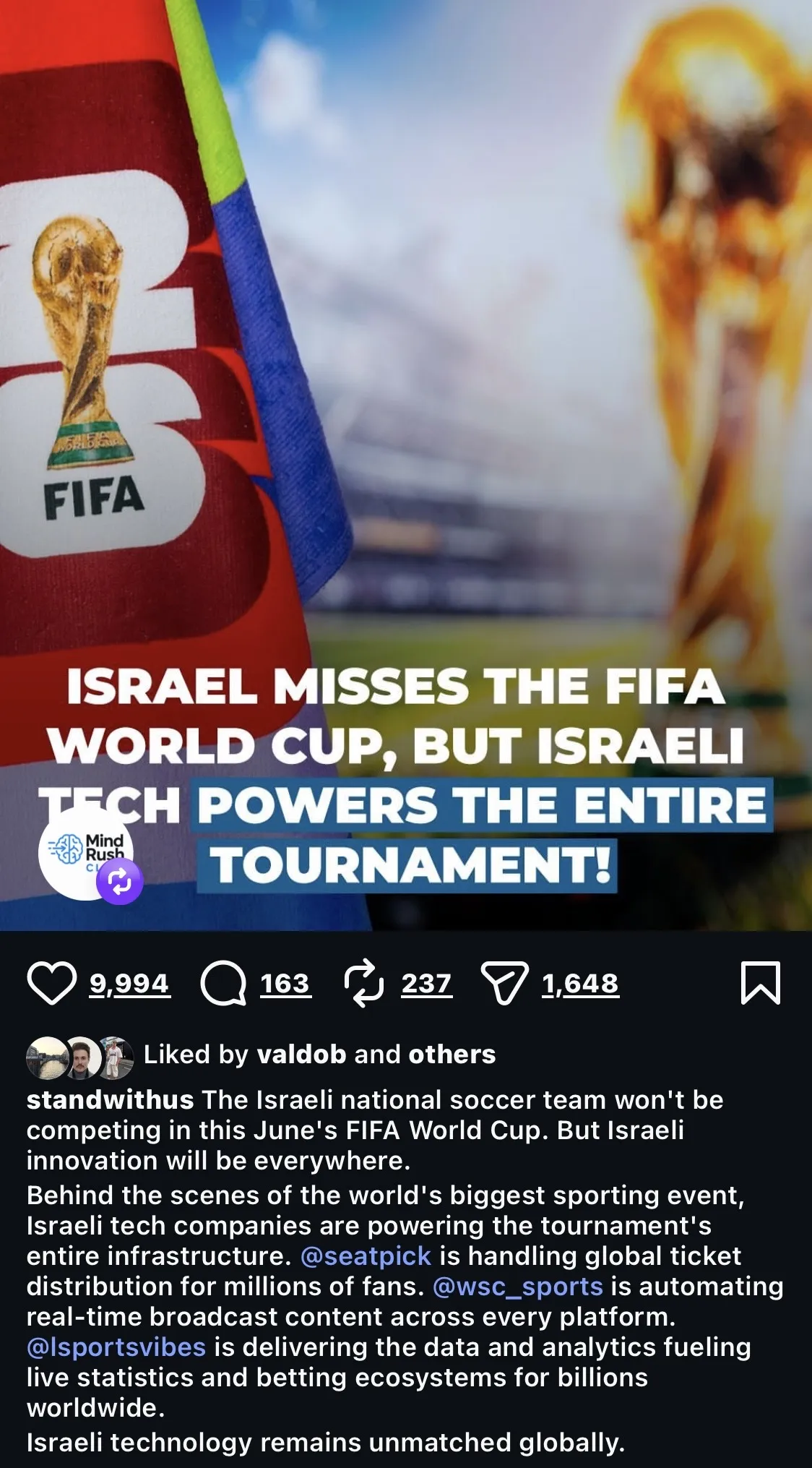
Pro-Israel organizations highlighted the fact that although Israel failed to qualify for the tournament, Israeli technology remains embedded within parts of FIFA’s operational infrastructure. Israeli companies contribute to ticketing systems, broadcast automation, sports data processing, and other technological functions used throughout the competition.
The campaign served as a data-driven response to a media environment dominated by exclusionary narratives, drawing attention to the extent of Israel’s ongoing contribution behind the scenes.
Sixteen Years Later
For longtime HonestReporting readers, the parallels are difficult to ignore.
In 2010, Shattered Lens documented how soccer imagery was repeatedly used to draw attention to Israel’s security fence and other political themes during the South Africa World Cup. Goalposts, soccer balls, and tournament symbolism became recurring devices through which political messages were delivered to international audiences.
The visual vocabulary has evolved.
The distribution channels have expanded.
Social media now amplifies content at a scale unimaginable in 2010.
What has remained remarkably consistent is the recurring appearance of Israel-related political narratives during major sporting events, even when those events have little direct connection to Israel itself.
Conclusion
Global sporting events attract enormous audiences. The FIFA World Cup, more than any other tournament, offers activists, journalists, photographers, and political organizations access to a platform capable of reaching hundreds of millions of people.
That visibility creates opportunities for storytelling.
It also creates opportunities for political messaging.
The opening week of the 2026 World Cup demonstrates how quickly a tournament can become a vehicle for narratives that have little to do with the matches being played. Sixteen years after HonestReporting documented the use of soccer imagery to promote anti-Israel political themes, many of the same methods remain visible across traditional media, activist campaigns, and social media platforms.
The names have changed.
The technology has evolved.
The playbook remains remarkably familiar.
David Katz is an internationally acclaimed photojournalist and imagery analyst with more than forty years of experience covering global news, politics, and major events. A former picture editor and contributor to leading British and international outlets, he specializes in visual-forensic analysis, media integrity, and the influence of photographic framing on public perception. His work now focuses on exposing visual bias in conflict reporting and strengthening public understanding of how images shape narratives in the digital age. The author is a contributor to HonestReporting, a Jerusalem-based media watchdog with a focus on antisemitism and anti-Israel bias — where a version of this article first appeared.