






The Business of Fighting Antisemitism — Why the Organized Jewish Community Must Change
Error: Contact form not found.
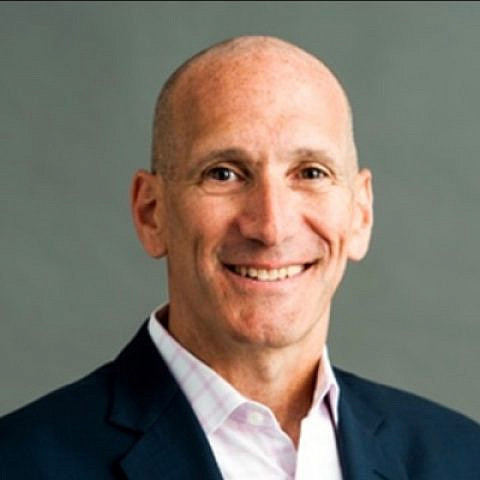
 by Steven Rosenberg


Jewish Americans and supporters of Israel gather at the National Mall in Washington, DC on Nov. 14, 2023 for the “March for Israel” rally. Photo: Dion J. Pierre/The Algemeiner
One of the hardest questions any organization should be willing to ask itself is this: What would happen if we actually solved the problem we were created to address? Most organizations never ask that question because the answer can be uncomfortable.
Imagine a hospital that quietly depended on people staying sick. Imagine a consulting firm that relied on its clients’ problems never being fully resolved. Imagine a fire department that measured success by the number of fires instead of the number prevented.
The organization might still employ good people. It might still perform valuable work. Yet over time, the institution would begin optimizing for the continuation of the problem rather than its elimination.
That question has been on my mind a lot when I think about the state of the organized Jewish community.
For decades, many legacy Jewish organizations have operated from essentially the same playbook. A crisis occurs. A statement is issued. A task force is formed. An emergency meeting is convened. A fundraising campaign follows. Another incident occurs. Another statement follows. Another fundraising campaign follows. The cycle continues.
The troubling question is whether anyone is measuring success by the right metric.
If antisemitism is the problem, the goal should be reducing antisemitism. If Jewish security is the goal, the goal should be increasing Jewish security. If Jewish continuity is the mission, the goal should be strengthening Jewish identity, Jewish education, and Jewish institutions.
Instead, too much of the organized Jewish world appears to measure success through inputs rather than outcomes. More dollars raised. More events hosted. More conferences attended. More press releases issued. More committees created. Those are activities — not outcomes.
A non-profit should not be judged by how much money it raises. It should be judged by what changes because that money was raised. Yet increasingly, some organizations seem to confuse fundraising with impact. The annual campaign becomes the mission instead of the tool that supports the mission. That distinction matters because incentives matter.
If your primary Key Performance Indicator (KPI) is dollars raised, incidents become fundraising opportunities. Crises become fundraising opportunities. Fear becomes a fundraising opportunity. The worse things become, the easier it often becomes to raise money. The more frightened the community becomes, the more responsive donors become.
Nobody says this out loud, of course. Most leaders within these institutions genuinely care about the Jewish community. The issue is not intent. The issue is incentives. Organizations eventually optimize around whatever they measure. If dollars become the primary measure of success, dollars inevitably begin driving behavior and then a dangerous dynamic is created — because solving the problem and sustaining the institution can quietly become competing interests.
The evidence is increasingly difficult to ignore. Since Oct. 7, 2023, many of the most effective advocacy efforts have not come from the largest institutions.
They have come from smaller, entrepreneurial organizations operating with urgency, creativity, speed, and focus. They have come from groups willing to challenge conventional wisdom, engage directly with hostile environments, use modern communications tools, and measure success through outcomes rather than process.
In the business world, this pattern is familiar. Start-ups often outperform incumbents because they are solving today’s problems while incumbents are protecting yesterday’s model. The startup asks, “What works?” The incumbent asks, “What have we always done?” One is focused on results. The other is focused on preservation.
The organized Jewish world increasingly feels like it is facing the same challenge.
Rather than embracing these newer organizations, partnering with them, funding them, and learning from them, many legacy institutions appear more interested in protecting territory. Donors, relationships, access, and visibility all become territory. That is not leadership; it is protectionism.
The irony is that the Jewish community has always thrived through entrepreneurship. Jewish history is filled with builders, innovators, disruptors, and risk-takers. We celebrate creativity in business. We celebrate innovation in technology. We celebrate fresh thinking in nearly every area of life. Until it threatens an existing institution.
The people attacking Jews are not operating from a 1995 playbook. Why are so many organizations defending Jews still doing exactly that? In today’s world, fighting antisemitism is like fighting obesity or stupidity. It isn’t going away, so what do we do to contain it?
There is another uncomfortable reality. The Jewish community has often confused prominence with effectiveness.
Large organizations become large because they have history, infrastructure, relationships, and resources. None of those things automatically make them effective. Longevity, brand recognition, and annual budgets are not impact. Impact is impact.
The question every organization should be forced to answer is simple: What is different because you exist? Not what events did you host, or how many donors attended a gala, or how many emails were sent.
The questions I’d ask are what changed, what improved, what threat became weaker, and what opportunity became stronger?
Those are the questions entrepreneurs answer every day because the market forces them to. Legacy institutions rarely face that same pressure because funding often continues regardless of outcomes.
The Jewish community does probably need fewer institutions, but it really needs more accountability and a willingness to acknowledge that some organizations are producing extraordinary results while others are producing extraordinary reports about results.
The world has changed dramatically. Yet too many organizations continue operating as though the same playbook that worked 30 years ago will somehow work tomorrow. Nothing changes if nothing changes.
The question is not whether the Jewish community has enough resources to meet this moment. It does. The question is whether those resources are being deployed to solve the problem or sustain the system.
Those are very different goals, and it is time we started being honest about the difference.
Steve Rosenberg is the Principal of the Team GSD and the author of the book: Make Bold Things Happen: Inspirational Stories from Sports, Business, and Life.