




IAEA Publicly Rebuffs Iranian Offer to Inspect Suspected Nuclear Site, Insisting on Access to Parchin Complex Instead
Error: Contact form not found.

 by Ben Cohen



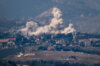
A satellite image of Iran's Parchin military complex, where IAEA inspectors have been refused access. Photo: Twitter
The International Atomic Energy Agency (IAEA) has for the first time publicly refused an Iranian offer to inspect a suspected nuclear site at Marivan, an area near the border with Iraq.
In 2012, the IAEA believed that Marivan was the location of high-explosive experiments linked to setting off a nuclear charge. However, those concerns were not borne out and the Agency shifted its attention to Parchin, a military complex south-east of Tehran.
Diplomats have said that Iran first suggested a visit to Marivan instead of Parchin two years ago and the agency has repeatedly refused any tradeoff, AP reported. But Thursday appeared to be the first time it did so publicly, possibly reflecting exasperation with the lack of progress in its probe since its first attempts more than a decade ago.
The probe is separate from newly extended talks between Iran and six world powers meant to reduce Iran’s technical capacity to make nuclear weapons, AP said. However, its failure would throw hopes of a deal at the talks into doubt because the U.S. says an agreement can be reached only if the IAEA is satisfied with the probe and its final results.
The latest dispute with the Iranian regime comes just as IAEA chief Yukiya Amano asked key members of the organization to provide $5.7 million in extra funding. Amano said the extra cash is needed if the IAEA is to continue monitoring a preliminary deal that temporarily restrains Iran’s nuclear programs as negotiators work on a longer-term agreement. Both the UK and the US have agreed to assist, Reuters reported, quoting Laura Kennedy, the U.S. Ambassador to the IAEA, saying “We would like to announce our intent to make an additional extra-budgetary contribution.”
In an interview with CNN last month, Amano stated that “Iran is not fully cooperating with the Agency to clarify the information that may have military aspects.”
The IAEA chief added, “Another problem is that Iran is not allowing us to implement a more powerful verification tool which is called an ‘Additional Protocol.’ Agreement was not reached.”
Amano will have received scant comfort from the comments yesterday of State Department spokeswoman Jen Psaki that the public was “just going to have to trust” that Iran wasn’t in violation of the November 2013 Joint Plan of Action (JPOA) agreement, despite a UN report claiming that the regime had violated international sanctions by acquiring materials for its Arak nuclear facility.
After the failure of negotiators to reach an agreement on the nuclear program by last November 24, new talks have been scheduled in Geneva next week. Those discussions on December 17 will be preceded by two days of bilateral talks between the US and Iran, the official Iranian Mehr News Agency reported.