





The Nuclear Deal Hasn’t Prevented Iran From Building a Bomb
Error: Contact form not found.

 by Ehud Eilam

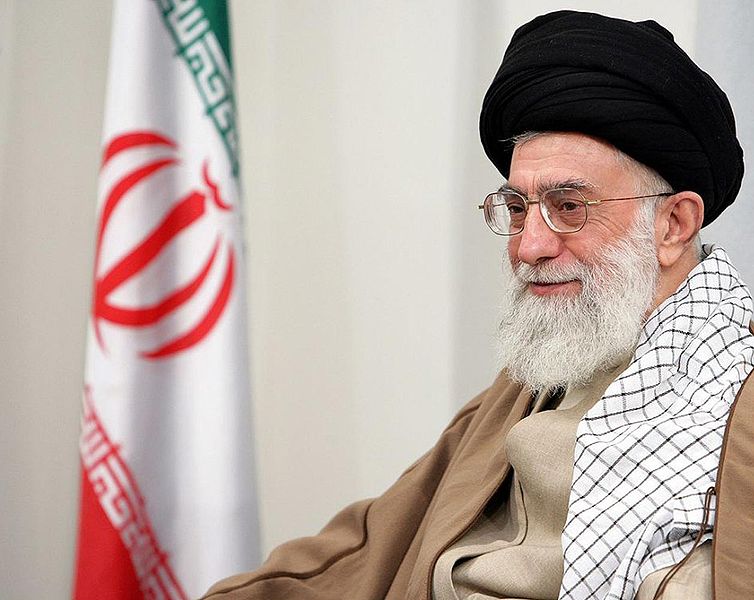
Ayatollah Ali Khamenei, the Supreme Leader of Iran. Photo: Wiki Commons.
On July 14, 2015, the P5+1 and Iran signed an agreement (the JCPOA) regarding Iran’s nuclear program. Under this “agreement,” Iran kept the capability to renew its efforts to produce a nuclear weapon. Iran also went on with developing and testing its long-range surface-to-surface missiles so they could eventually carry a nuclear warhead.
Despite the deal, Iran’s leaders continue to express their hostility toward Israel. For example, on June 3, 2016, Iran’s Supreme Leader, Ayatollah Ali Khamenei, said that the United States, Britain and Israel are Iran’s “main enemies.”
In early July 2016, the annual report by the Federal Office for the Protection of the Constitution (the German equivalent of the FBI), charged that Iran had made at least nine attempts to develop technology that could be used to build a nuclear arsenal. Most of those attempts failed due to the cooperation between German companies and the country’s intelligence agency.
The Obama administration will do whatever it can to keep what it sees as its biggest foreign policy achievement in tact. As long as Iran does not openly breach the deal and provoke the United States, the latter might not pay too much attention to Iran and its nuclear program.
Israel might have to wait until a new American administration comes into office to make any progress on the issue. Meanwhile, Jerusalem has been independently watching to see if Iran tries to breach the JCPOA. It did not accept the JCPOA to begin with, but it can use a major violation of the agreement to prove that Iran can’t be trusted. Even if this happened, at most there would probably be more sanctions — but no military measures. Therefore, Israel has been preparing to rely on its own forces.
In June 2016, the Israeli Air Force (IAF) officially received its first US F-35, which, due to its stealth capabilities, would be the spearhead of a raid to bomb Iran’s nuclear infrastructure. The IAF already has advanced fighter-bombers, the F-15I and F-16I, meant for long-range missions. The problem, however, is that neither carries bombs big enough to crack the protection that Iran has created around some of its more important nuclear sites — such as the one in Fordow, which is located 250 feet below the ground.
The United States has a huge bunker-buster bomb, the MOP (Massive Ordnance Penetrator), which could do the job in Iran. Israel needs that bomb and aircraft capable of carrying it. Then Israel could deter Iran from building a nuclear weapon. Israel therefore needs the support of its American patron, or else it might have to get used to a new reality in which Iran possesses nuclear weapons. One year later, the Iran nuclear deal isn’t looking great.


