


Iraqi PM Meets With Kurdish Leaders
Error: Contact form not found.

 by Michael Johnson

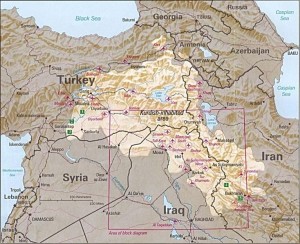
Kurdish-inhabited areas.
Iraqi Prime Minister Nouri al-Maliki visited the northern semi-autonomous area of Iraqi Kurdistan over the weekend. Masoud Barzani, president of the Kurdistan Regional Government, greeted the Prime Minister in the regional capital of Erbil. Maliki brought high-level Baghdad officials for the first cabinet meeting in the city since the 2003 U.S. led invasion. The UN envoy to Iraq expressed hope that the Prime Minister’s visit will help national reconciliation efforts amid growing tensions after the 2011 departure of U.S. troops.
Relations have been strained for years between Kurdish leaders and the central government in Baghdad over energy exploration. The Kurds signed dozens of deals with Western firms since 2003, but the central government refused to recognize the agreements. The semi-autonomous northern region is also constructing a pipeline to Turkey, helping expand exports and further bypass Baghdad’s influence. Disagreements over Kirkuk, an oil-rich city that straddles the Kurdish region’s border with Iraq, could pose a serious threat to Iraq’s stability if left unresolved.
Maliki hopes his meeting with Kurdish leaders could take some pressure off Iraq’s Shiite leadership, which faces challenges from increasingly common sectarian attacks. In 2010, the Prime Minister signed the “Erbil Agreement,” creating a power sharing government with Kurdish and Shiite parties, but the accord was never fully implemented. This weekend’s meeting also seemed to produce little consensus.
As sectarian violence continues to spill over the Syrian border after the U.S. military’s departure, Iraq’s prime minister seeks Kurdish support in overcoming Baghdad’s political deadlock. Such support may offer a stronger bargaining position against Sunni political parties and show a united stance against further Sunni incited violence.
This article was originally published by the Jewish Policy Center.


