




After Marathon Meeting With Netanyahu, John Kerry Leaves Jerusalem Frustrated by Lack of Progress in Peace Talks
Error: Contact form not found.

 by Gidon Ben-Zvi

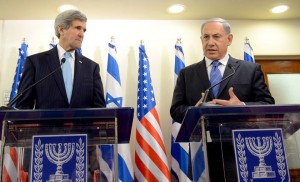
Prime Minister Netanyahu and U.S. Secretary of State John Kerry.
A marathon five-hour meeting in Jerusalem between Israeli Prime Minister Benjamin Netanyahu and U.S. Secretary of State John Kerry ended with little progress being made regarding the U.S. proposed framework peace agreement between Israel and the Palestinian Authority, Israeli daily Walla reported on Thursday.
Much of the conversation was dedicated to America’s proposal for future security arrangements in the Jordan Valley. The source of the U.S. frustration is that its idea of a limited American military presence near the proposed future border between Israel and a Palestinian state for a period of ten years has been effectively rejected – both by Jerusalem and Ramallah, Walla said.
On the Israeli side, senior government officials, led by Defense Minister Moshe (Bogie) Ya’alon raised several objections to the American initiative. Israel’s official position regarding Jordan Valley security arrangements supports a longer Israeli presence than Kerry’s version. Israel’s also seeks a longer American commitment in the area and over a greater geographical radius than the U.S. proposal. Finally, Netanyahu’s vision for the Jordan Valley puts no specific time frame for the IDF’s ultimate withdrawal from the area.
In contrast, the Palestinian Authority continues to assert that the United States is being overly deferential to Israeli demands. Specifically, the PA is furious that, at least according to sources in Arab media outlets, Kerry has offered Israel a right to veto any agreed upon date for the IDF’s retreat from the Jordan Valley, Walla said.
Despite these differences, John Kerry remains convinced that Netanyahu and Palestinian Authority President Mahmoud Abbas understand the heavy cost of not accepting the American-backed framework plan, according to Walla.
Going forward, Walla said that John Kerry shouldn’t expect much relief anytime soon. Even if he manages to smooth over the disagreements surrounding the Jordan Valley, several other potential deal breakers lay ahead.
First and foremost, the divisive issue of Jerusalem’s final status is a topic that if not addressed skillfully will lead to political turmoil, in Jerusalem or Ramallah – or both.