



Mideast Analysts: Imminent Election of Hezbollah Ally as Lebanese President to Benefit Iran
Error: Contact form not found.

 by Algemeiner Staff

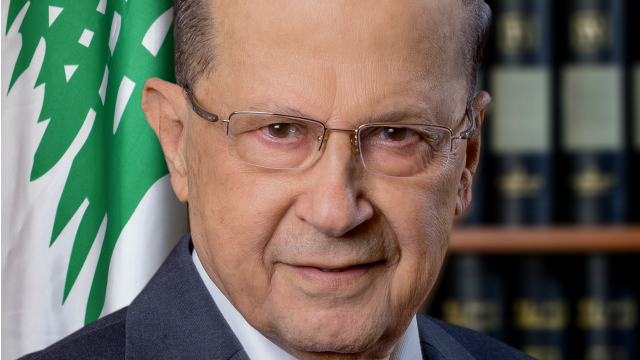
Michel Aoun. Photo: Mgchammas via Wikimedia Commons.
The expected election on Monday of a Hezbollah ally as the next president of Lebanon will benefit Iran, two Mideast experts wrote on Friday.
In an analysis published by the Middle East Media Research Institute (MEMRI), E.B. Picali and Y. Yehoshua wrote that, by choosing 81-year-old Michel Aoun to become president — a position that has been vacant for more than two years due to political paralysis in Israel’s neighboring country to the north — the parliament will “definitely serve future pro-Iran interests in Lebanon at the expense of Sunni interests in Lebanon, and also at the expense of Saudi Arabia.”
Referring to Sunni former Lebanese Prime Minister Saad Hariri’s decision earlier this month to back the candidacy of Aoun — a Maronite Christian who is an advocate of Shiite Hezbollah’s military involvement in Syria on behalf of the Assad regime — Picali and Yehoshua said: “[I]t constitutes another successful attempt by Hezbollah to impose its wishes there [in Lebanon] and a further weakening of the country’s main Sunni force, the Al-Mustaqbal party.”
Furthermore, the analysts stated, “[T]his triumph for Hezbollah comes at a time when it is mostly preoccupied outside of Lebanon’s borders, primarily with fighting alongside the Assad regime in Syria, as well as elsewhere in the Arab world as a proxy of Iran. The organization has fortified its position within Lebanon by virtue of its network of political alliances in the country, as well as by virtue of the quantity of weapons in its possession.”
Aoun served as prime minister and acting president of Lebanon from September 1988 to October 1990 — the end of the 15-year-long Lebanese Civil War, at which point he was forced into exile in France. In 2005, he returned to Lebanon and founded the Free Patriotic Movement, which is now the second-largest party in the Lebanese Parliament and part of the March 8 Alliance that includes Hezbollah.
Though the role of the president in Lebanon — always a Maronite Christian by convention — is mainly symbolic, according to the constitution, he serves as commander-in-chief of the military and security forces; may appoint and dismiss the prime minister and cabinet; may veto bills and dissolve the parliament.


