


Common Words Between Hebrew and Urdu
Error: Contact form not found.

 by Sarmad Iqbal

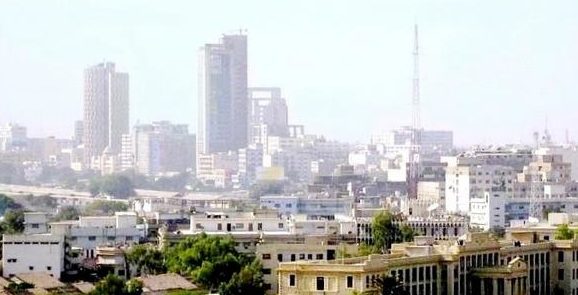
Karachi, Pakistan. Photo: Wikimedia commons.
Shalom chaverim sheli (“Hello my friends”):
I was so happy with the overwhelmingly positive response that my previous article, “A Pakistani Lover of Hebrew,” garnered. I want to express my gratitude to all of my Jewish and Hebrew-speaking friends from Israel and around the world who read and shared that article.
The love and warmth that I received in the form of comments and likes wasn’t just confined to the praise of my article and my love for Hebrew — but for a desire to see more Pakistanis embrace Israel and the Jewish people.
For me, Hebrew isn’t just a language. It is a love that has been renewed and reignited by the warmth that I received from the Jewish community.
As I promised in my previous article, I’m devoting this article to the common words between Hebrew and my mother tongue of Urdu — which is also the national language of Pakistan.
Hebrew is truly a great language, and was immensely riveting and enthralling for me as I started exploring it and studying it on my own (through online Hebrew learning sites, and movies and pop songs). So I would like to share some more words and phrases that can be found both in Hebrew, and in Urdu.
The first word is “Yom,” which is a common word for “day” in Hebrew and Urdu. Hebrew has the word “Olam” for “world,” and Pakistanis have the word “Alaam” in Urdu. Hebrew speakers have the word “Gehenom” for “Hell,” while Pakistanis have “Jahanoom” in Urdu.
In Hebrew, there is the word “Mequdash” for “holy” — and Pakistanis have the word “Muqadas.” Hebrew has the word “Ra’hmanut” for “mercy,” and Urdu has the word “Rahmat,” which derives from the Arabic word “Ra’hma.”
For “mother” Hebrew speakers have the word “Em,” and Pakistanis have the word “Ammi.” You have “Nahar” for “river” in Hebrew, and Pakistanis have “Naher” for “canal” or a “short river” in Urdu. In Hebrew, the word for the “soul” is “Rua’h,” and in Urdu there is “Rouh.”
And how can I forget that we also have the word for “sun” in common, though with slight difference. In Urdu, Pakistanis have the word “Shams,” and in Hebrew there is “Shemesh.” In Hebrew, you have the word “Targum” for translation, and Pakistanis have the word “Tarjuma.”
And lastly, we have the word for “one” in common — as Hebrew speakers have the word “E’had,”and Urdu speakers have the word “Wahid.” I wish from the core of my heart that one day our two peoples we will be “E’had” and “Wahid.”
We must join together against all the mutual problems shared by human beings, regardless of their religion, ethnicity or nationality.
Lehitra’ot (“Goodbye”) everyone — and Nitra’eh Beqarov! (“See you soon!)”
Sarmad Iqbal is a Pakistani writer, blogger and student who has a penchant for reading, writing, learning languages and studying cultures, religions and geopolitical affairs. He can be followed on Twitterat @sarmadiqbal7.


