Wednesday, July 15th | 1 Av 5786

Subscribe

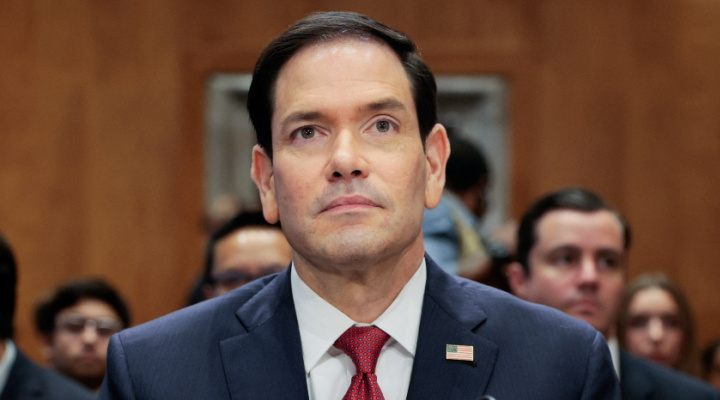
Hakeem Jeffries Announces He Will Not House Minority Leader Hakeem Jeffries (D-NY) has come out against a bid to cut off US military aid to Israel, while calling for a “major reset” of Washington’s relationship with the Jewish state. In a “Dear Colleague” letter to fellow Democrats on Tuesday, Jeffries said he would vote against an amendment led by Rep. Thomas Massie (R-KY), and co-sponsored by Rep. Ro Khanna (D-CA), that would strip roughly $3.3 billion in annual military financing for Israel — while preserving $500 million for missile-defense programs such as Iron Dome — from the fiscal 2027 National Security, Department of State, and Related Programs Appropriations Act. The House could vote on the measure as early as this week. Aligning himself with the ranking Democrats on the Appropriations and Foreign Affairs committees, Reps. Rosa DeLauro (D-CT) and Gregory Meeks (D-NY), as well as the advocacy group J Street, Jeffries called the proposal too sweeping. “As written, it is overly broad in that it prohibits or would limit the use of funds for longstanding initiatives related to humanitarian aid, refugee resettlement, peace-building and US Embassy operations,” he wrote, adding that the “so-called Massie amendment” would restrict US efforts to confront Hamas, Hezbollah “and other terrorist organizations in the region who are sworn enemies of both the United States and Israel.” Citing deep divisions within the party over Israel, Jeffries said leadership would not pressure members to follow his lead. “There are good faith reasons that will result in Members voting in a variety of different ways with respect to the amendment,” he wrote, noting that the caucus was not whipping the vote. At the same time, Jeffries argued that US policy toward the region “must change,” tying his call for a “major reset” to criticism of what he termed the “far-right Netanyahu government.” He wrote that America’s commitment to “Israel’s right to exist as a Jewish and democratic state and homeland for the Jewish people must remain ironclad,” while urging strong US support for the creation of an independent Palestinian state. Israeli governments have long rejected the establishment of a Palestinian state along Israel’s borders, warning that it would pose an existential security threat and leave major population centers exposed to attack. Jeffries also said Gaza must undergo “complete reconstruction and modernization” and that “Hamas must be disarmed and removed from power.” Jeffries further signaled that the next US-Israel aid agreement should require Israel to cover more of its own defense costs. The current 10-year memorandum of understanding, signed under President Barack Obama in 2016, provides Israel about $3.8 billion annually — $3.3 billion in military financing and $500 million for missile defense — and expires in 2028. “Israel has an advanced economy and is capable of paying for its own sophisticated weapons, as the Prime Minister recently acknowledged,” Jeffries wrote, adding that any future arrangement should mirror US defense agreements with other Western allies and “strictly adhere to our human rights laws and values.” His stance placed him between the two poles of a party increasingly split over Israel. Hours after his letter circulated, the chair of the Congressional Progressive Caucus, Rep. Greg Casar (D-TX), sent a competing letter urging Democrats to back the Massie amendment, and progressives including Rep. Alexandria Ocasio-Cortez (D-NY) said they would vote to cut the aid. Support for Israel among Democratic voters has fallen sharply during the war in Gaza. An Associated Press-NORC poll conducted in June found that 52 percent of Democrats say Israel has committed genocide against Palestinians, while a Pew Research Center survey found that roughly 80 percent of Democrats hold a negative view of Israel. In April, a majority of Senate Democrats — 40 of the caucus’s 47 members — voted for at least one of two resolutions to block certain arms sales to Israel, though the measures failed. Supporters of continued assistance say it preserves Israel’s qualitative military edge and bolsters a key US partner against Iran-backed groups, while critics want aid conditioned on Israeli policy changes, particularly over the conduct of the war in Gaza. The upcoming vote is expected to underscore the widening gap between the party’s pro-Israel wing and its growing bloc of aid critics. for Amendment to Strip Israel Aid

April 25, 2018 8:25 am

Urging ‘Restraint’ and Other Anti-Israel Mischief

×

Error: Contact form not found.

avatar by Manfred Gerstenfeld

Opinion

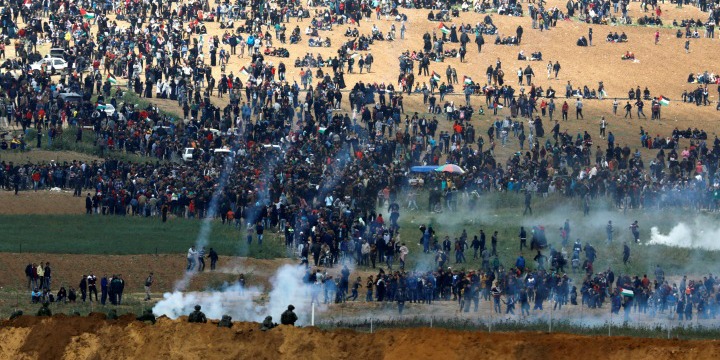
Israeli soldiers use tear gas against Palestinian rioters on the Gaza border, March 30, 2018. Photo: Reuters / Amir Cohen.

There is a long history of anti-Israel bias among many in the Western world. This has led Palestinian leaders to conclude that provocations against Israel can be productive, because they have important public relations value. Such action often leads to condemnations from sources like the United Nations, Arab countries, the European Union, NGOs, as well as some Jewish organizations. These reactions then provide a further incentive for more Palestinian provocations.

The recent Hamas-conducted “March of Return” protests along the Gaza border were not peaceful. They included rock throwing, Molotov cocktails, and shooting at IDF soldiers. There were also repeated attempts by Palestinians to cross the Israeli border in order to launch violent attacks on Israelis. Eleven of the first Palestinian casualties in the protests were proven to be terrorists, including those from Hamas.

During the second march, there was new violence, including the burning of what may have been 10,000 tires. There were also further attempts to both attack IDF soldiers and infiltrate Israel under the resulting smokescreen. Since then, burning kites have been launched against the Jewish state. But these kites are far from innocent; at least one had a firebomb attached to it.

Many Western anti-Israel statements were issued after Israel responded to this rampant Palestinian violence. A number of these statements were of four types. On the surface, they seem reasonable. But even superficial analysis shows that all of these kinds of statements involve hypocrisy and bias. A few examples will illustrate this.

The first type of statement claims that Palestinians are entitled to demonstrate peacefully, suggesting that Israel was trying to stop the Gazans from doing so. Those who made this statement knew the truth: the demonstrations were not peaceful, and included violent attempts to breach the border with Israel. Among those whose statements stressed the Palestinian right to “peaceful demonstrations” were the European Union, France, US senators Elizabeth Warren and Bernie Sanders, and J Street.

The second type consisted of calling for “restraint.” This came in two versions: either calling for Israeli restraint alone, or calling for restraint from both Israel and Hamas — thereby equating the two. Statements about restraint on both sides were made by the EU, the deputy prime minister of Ireland,  J Street, and Russia. Other statements that addressed only Israel came from France, Senator Warren, and the head of the Union of Reform Judaism, Rabbi Rick Jacobs.

As far as armies go, the Israeli army is probably the most codified and restrained army which has ever existed on the planet. Amos Guiora, a professor at the University of Utah, has described the many codes that the Israeli army follows concerning morality and ethics in combat. It is doubtful whether anything similar exists elsewhere. These codes have been praised by several Western armies.

The third type of statement includes asking for an independent investigation of the events in question. Here we find the EU in the company of the deputy prime minister of Ireland and Kuwait. Those who make this claim know full well that the logical candidates for such pseudo-independent investigations are United Nations associate bodies. The best known such investigation was the report by the Goldstone committee, which was so extremely distorted that in 2011 editors Gerald Steinberg and Anne Herzberg were able to publish an entire book about its massive bias.

The fourth type of statement concerns the proportionality of Israeli actions. This implies that Israel’s actions are not proportionate. Here we find the EU and France, along with Iran, Turkey, and Russia.

There were also other Western statements. For instance, the long-time anti-Israel inciter Jeremy Corbyn, leader of the British Labour party, asked for a review of his country’s arms sales to Israel.

These kinds of Western reactions will stimulate further Hamas-initiated violent demonstrations, as the organization hopes to solicit more anti-Israel reactions. Those Westerners who make these declarations may claim that incentivizing Hamas is not their intention — but that is immaterial. They should have learned from history that they contribute to causing more Palestinian violence and more Palestinian casualties.

Dr. Manfred Gerstenfeld is the Emeritus Chairman of the Jerusalem Center for Public Affairs think tank. The author was given a Lifetime Achievement Award by the Journal for the Study of Antisemitism and the International Leadership Award by the Simon Wiesenthal Center. 

The opinions presented by Algemeiner bloggers are solely theirs and do not represent those of The Algemeiner, its publishers or editors. If you would like to share your views with a blog post on The Algemeiner, please be in touch through our Contact page.

Share this Story: Share On Facebook Share On Twitter

Let your voice be heard!

Join the Algemeiner

Algemeiner.com

This field is for validation purposes and should be left unchanged.
Email a copy of to a friend
This field is hidden when viewing the form
This site is protected by reCAPTCHA and the Google Privacy Policy and Terms of Service apply.