



Israel’s Recent Tragedy: When Dire Warnings Go Unheeded
Error: Contact form not found.

 by Zvika Fogel / JNS.org

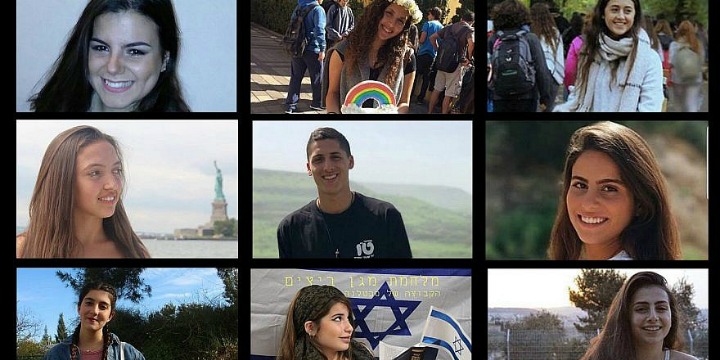
Nine of the 10 victims who drowned in a flash flood near the Dead Sea on the April 26. Photo: Facebook.
JNS.org – Why does this happen? Why does the same thing always seem to repeat itself? In my opinion, it’s not always due to contempt for the rules or a fundamental lack of discipline; the answer lies in the DNA some of us possess, which pushes us to explore and stretch the boundaries of our abilities.
This is a familiar routine, which stems from our inability to distinguish between the need to avoid pitfalls, and our capacity to extricate ourselves from them.
I have the privilege of being a member of the Golan Search and Rescue Unit, an elite team of Israel Police volunteers. Upon receiving notification of the event in the Arava last Thursday, we turned to the relevant authorities and offered our assistance. Experience has taught us that an event of this sort doesn’t end well. To my great sorrow, as search-and-rescue volunteers, once we are alerted to incoming drastic weather changes, we know right away that a substantial portion of the public won’t heed the warnings and will take risks.
Some people simply do not understand the magnitude of the danger, and others are convinced that “it won’t happen to us.”
It is hard for us to gauge the power of nature. It’s even harder for us to estimate how quickly and forcefully changes can occur during an extreme climate event, such as a heavy downpour in the middle of spring, which builds up and flows like a giant wave through dry gullies. This also applies to powerful and sudden wind changes during a large fire, which can be deadly for anyone unfamiliar with the lay of the land, and other factors.
Rescue units train for a variety of scenarios and know — just as members and volunteers of the police’s rescue units do — how to analyze the dangers and prepare for them. It’s important to keep in mind that rescuers will do everything they can to save lives, and will even take risks in the process — up to the point where they endanger their own lives.
Rescuers will wade into dangerous waters only if they know that they can accomplish the mission, which is to get out along with the person they are saving.
These warnings that are issued time and again — “high risk of flash floods in low areas,” for example — have been written in blood. Apparently, that is not enough.
Maybe we need photographs from disasters to drive the point home. All we can hope for now is that the unfathomable images of dead girls and boys will help us internalize that we are not intended to defeat the forces of nature, but to live and mesh with them.
Brig. Gen. (res.) Zvika Fogel is a brigadier general in the Israel Defense Forces’ reserves, who served as commander of artillery and as head of the headquarters of the Southern Command. He also served as head of the council in charge in Tuba-Zangarriye, Golan Rescue Unit.


