The Moroccan Protests: A New Model After the Arab Spring?
Error: Contact form not found.

 by James M. Dorsey

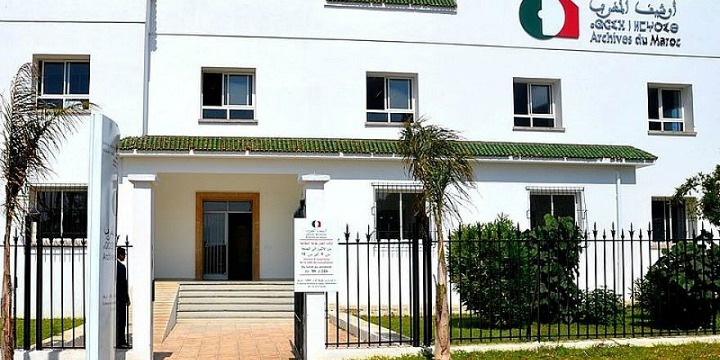
The archives of Morocco in the capital city of Rabat. Photo: Wikimedia Commons.
Mounting anger and discontent is simmering across the Arab world, much as it did in the run-up to the 2011 Arab Spring popular revolts that toppled four autocratic leaders. But this time around, the anger is not always exploding in mass street protests, as it recently did in Jordan. In Morocco, it is manifesting itself in the form of widespread boycotts.
In Jordan recently, fury at tax hikes followed the classic pattern of sustained public protest. In contrast to the calls for regime change that dominated the 2011 revolts, protesters targeted the government’s austerity measures and efforts to broaden its revenue base. The protesters forced the resignation of Prime Minister Hani Mulki and the repeal of proposals for tax hikes that were being imposed to comply with conditions of a $723 million International Monetary Fund loan.
Austerity measures in Egypt linked to a $12 billion IMF loan also sparked protests in a country where dissent is brutally repressed. Rare protests erupted there last month after the government hiked Cairo’s metro fares by up to 250%.
Now, with economists and analysts waiting to see how Egyptians respond to new austerity measures that include a 50% rise in gasoline prices — the third since Egypt floated its currency in 2016, with further hikes expected in July — Morocco may provide a more risk-free and effective model for future protest in one of the most repressive parts of the world.
An online boycott campaign fueled by anger at rising consumer prices that uses hashtags such as “let it curdle” and “let it rot” has spread like wildfire across Moroccan social media. A survey in late May by economic daily L’Economiste suggested that 57% of Moroccans were participating in the boycott of some of Morocco’s foremost oligopolies, which have close ties to the government.
The boycott of the likes of French dairy giant Danone, mineral water company Oulmes, and the country’s leading fuel distributor Afriquia SMDC is proving effective and difficult to counter. The boycott recently expanded to include the country’s fish markets.
The boycott has already halved Danone’s sales. The company said that it would post a 150 million Moroccan dirham ($15.9 million) loss for the first six months of this year, cut raw milk purchases by 30%, and reduce its number of short-term job contracts.
Danone employees recently staged a sit-in that blamed both the boycott and the government for their predicament. Lahcen Daoudi, a cabinet minister, resigned after participating in a sit-in organized by Danone workers.
The boycott has also affected the performance of energy companies. Shares of Total Maroc, the only listed fuel distributor, have fallen by almost 10% since the boycott began in April.
The strength of the boycott, which was launched on Facebook pages that have since attracted some two million visitors, lies in the fact that it is difficult to identify who is driving it. No individual or group has publicly claimed ownership.
The boycott’s effectiveness is enhanced by the selectiveness of its targets, which are described by angry consumers on social media as “thieves” and “bloodsuckers.”
Anonymity and the virtual character of the protest, in what could become a model elsewhere in the Middle East and North Africa, has made it difficult for the government to crack down on its organizers.
Yet even if the government identified the boycott’s organizers, it would be unable to impose its will on choices that consumers make daily. The boycott also levels the playing field, with even the poorest able to affect the performance of economic giants.
In doing so, the boycott strategy counters region-wide frustration with the fact that protests have either failed to produce results or — in countries like Syria, Yemen, Egypt, and Libya — have led to mayhem, increased repression, and civil war.
“While boycotts solve some of the problems of protest movements … they also create new challenges. … [Their] diffuse structures … limit their ability to formulate clear demands. … Boycotts against domestic producers are likely to face criticism that they are hurting the economy and endangering the jobs of their compatriots working in the boycotted companies,” cautioned Max Gallien, a London School of Economics PhD candidate, who studies the political economy of North Africa.
The Moroccan boycott grew out of months of daily protests in the country’s impoverished northern Rif region. The government tried to squash those protests with a carrot-and-stick approach that involved the arrest of hundreds.
Underlying the boycott is a deep-seated resentment of the government’s incestuous relationship with business, which has led to its failure to ensure fair competition. Many believe that this has eroded purchasing power among the rural poor and the urban middle class alike.
Afriquia is part of the Akwa group owned by Aziz Akhannouch, a Moroccan billionaire ranked by Forbes. Akhannouch also serves as agriculture minister, heads a political party, and is one of the kingdom’s most powerful politicians. Oulmes is headed by Miriem Bensalah Chekroun, the former president of Morocco’s confederation of enterprises CGEM.
“The goal of this boycott is to unite Moroccan people and speak with one voice against expensive prices, poverty, unemployment, injustice, corruption, and despotism,” said one Facebook page that supports the boycott. This is a message and a methodology that could resonate across a swath of land stretching from the Atlantic coast of Africa to the Gulf.
Dr. James M. Dorsey, a non-resident Senior Associate at the BESA Center, is a senior fellow at the S. Rajaratnam School of International Studies at Singapore’s Nanyang Technological University and co-director of the University of Würzburg’s Institute for Fan Culture. BESA Center Perspectives Papers, such as this one, are published through the generosity of the Greg Rosshandler Family.